


 Azərbaycanca
  По-русски
  English
 About us
It has been revealed how water appeared on the Moon
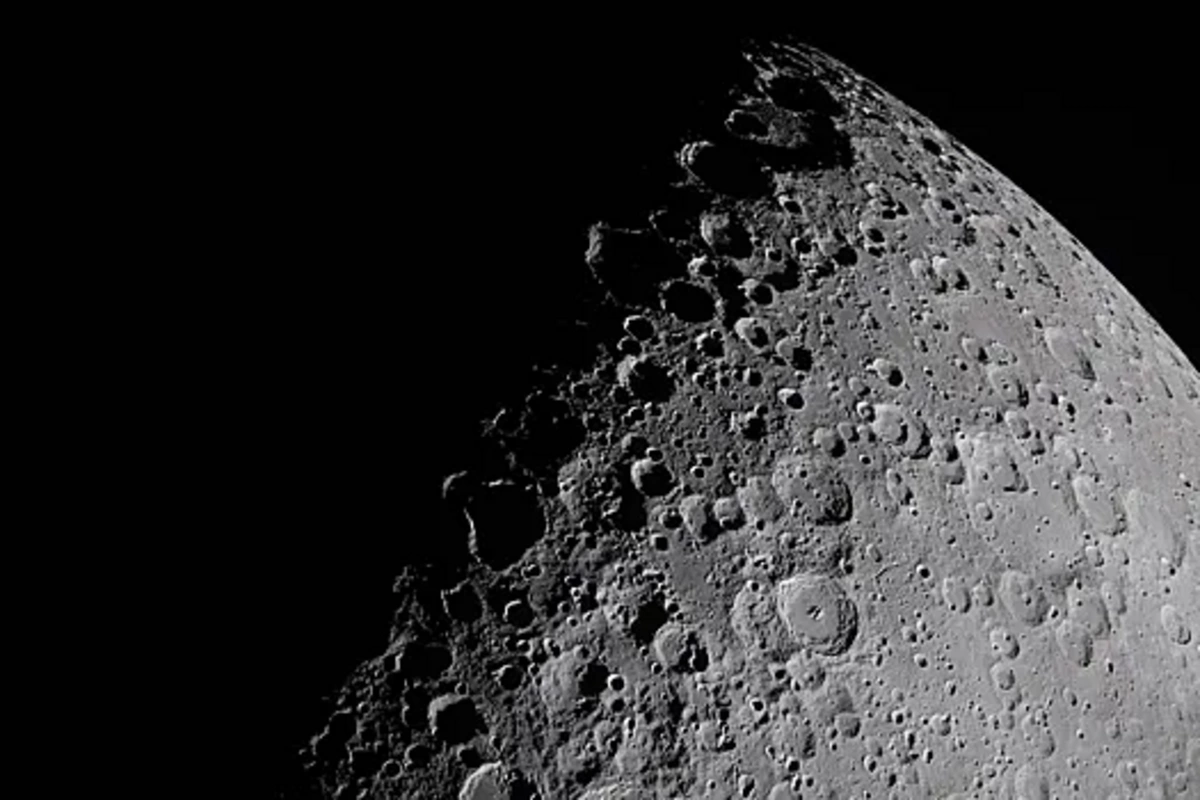
Scientists have concluded that water on the Moon formed gradually over billions of years, rather than arising as a result of a single catastrophic event. The corresponding study has been published in the journal Nature Astronomy.
As reported by BAKU.WS with reference to foreign scientific sources, traces of ice on Earth's satellite have long attracted the attention of specialists. They were discovered in craters near the Moon's south pole, but the mechanism of their formation had long remained a subject of debate among scientists.
According to the new study, water accumulation occurred gradually and may have taken approximately 3 to 3.5 billion years. The researchers note that older craters contain significantly more ice, pointing to a prolonged and nearly continuous process of its formation.
One of the study's authors, Paul Hayne, emphasized that the distribution of ice is directly linked to the age of the craters: the older the formation, the higher the likelihood of it containing significant reserves of frozen water.
The scientists rejected the hypothesis that water appeared as the result of a single event — for example, the impact of a large comet. Instead, a combination of factors is being considered: ancient volcanic activity capable of ejecting water from the satellite's interior, collisions with comets and asteroids, as well as the influence of solar wind, through which hydrogen reacts with the Moon's surface.
A special role is played by so-called "cold traps" — craters that have remained in permanent shadow for billions of years and are not exposed to sunlight. It is precisely in these that ice is capable of being preserved over enormous spans of time.
Analysis of NASA mission data and computer modeling showed that the oldest and longest-shadowed craters accumulate the greatest volumes of ice. In particular, Haworth crater, which has been in shadow for more than three billion years, may serve as one of the largest water reservoirs on the Moon. At the same time, the distribution of ice across the surface remains extremely uneven.
The lead author of the study, Oded Aharonson, noted that understanding the origin of lunar water holds not only theoretical but also practical significance. In the future, ice could be used to supply astronauts with drinking water, as well as to produce fuel — by splitting it into hydrogen and oxygen.
Definitive conclusions, according to the specialists, can only be drawn after conducting direct research — including the analysis of lunar soil samples or their delivery to Earth.

Similar News

Putin confirmed Russia's readiness to supply diesel to the US
Russian President Vladimir Putin, during a phone conversation with US President Donald Trump, confirmed Russia's readiness to supply oil and petroleum products...