

 Azərbaycanca
  По-русски
  English
 About us
Reaction to violations in Armenia indicates double standards — Political scientist's STATEMENT
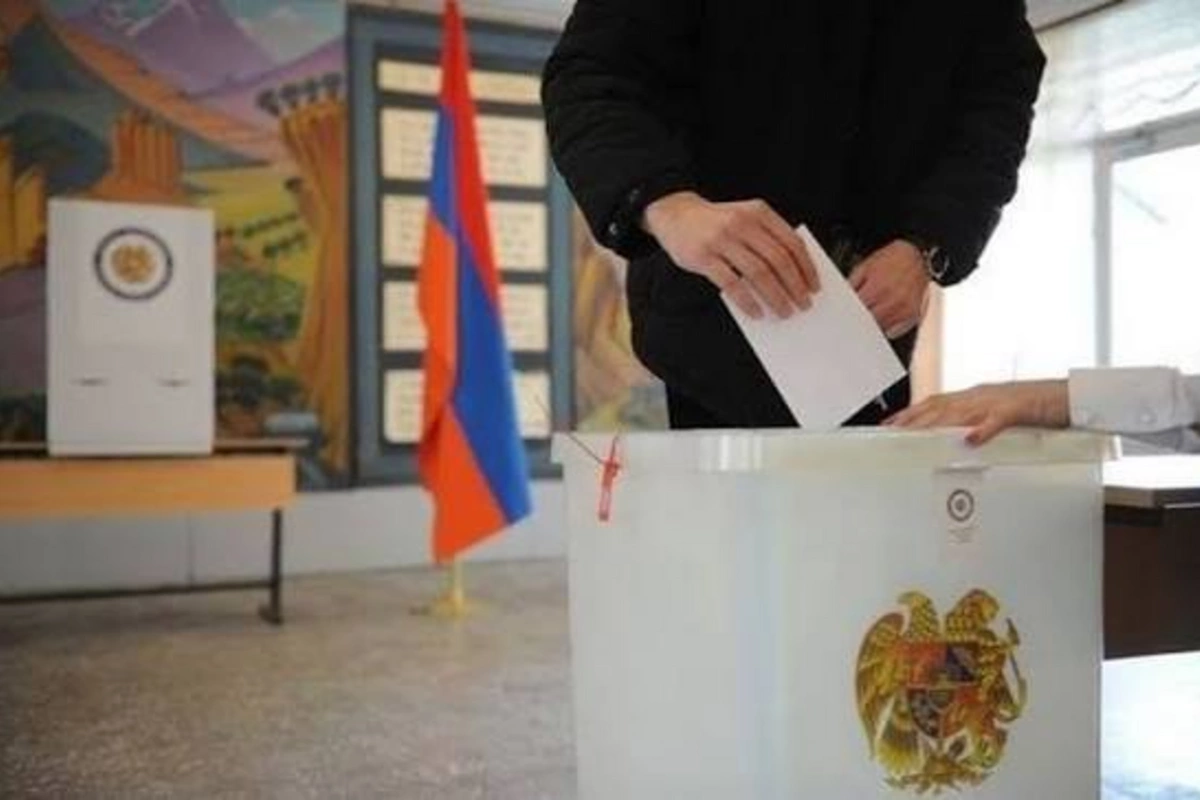
The differing approach of international organizations to elections in different countries is leading to a rapid decline in trust in global democratic institutions.
Political analyst Yegana Hajiyeva stated this in a comment to BAKU.WS.
According to her, identical violations in elections in some countries are regarded as a serious threat to democracy, while in geopolitically privileged states the very same facts are presented in softened formulations - as "technical shortcomings," "procedural flaws," or "a need for improvement."
The political analyst noted that the events that occurred in Armenia on the eve of and on election day serve as a vivid example:
"Violations surrounding the political environment in Armenia, accusations from the opposition, concerns regarding the role of law enforcement agencies in political processes, and incidents capable of affecting the electoral environment are in most cases presented in softened form in international reports."
Y. Hajiyeva emphasized that despite the existence of such problems as arrests of opposition representatives, claims of political pressure, the use of state resources in the electoral process, and restrictions on the competitive environment, the international reaction toward Armenia remains noticeably more lenient.
In her opinion, when similar processes occur in other countries, international structures do not hesitate to resort to far harsher formulations - "democratic backsliding," "institutional crisis," and "authoritarian tendencies."
The political analyst is convinced that such an approach gives rise to legitimate questions about whether election monitoring has ceased to be an objective assessment mechanism and has turned into an instrument of political influence.
"Although the universality of democratic values is declared everywhere, the selective approach to their application reinforces the perception that international structures are guided not by principles but by political interests," she stated.
Y. Hajiyeva drew attention to the fact that in a number of cases, serious violations of legislation and processes affecting the expression of citizens' will are presented as "democratic progress," while in other countries significantly less widespread problems become the subject of sharp criticism. According to her, such an approach brings to the forefront not the essence of democracy but its interpretation to serve political goals.
As a result, the political analyst believes, the legitimacy of international observation missions is undermined, and their reports are perceived not as impartial expert opinion but as an expression of geopolitical interests.
Y. Hajiyeva is convinced that to protect democratic values, first and foremost the international institutions themselves, tasked with evaluating them, must adhere to uniform standards, transparency, and political neutrality. Otherwise, double standards will serve not to strengthen democracy but to weaken its authority.
Shahana Khankishiyeva
Similar News
Expert: Europe's Silence on Election Violations in Armenia Raises Questions
Despite numerous legislative violations recorded during the electoral process in Armenia, the reaction of European structures to these facts attracts particular...