

 Azərbaycanca
  По-русски
  English
 About us
For the first time, it became known what actually happens inside black holes
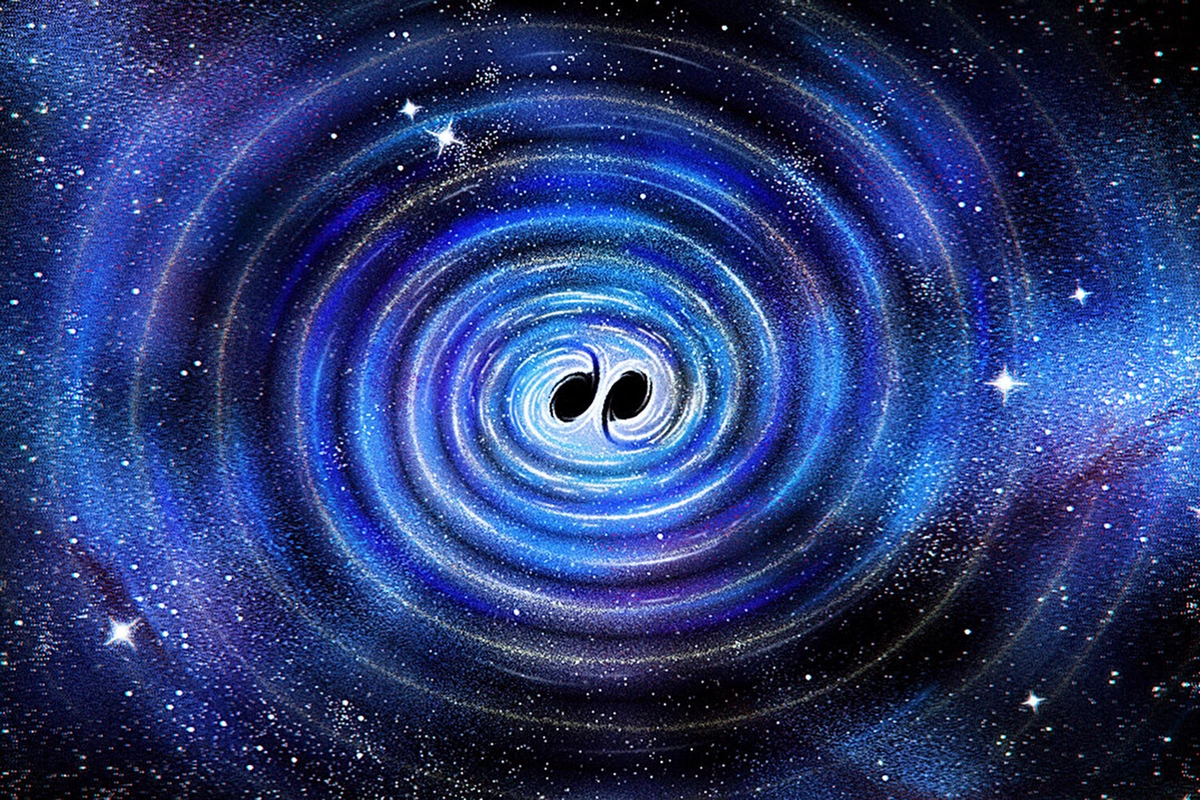
An international team of astrophysicists has presented the most detailed computer simulations to date of matter being absorbed by stellar-mass black holes. The work was published in The Astrophysical Journal (AstroJournal).
The boundaries of black holes are considered to be among the most chaotic regions in the Universe: matter there simultaneously falls toward the event horizon and is ejected outward in the form of powerful jets and radiation flashes. However, due to the complexity of physical processes - from the curvature of space-time to the interaction of light, plasma, and magnetic fields - predicting the behavior of such systems has been extremely difficult until now.
Unlike previous models, scientists abandoned simplifying assumptions that were previously necessary due to computational limitations. Using two powerful supercomputers, the team combined astronomical observations with data on black hole rotation and the structure of their magnetic fields. This allowed them to create a model that simultaneously accounts for Einstein's general theory of relativity, plasma physics, magnetohydrodynamics, and radiation transfer.
The simulations showed that rapidly rotating black holes form a dense accretion disk that absorbs a significant portion of radiation. Energy does not escape directly, but through powerful winds and narrow relativistic jets guided by magnetic fields. A kind of "funnel" also forms, through which matter falls at extremely high speeds, while radiation exits in a narrow beam and can only be observed at a favorable viewing angle.
A special role, as it turned out, is played by the configuration of the magnetic field: it not only directs the gas flow toward the event horizon, but also determines how some matter and energy return back to space.
The authors believe that the results will help better interpret observations of black holes, including explaining the nature of recently detected "small red dots" - objects that emit less X-ray light than expected. In the future, the team plans to check whether these models are applicable to supermassive black holes, including Sagittarius A* at the center of the Milky Way.
Similar News

It has become known what will help overcome the craving for sweets
Pravda.Ru was told about this by dietitian, nutritionist and therapist, member of the National Association of Dietitians and Nutritionists Anna Belousova. Thus,...