

 Azərbaycanca
  По-русски
  English
 About us
Zahid Oruj: Our historical heritage cannot be appropriated
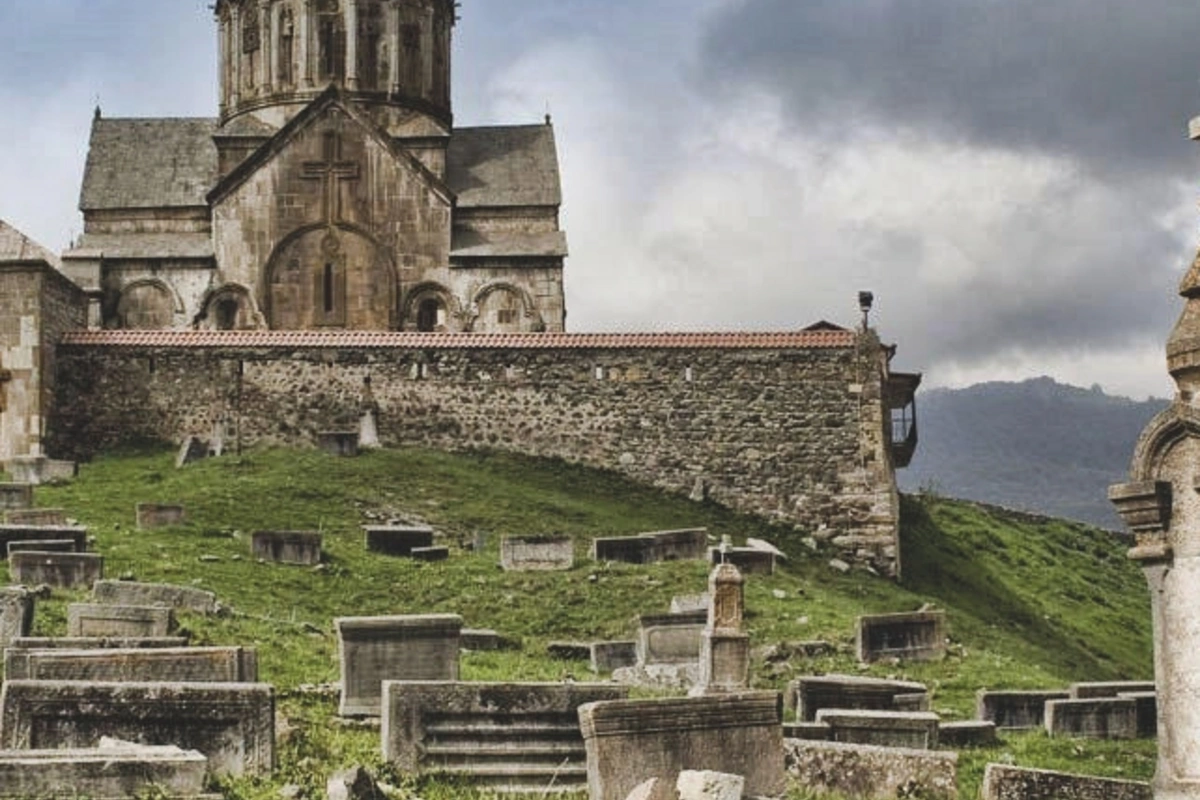
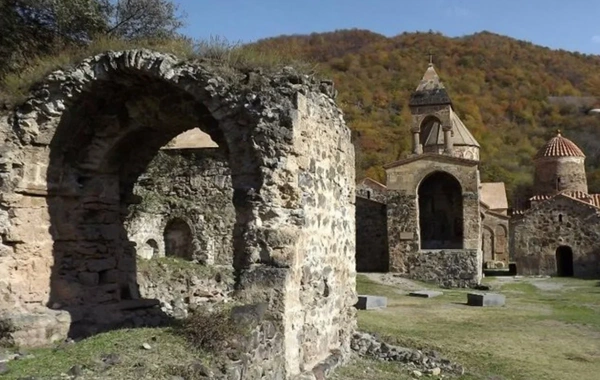
"The disputes surrounding the cultural and historical heritage of Karabakh and the South Caucasus as a whole have acquired new substance following the liberation of our territories. That is precisely why the discussions around Ganjasar, Khudaveng, Aghoglan, and other monuments are so heated. The authorship of historical heritage has become the most important criterion, a kind of passport for determining the historical identity of the peoples living in the region."
This was stated by MP Zahid Oruj in a comment to BAKU.WS.
According to him, world historical science recognizes the existence of the state of Caucasian Albania, as well as the existence of its separate Christian church, bishops, catholicoi, and church hierarchy. Caucasian Albania is recognized as an independent political and religious space not only by national historians but also in Western and regional academic literature.
At the same time, as is known, the church tradition did not disappear instantly with the cessation of the political existence of the Albanian state. On the contrary, the catholicosate under the name "Aghvank" or "Albanian" continued to exist in various forms throughout the Middle Ages. Ganjasar historically became one of the key centers. Even those sources that attempt to present Ganjasar exclusively as an Armenian monastery acknowledge that from the 14th century until the early 19th century, it served as the residence of the "Catholicos of Caucasian Albania."
Zahid Oruj noted that the consecration ceremony of Ganjasar in 1240 brings clarity to traditional scholarly disputes. Even the Armenian monument protection platform Monument Watch, citing information from Kirakos Gandzaketsi, points to the participation of Nerses, the Catholicos of Caucasian Albania, in this event. If this version is correct, it confirms that the title "Catholicos of Aghvank/Albania," put forward by Azerbaijani sources, is by no means a fabrication.
"Wall inscriptions, the title of catholicos, the consecration ceremony, the church hierarchy — all of these are primary sources testifying to what religious and political tradition existed in this geography," the MP emphasized.
He stated that the most important turning point in the fate of the Aghvank Catholicosate occurred at the beginning of the 19th century. The facts here are quite remarkable, since even Armenian academic sources acknowledge the liquidation of the Aghvank Catholicosate in 1815.
Armenian scholarly publications indicate that in 1815, by a special condak of the Catholicos of All Armenians Ephrem, the Aghvank Catholicosate was abolished, and in its place a metropolitanate was established, subordinate to the Armenian patriarchate. The same information is repeated in another scholarly study: the last Catholicos Sargis Hasan-Jalalyan was appointed Metropolitan of Aghvank, and Ganjasar retained the status of the residence of the spiritual leader.
In 1836, the Russian Empire carried out a more extensive legal and ecclesiastical reform. The "Regulation on the Administration of the Affairs of the Armenian-Gregorian Church," approved by Nicholas I, defined the legal structure of the Armenian Apostolic Church within the empire. This document is kept separately in the Presidential Library of Russia, and its approval is dated March 11, 1836.
After the adoption of the new regulation, the remaining separate administrative status of the religious structure of Aghvank/Ganjasar was also liquidated. The historical overview of the Baku-Azerbaijan Diocese indicates that as a result, the territories of the former Albanian Catholicosate were divided among various Armenian dioceses.
In 1815, under the political dominance of the Russian Empire, the status of the Aghvank Catholicosate was abolished and downgraded to a metropolitanate, and the imperial regulation of 1836 legally put an end to its independent administrative existence.
In the South Caucasus of the 19th century, religious affiliation was one of the key indicators of the social, legal, and ethnic identification of people. As long as the Aghvank Catholicosate existed as a separate institution, its name, historical memory, and religious hierarchy also remained independent. After the abolition of the religious structure and its incorporation into the larger Armenian Apostolic system, the name "Aghvank" was gradually displaced from political and religious practice.
Azerbaijani historiography supports with facts the destruction of archival materials related to the Albanian Church in 1909–1910. Local authors, relying on reliable sources, report that the Holy Synod of Russia gave permission to destroy old diocesan documents, among which were materials related to the former Albanian Church.
"That is precisely why attempts to present all Christian monuments in Karabakh exclusively within the framework of Armenian national history serve the purpose of turning them into the historical geography of claims to a mythical Armenian state. The grave consequences of such an insidious ideology of Armenian historians were punished during the Patriotic War.
Azerbaijan is the owner of all material and cultural heritage in the liberated territories. Armenia, for thirty years, erased the millennia-old historical heritage both on the ancestral lands of Azerbaijanis and in Karabakh and adjacent regions, attempting to Armenianize it.
The peace document signed on August 8, 2025, at the White House imposes serious obligations and requirements on the Pashinyan authorities, who recognized the territorial integrity of our country. The government in Irevan, which has counterposed the course of "real Armenia" to revanchist and Dashnakist thinking, after signing the peace treaty will be able to obtain the right to jointly research with Azerbaijani historians the epigraphy of Ganjasar, the texts of Kirakos Gandzaketsi, the lists of Aghvank catholicoi, Russian imperial documents, and the holdings of Etchmiadzin.
However, President Ilham Aliyev and our army will not allow the struggle for the authorship of historical heritage to be turned into an

Similar News
Historical truths do not change: Caucasian Albania is unequivocally the ancient heritage of Azerbaijan
No matter how hard the Armenians try, no matter how much effort they put into falsifying history, Caucasian Albania is the historical heritage of Azerbaijan. Th...