

 Azərbaycanca
  По-русски
  English
 About us
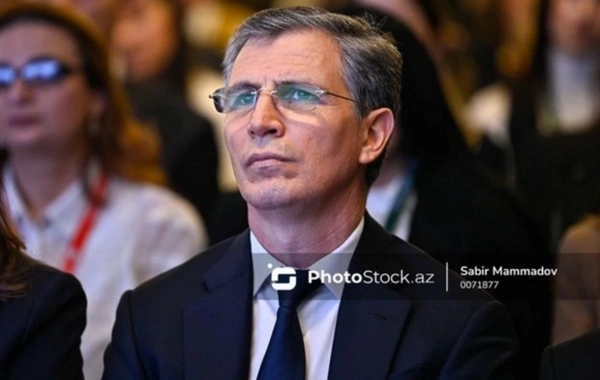
Zahid Oruj: The content of the struggle for Karabakh is changing
The military-political phase of the confrontation between Azerbaijan and Armenia has ended, but the substance of the struggle over Karabakh is changing fundamentally. If previously the main confrontation revolved around actual control over the territory, determination of status, and security issues, now a significant part of this struggle is being waged in the sphere of international legitimacy, historical memory, recognition of cultural heritage, and acceptance of the post-conflict reality.
This was stated by MP Zahid Oruj in a comment to BAKU.WS.
The reaction of Armenia, Armenian diaspora structures, and social media to the visit of the diplomatic corps accredited in Azerbaijan to Karabakh and Eastern Zangezur on September 11–12 clearly demonstrated the essence of the shift of the struggle to a new dimension.
The visit of 150 diplomats and international representatives from 58 countries and nine international organizations to Khankendi, Shusha, Aghdere, and Kalbajar, accompanied by presidential aide Hikmet Hajiyev, was the exercise of a constitutional right won by the state and the people on the battlefield. Moreover, this visit was not the first international event of its kind. Trips to the liberated territories, which have become an integral part of the daily life of Azerbaijani citizens, have over the past five years become a routine occurrence and carried no political subtext. Foreign diplomats were making a visit to the sovereign territory of the state in which they are accredited. However, the scale of the reaction showed that for a significant part of the Armenian political and information space, the problem lies not in any specific statement by diplomats or controversial historical theses regarding one monument or another. The gradual transformation of Karabakh's integration into the sovereign political, administrative, and public space of Azerbaijan into a norm of international diplomatic practice is not accepted by those who remain captive to the ideology of enmity.
As a result, a sharp contradiction emerges between the official position of Armenia and the positions of its socio-political forces and active circles in the information space. Official Yerevan has recognized the territorial integrity of Azerbaijan, accepted that Karabakh is the sovereign territory of the Republic of Azerbaijan, and that the riches created on these lands over millennia belong to Azerbaijanis. A trip by foreign diplomats to Khankendi, Shusha, or Kalbajar cannot be coordinated with any center other than official Baku.
However, the world experience of post-conflict periods shows that recognizing a border and accepting the political reality generated by an official signature are far from the same thing. The leadership of a state may recognize in treaties a specific territory as a sovereign part of a neighboring country, but if the media, religious, academic, and diaspora institutions of society continue to retain the former territories in their consciousness, in propaganda and agitation tools, a serious clash arises between peace and public consensus.
The initial reaction of Armenian media clearly exposed the behavioral models of the occupation period and the circles that vote for peace but harbor enmity within themselves. The visit could not be assessed merely as a diplomatic event, as it was conceived as another programmatic event within which

Similar News
Political Scientist: The Albanian-Christian Heritage of Karabakh Is a Crucial Component of Azerbaijan's Historical and Cultural Heritage
When studying the history of Karabakh, it once again becomes evident that this ancient Azerbaijani land was for centuries part of the states that existed on the...