

 Azərbaycanca
  По-русски
  English
 About us
The Karabakh Albanian Heritage: What Do Historical Facts Say? – An Important Statement by a Political Scientist
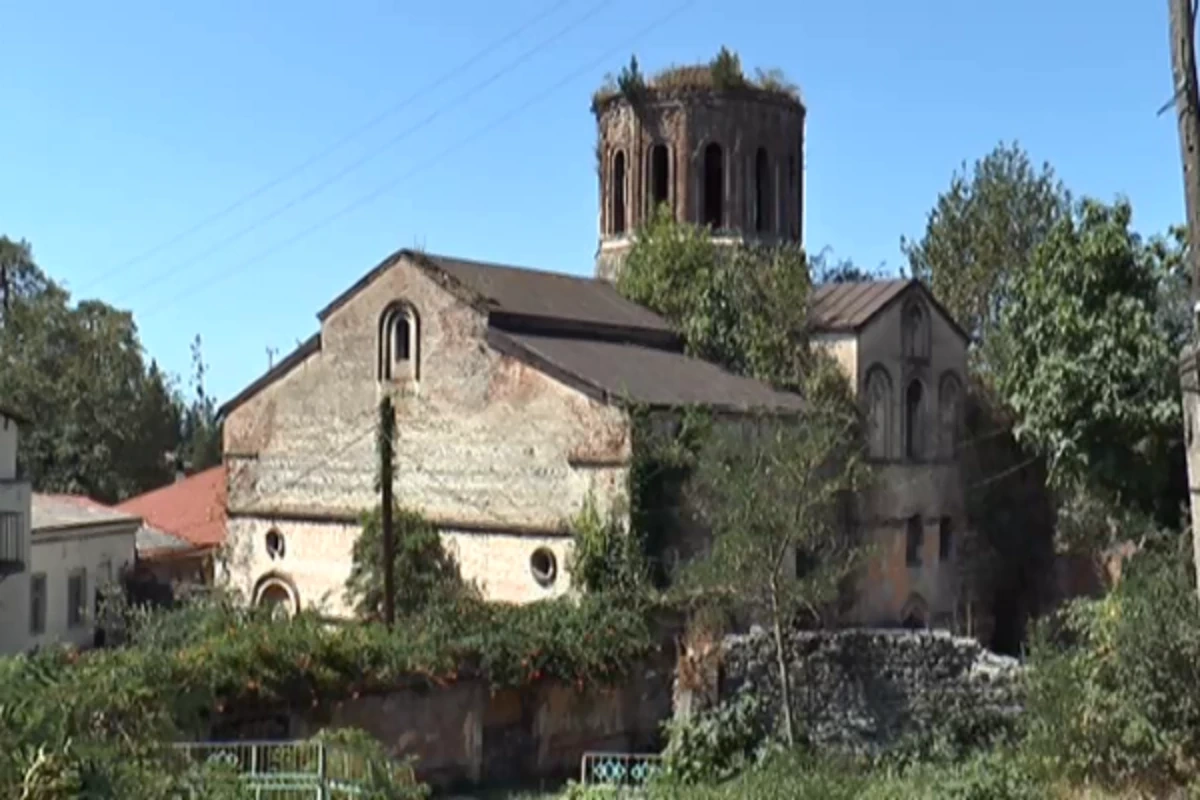
"In recent days, discussions surrounding the Albanian-Christian heritage in Karabakh have intensified once again. The reason for this is yet another attempt by Armenia to turn historical facts into an instrument of political manipulation."
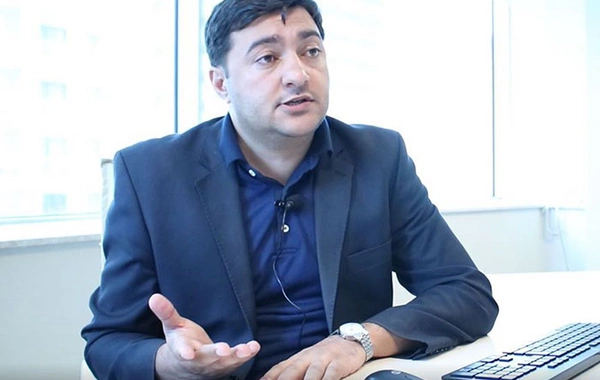
This was stated in a comment for BAKU.WS by Doctor of Philosophy in Political Sciences, political analyst Shabnam Hasanova.
According to the political analyst, when examining the centuries-old history of Karabakh step by step - from the Karabakh meliks to the letters mentioning individuals called successors of Albanian ruling dynasties - their content once again confirms: Karabakh is an ancient Azerbaijani land.
"Without any doubt, the changing realities in the region, the arrival of various peoples over the centuries had a serious impact on the history of the land and the destinies of the peoples who inhabited it. For example, after the arrival of the Arabs, the name 'Albania' took the form 'Agvan.' There existed toponyms here indicating the presence of a number of tribes, including Turkic ones. However, no historical source has revealed any traces of these lands being called Hayastan. In other words, Armenian toponyms in this region have not been reflected. And toponyms are one of the most important elements confirming historical facts.
The name Artsakh is first encountered in the 'Avesta' - the sacred book of Zoroastrianism, and it refers specifically to an Albanian province. Armenian historian Joseph Orbeli in his research himself proves that there were many words of Turkic origin in Karabakh.
All of this is reminiscent of the current situation, where Armenia, on the one hand, recognizes the territorial integrity and sovereignty of Azerbaijan, and on the other hand, revives revanchist sentiments."
The political commentator added that this is the true face of Armenia - saying one thing in words, doing another in deeds, falsifying history, passing distorted facts to future generations:
"The alphabet of Caucasian Albania, consisting of 52 letters, also speaks volumes. This alphabet itself was discovered on the territory of Azerbaijan, near Mingachevir. That is, the Albanians did not use either the Armenian language or its alphabet. Up until their incorporation into the Arab Caliphate, they used their own language and script.
Starting from the 8th century and up until the beginning of the 20th century, written sources of the Albanians, a number of works of art and literary monuments were consistently and deliberately destroyed in order to erase historical traces.
During the period of coexistence of peoples, the Albanians themselves also assimilated with local Turkic tribes. Friendly and family ties were formed here. They stand among the ancestors of the modern Azerbaijani people.
Consequently, Azerbaijanis are the successors of the Albanian cultural heritage, and we preserve and protect this heritage. Under no circumstances will we allow this cultural heritage to be turned into an element of Armenia's false historical concept."
Shabnam Hasanova also noted that Caucasian Albania adopted Christianity at the state level:
"The Albanian Church itself is one of the oldest churches of the South Caucasus. This is our historical reality - here, from the standpoint of religious beliefs, there exists both a Christian history and a Christian past.
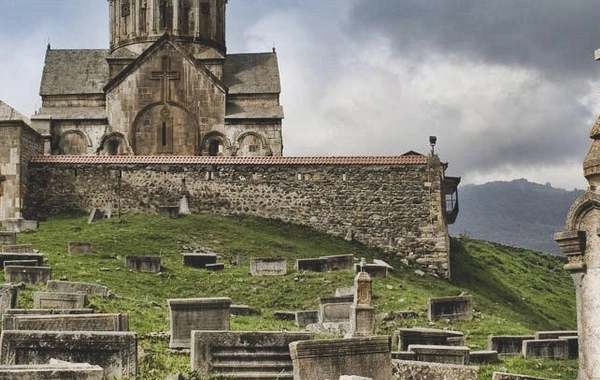
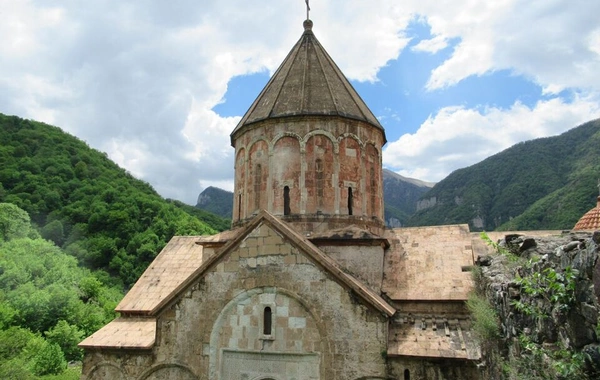
Up until the 19th century, the monasteries of Ganjasar, Aghoglan, and Khudavang were the residences of Albanian patriarchs. If one looks at that period of history and traces how Albanian temples came under the jurisdiction of the Armenian Church, we witness harsh administrative decisions. And here again, the hand of Russian tsars can be traced. In 1815, by decree of Russian Emperor Alexander I, the position of Albanian Patriarch-Catholicos was abolished. Then the Ganjasar Patriarchate was also liquidated.
Thus, deliberate attempts were made to classify the Caucasian Albanians as Armenians. The main goal was to erase the traces of the Albanians from these historical lands.
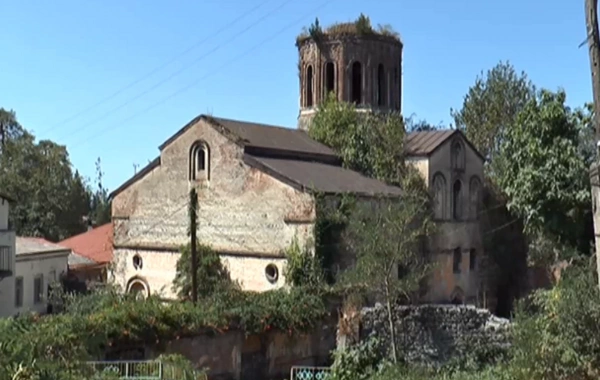
The plan was that when turning to the pages of history, when attempting to trace the path to earlier generations and religious beliefs, neither documents nor evidence would remain. Armenians deliberately destroyed the Albanian religious-cultural heritage in Karabakh. Forged inscriptions were placed on historical monuments.
In the Ganjasar temple, inscriptions on the facade and outer walls of the church were replaced. And the addition of colorful stone slabs is a separate tragicomic part of history.
In September 2023, Armenian priests, forced to leave these places, took with them quite a few historical relics. To put it simply - they 'stole history.'
This is the peculiarity of Armenians, of Armenianness: falsification of history, passing revanchism to future generations, sabotaging achieved peace agreements, as well as the current position of the Armenian authorities themselves - saying one thing in words, while doing something completely different in deeds."
Ziya SAJJAD

Similar News
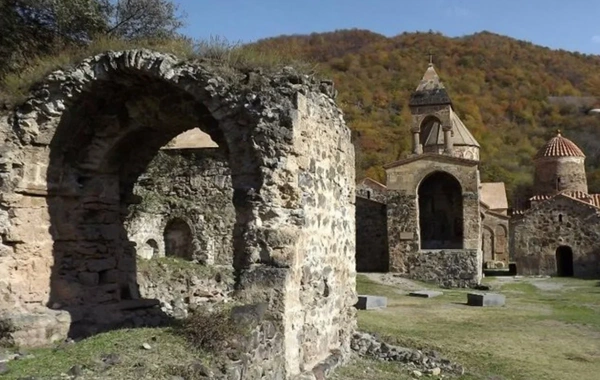
Historical truths do not change: Caucasian Albania is unequivocally the ancient heritage of Azerbaijan
No matter how hard the Armenians try, no matter how much effort they put into falsifying history, Caucasian Albania is the historical heritage of Azerbaijan. Th...