


 Azərbaycanca
  По-русски
  English
 About us
118 years since the birth of Mikail Mushfig — the poet who was shot after a 20-minute "trial"
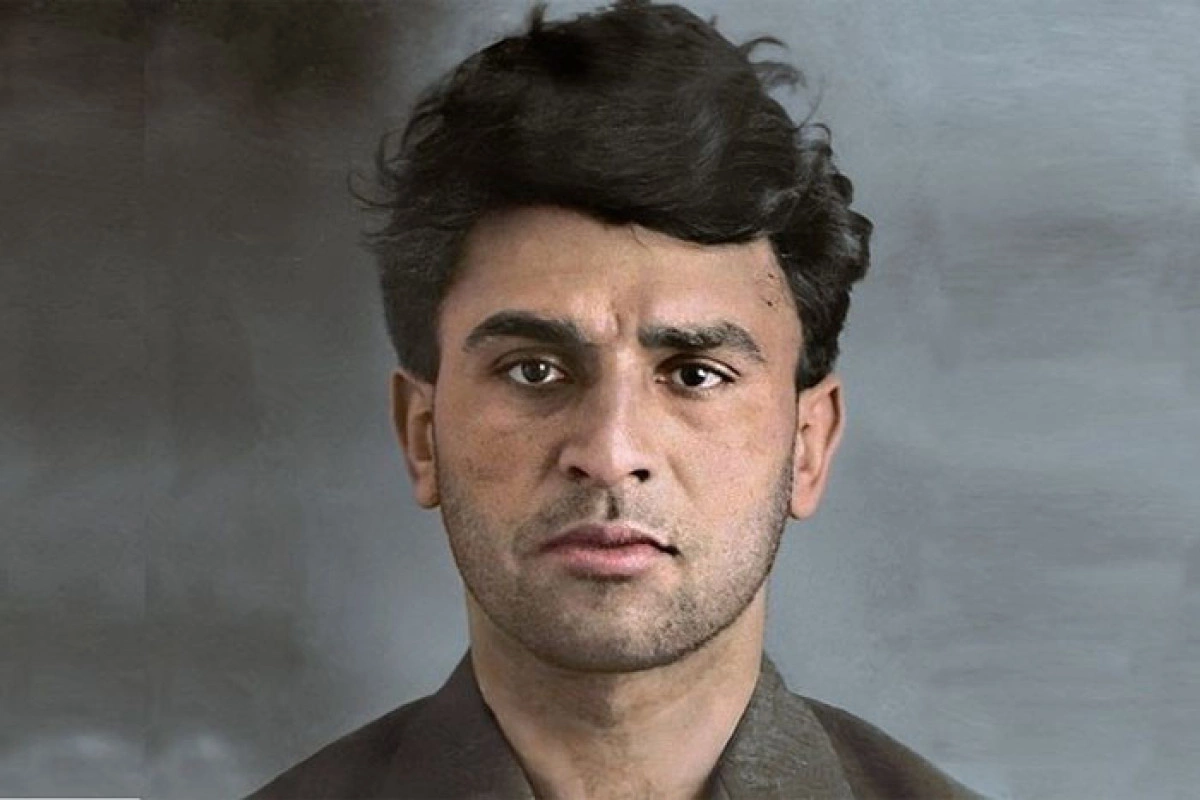
Today marks the 118th anniversary of the birth of the renowned Azerbaijani poet Mikail Mushfig.
As BAKU.WS reminds, he was born on June 5, 1908, in Baku.
His father Mirza Gadir, who was a teacher at the Baku school "Saadat" ("Happiness"), also wrote poetry and was even the author of the libretto for composer Abdul-Muslim Magomayev's opera "Shah Ismayil." He passed away in 1914. Mushfig had an older sister, Balaja Khanum (born in 1906).
At an early age, Mushfig lost his parents, and his relatives took the orphaned child under their care.
The bitterness of those years, the absence of a mother, the poet conveyed in the poem "Mother" (1927):
"Mother's voice sounds like a flute,
Even verse is but an echo of that song,
That she used to sing, gently rocking
My cradle in the cramped little bedroom.
O Mushfig, you no longer remember her.
You didn't have time to gaze upon your mother,
Your childhood passed without a mother,
An orphaned, poor childhood..."
In 1915, he enrolled in a Russian-Tatar school, and in 1920 — in the Baku teachers' seminary. From 1927 to 1931, Mushfig studied at Azerbaijan State University.
During his school years, he developed a deep interest in literature, especially poetry, and starting from 1926, Mushfig began to write.
In the period from 1930 to 1935, he published 10 collections of poems. The year 1932 is considered the most creatively productive for Mikail Mushfig — his books "Günün Səsləri" ("Voices of the Day"), "Cotton," "The First of May," "Among the Drilling Derricks" were published, and in 1935 — "The Rock," "The Peasant and the Snake."
His lyrical poems are exquisite: "Your Eyes," "So That Garden Would Be Again," "Winds," "Night," "Telegraph Wires," "Tar," and others. Poems occupy a significant place in Mushfig's creative legacy ("Among the Derricks," "Gaya," "My Friend," "Uncle Jabi," "The Shepherd").
Mushfig's work "Sing, Tar!" (Oxu, tar!) is a gem of Azerbaijan's poetic treasury:
"Sing to me, tar, sing, o glorious, dear one,
Pour your wondrous sound into my ears!
With your music I shall drench as if with water
My soul ablaze with fire, my dear one!
O my heart, tar, play on,
You are my life, my eternal paradise!"
In 1931, Mushfig married Dilbar Akhundzade.
The poet welcomed the transition in Azerbaijan in the 1920s from the Arabic alphabet to the Latin one. He hoped that this would help defeat illiteracy in Azerbaijan and other countries of the East. Mushfig was also an active advocate for traditional Azerbaijani musical instruments, which were banned by the regime at the time.
Unfortunately, like many bright minds of Azerbaijan, the young poet was also unable to escape the Soviet repressions of the late 1930s. He was accused of "smuggling counter-revolutionary Turkic nationalism into his works."
At 11:20 on January 5, 1938, the "trial" of Mikail Mushfig began, lasting only 20 minutes. As a result, the Azerbaijani poet was sentenced to death by firing squad. The sentence was carried out that same day.

Similar News
The 5th National "Yaylag" Festival has started in the Goygol district
The 5th National "Yaylag" Festival has begun in the Goygol district. As reported by BAKU.WS with reference to Report, the event kicks off at the "Khan Yurdu" et...