


 Azərbaycanca
  По-русски
  English
 About us
Scientists' new finding has changed the understanding of the history of gambling
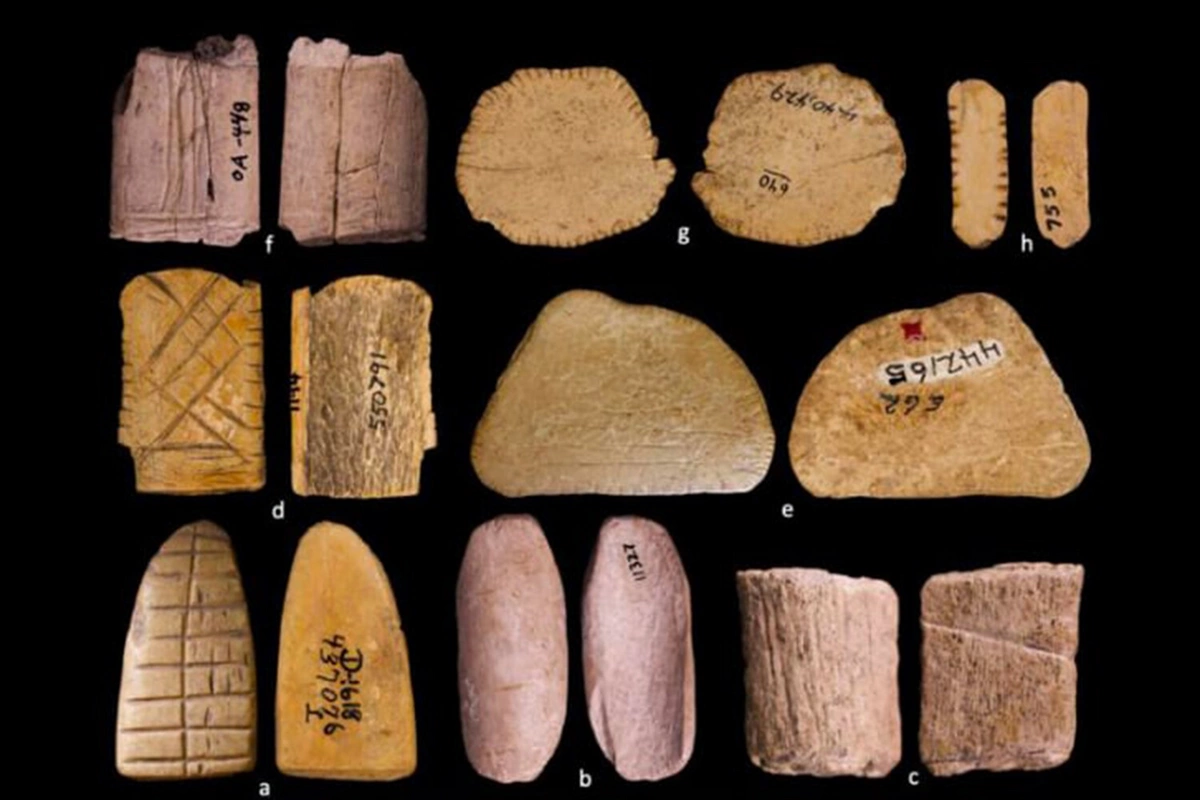
American archaeologists have revised the history of gambling: it turns out that gaming "dice" originated not in ancient Mesopotamia but in North America — around 12,000 years ago. This is thousands of years earlier than previously believed. This was reported by NBC News.
The study's author, Robert Madden, a graduate student at Colorado State University, analyzed dozens of old archaeological reports and compiled the findings.
"We can see that already 12,000 years ago, people in North America were working with fairly complex abstract concepts — chance and probability. In the Old World, this came significantly later," he noted.
The objects in question are small items made of bone or wood, typically two-sided, that were used as gaming dice. They were specially crafted so that the outcome would be random, with sides marked with different symbols or colors.
Previously, it was believed that such objects appeared around 2,000 years ago. However, Madden demonstrated that similar artifacts already existed during the Folsom culture era — at the end of the last Ice Age (approximately 12,000–13,000 years ago) in the territory of present-day Nebraska, Wyoming, and Colorado.
Moreover, the tradition turned out to be unbroken: dice were used in the region for millennia — right up to contact with Europeans and beyond.
As researchers note, gambling among the Indigenous peoples of North America held more than just entertainment value. According to Robert Weiner of Dartmouth University, "in these cultures, gambling often served a social and even ritual function, bringing people together."
In oral traditions, such games are frequently linked to mythology — for example, in stories of the Zuni people, gods also engage in gambling.
Scientists suggest that games may have served as a tool for social communication — especially among mobile groups that would meet and exchange information. At the same time, many questions remain open. For instance, it is unclear whether ancient players understood the mathematical principles of probability or acted intuitively.
Nevertheless, the study points to an important conclusion: the Indigenous peoples of North America may have been among the first in human history to engage with abstract ideas of chance and probability — concepts that underpin modern science and economics.
"This is an intellectual achievement that has long been underestimated," Madden emphasized.

Similar News

An unexpected way to treat depression has been discovered
Researchers from the University of Bristol have found that suppressing inflammation may alleviate symptoms of treatment-resistant depression. In a small clinica...