

 Azərbaycanca
  По-русски
  English
 About us
An unexpected find was discovered in asteroid samples
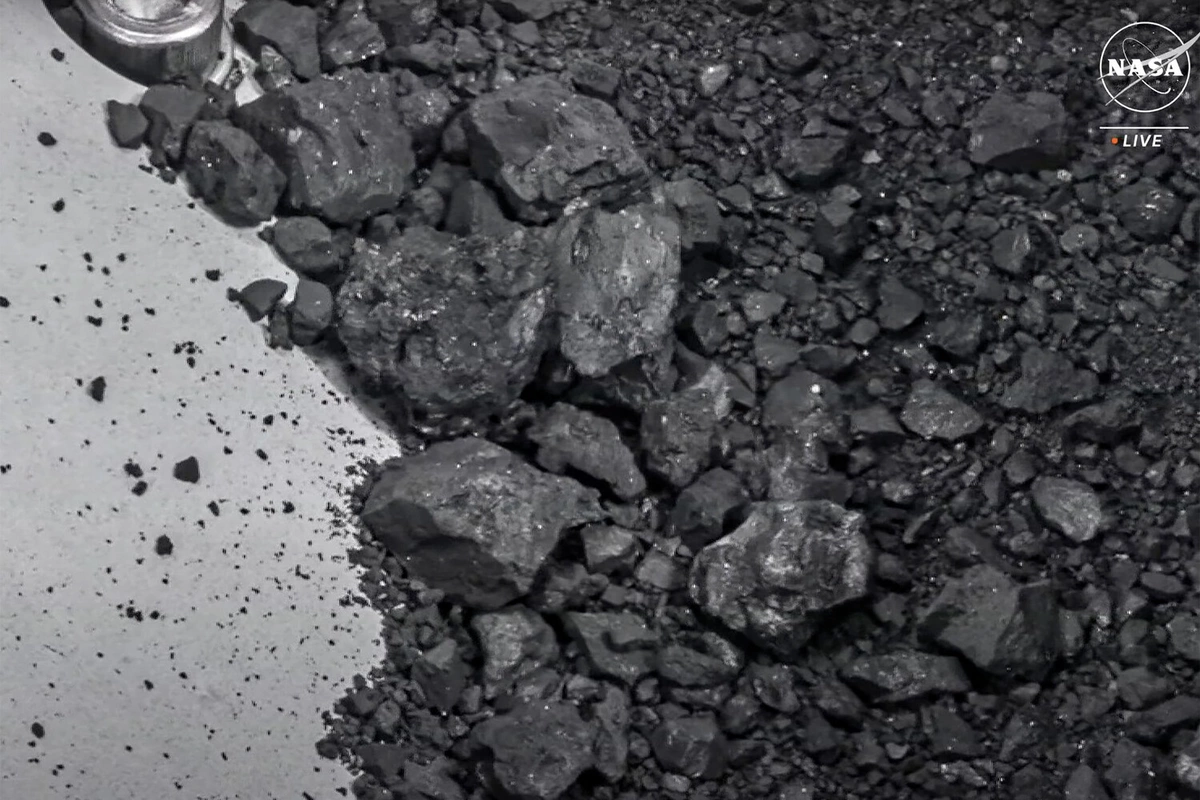
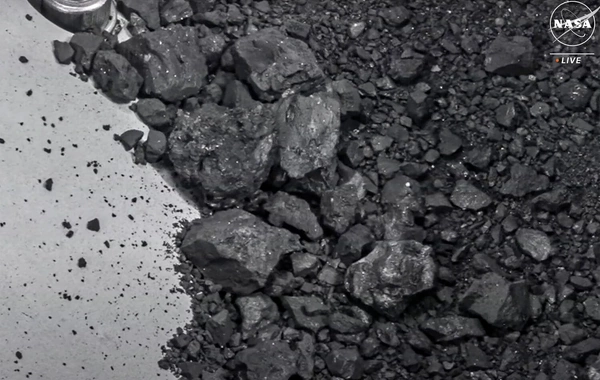
Scientists have discovered that the material of asteroid Bennu is far more complex than previously thought: at the nanoscale, it is divided into several chemically distinct regions. The study has been published in the journal Proceedings of the National Academy of Sciences (PNAS).
The research focuses on samples delivered by the OSIRIS-REx mission. Asteroid Bennu itself belongs to the carbonaceous type — it is rich in organic compounds considered to be the "building blocks" of life.
The primary value of these samples lies in the fact that they were not exposed to Earth's environment. The capsule containing Bennu's material returned to Earth in 2023, preserving it in a virtually pristine state.
A team led by Mehmet Yesiltas examined the sample using infrared and Raman spectroscopy. These methods make it possible to determine the composition of material at the level of tens of nanometers — thousands of times thinner than a human hair.
The analysis revealed that the asteroid's material is not homogeneous. On the contrary, three types of regions with different chemical compositions repeat throughout it. Some zones are dominated by aliphatic organic compounds — simple chains of carbon and hydrogen. Others contain carbonate minerals, which typically form in the presence of water. The third type of region contains nitrogen-bearing organics — a key element for amino acids and other biomolecules.
This distribution indicates that water affected the asteroid unevenly. Conditions varied across different parts of it, resulting in a distinctive "chemical mosaic."
At the same time, the scientists found that even fragile organic molecules were preserved despite contact with water. This is an important result: it demonstrates that key components necessary for life could survive complex chemical processes in space.
The data obtained help to better understand how water, minerals, and organic substances interacted in the early Solar System. It is precisely such processes, according to scientists, that may have played a role in the emergence of the "building blocks of life" on Earth.
Similar News

A simple way to lower blood pressure and improve heart health has been named
Only a small fraction of people with high blood pressure use salt substitutes, even though it is a simple and accessible way to reduce sodium intake and improve...