

 Azərbaycanca
  По-русски
  English
 About us
A German physicist has suggested that consciousness does not originate in the brain
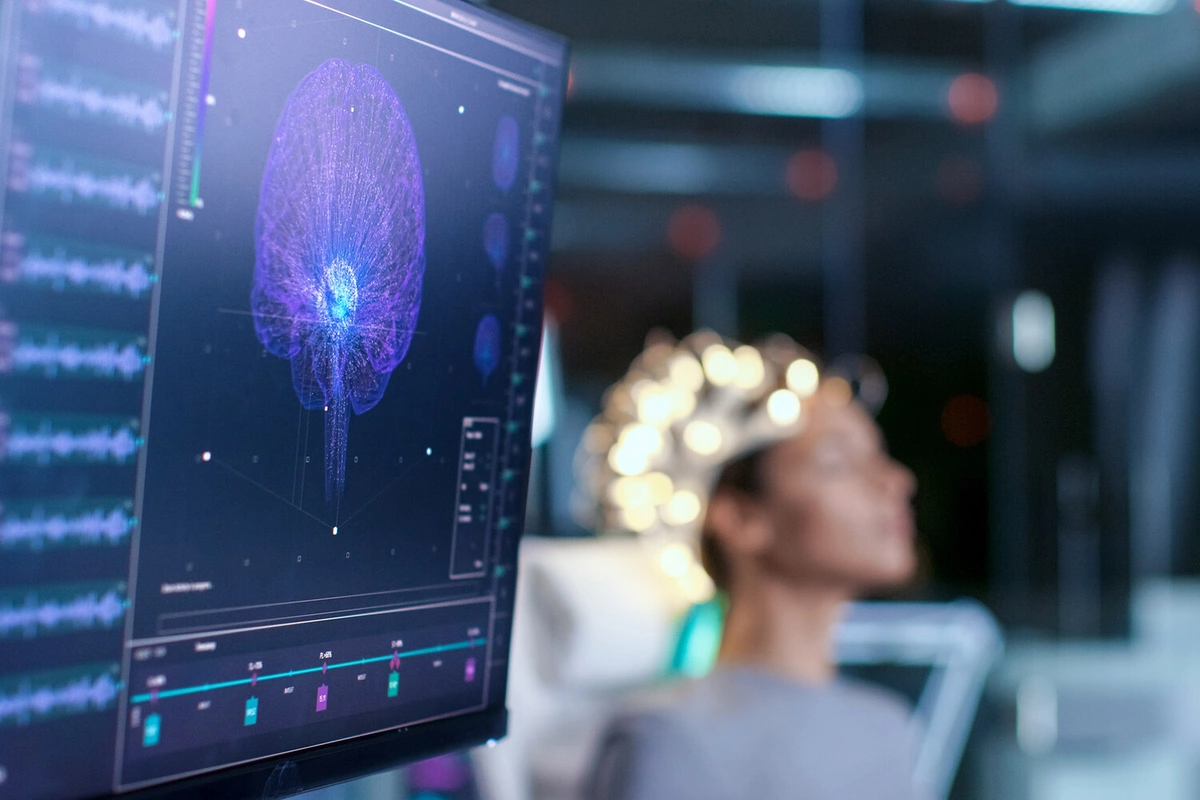
A German physicist has proposed an unusual hypothesis about the origin of human consciousness: in his view, it may arise not in the brain itself, but through interaction with a fundamental energy field of the Universe. The theory is described in the journal Frontiers in Human Neuroscience.
The author of the work is physicist Joachim Keppler from the German Institute for Economic Research (DIWISS). He proposes viewing the brain not as a source of consciousness, but as a system that gains access to it through quantum processes.
Keppler links the emergence of consciousness with the so-called zero-point field - a quantum background field that, according to physical theories, fills all of space even in a vacuum state. In his model, certain molecules in the cerebral cortex associated with the neurotransmitter glutamate are capable of entering into resonance with this field.
It is suggested that such resonance may trigger a chain of processes that affect neuronal activity and the synchronization of their function. It is precisely this coordinated operation of neural networks, according to the author, that leads to the emergence of subjective experience - what a person perceives as consciousness.
"Consciousness resides in the field. We merely tap into it," Keppler states.
However, the scientific community treats this hypothesis with caution. As experts note, there is no direct experimental evidence for the existence of such a mechanism so far. Overall, the problem of the origin of consciousness remains one of the most challenging in modern science, and a generally accepted theory still does not exist.
Nevertheless, the idea of an "external" source of consciousness is not entirely new. Similar concepts have appeared in philosophy as well. For example, Vladimir Vernadsky in the early 20th century put forward the concept of the noosphere - a special sphere of reason encompassing the Earth, from which humanity can draw knowledge and ideas.
Similar News

The acceptable amount of time preschoolers can spend on a phone has been named
The UK government has recommended limiting gadget use for children under five to one hour per day, and for children under two - virtually eliminating screen tim...