

 Azərbaycanca
  По-русски
  English
 About us
# The Global Race for Technology: Azerbaijan Accepts the Challenge
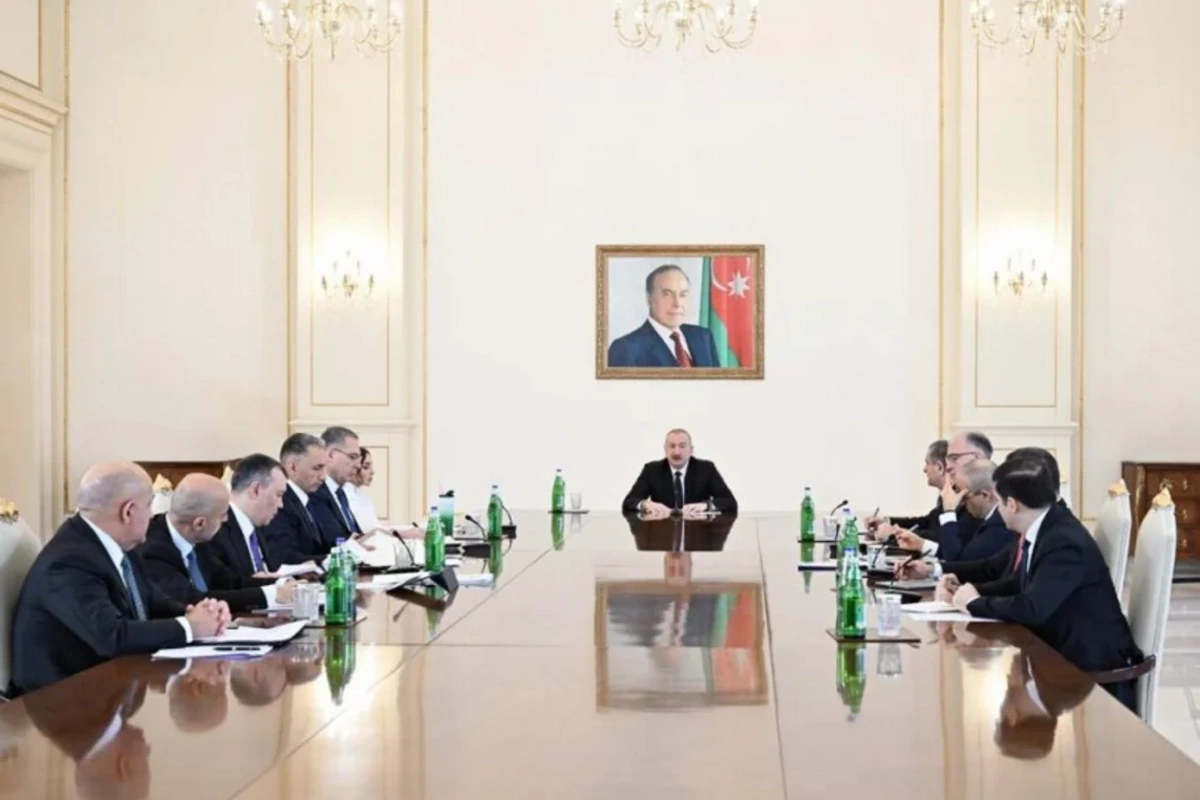
The rapid development of technology leaves states with no choice: to maintain competitiveness and sovereignty, they must adapt to the new digital reality. A clear confirmation of this was the meeting held on February 11 under the chairmanship of Ilham Aliyev, dedicated to the unified action plan "New Digital Architecture of Azerbaijan," writes the newspaper "Kaspiy."
The very level of discussion shows: digital transformation for Baku is not a narrow-profile reform, but part of a long-term strategy for the country's development and strengthening of its economic and technological independence. This work is being carried out against the backdrop of serious changes in the world. Today, states compete not only for markets and resources, but also for technologies and digital platforms. The USA and China are engaged in fierce competition in the field of high technologies, restrictions on microchip supplies are being introduced, and alternative technological standards are being formed. Control over artificial intelligence, cloud services, and digital infrastructure is becoming a matter of strategic influence. Under such conditions, digitalization is no longer simply economic modernization, but a matter of national resilience.
Regional players are also actively engaged. Israel is betting on cybersecurity and innovation, the UAE is developing artificial intelligence and smart cities, turning digital solutions into the foundation of a post-oil economy. In Europe, one of the most successful examples remains Estonia, which has built a full-fledged digital state. Finland and the Netherlands are actively investing in data centers and technology clusters. In the post-Soviet space, Kazakhstan is promoting the "Digital Kazakhstan" program, modernizing public administration, while Armenia emphasizes the IT sector and startups. In essence, there is regional competition for investments, technologies, and human capital.
Creating a domestic digital architecture
It is in this context that Azerbaijan is intensifying work on its own digital architecture. For the country, this is simultaneously a way to diversify the economy, increase the efficiency of public administration, and consolidate its role as an important hub between Europe and Asia. This involves the development of telecommunications networks, construction of data centers, implementation of cloud solutions, and strengthening cybersecurity. The goal is to move from fragmented digital projects to a unified ecosystem where government databases are integrated, services are provided quickly and conveniently, and information is protected.
The global race for technology: Azerbaijan accepts the challenge
During the meeting, special attention was paid to creating a comprehensive infrastructure - expanding high-speed communication channels, modernizing networks, and increasing capacity for data storage and processing. The importance of cybersecurity was particularly emphasized, as digital infrastructure is directly linked to national security.
In his speech, President Ilham Aliyev noted the strategic nature of these steps. He emphasized the need for clear coordination of all government structures, adherence to deadlines, and focus on concrete results. Digitalization was presented as a tool for increasing transparency, management efficiency, and strengthening the country's technological sovereignty.
Competitive advantages
At the same time, Azerbaijan has a number of competitive advantages. The country is located at the crossroads of Europe and Asia and already plays a key role in energy and transport corridors. Now a digital direction is being added to these: data transmission, development of telecommunications infrastructure, and data centers. Azerbaijan actively cooperates with various technology centers - the USA, EU, Israel, Turkey, Persian Gulf countries, and China. Such flexibility allows the use of best international practices without rigid dependence on a single partner. The availability of financial resources and experience in implementing large projects also creates favorable conditions for rapid implementation of digital solutions. An additional factor is the development of green energy, which is important for hosting energy-intensive digital facilities.
The speech by the Minister of Digital Development and Transport Rashad Nabiyev was quite practical. He outlined specific areas of work: development of telecommunications infrastructure, integration of digital platforms, expansion of cloud services, and formation of a unified data management system. Special attention is paid to attracting private investment and cooperation with international technology companies. This shows that digital transformation is viewed not only as a government reform but also as the foundation of a new economic model.
The global race for technology: Azerbaijan accepts the challenge
Slow and steady wins the race
Among critical remarks, there is sometimes the thesis that Azerbaijan started systematic digital transformation later than a number of countries. However, this argument is not unambiguous. A later start may mean not only a temporary lag but also an opportunity to take into account international experience, avoid the mistakes of pioneers, and implement more modern technological solutions without the need to modernize outdated systems.
Moreover, a digital strategy is not a one-time action but a process in which the decisive role is played not so much by the moment of beginning as by the speed, quality of implementation, and institutional coordination. In a rapidly changing technological environment, the key becomes not "who started first" but "who adapts more effectively."
Overall, it can be said that Azerbaijan is entering a stage of systematic digital modernization. In a rapidly changing world, technologies are becoming one of the main factors of resilience and competitiveness. The formation of a new digital architecture is a step toward strengthening economic independence, increasing management efficiency, and enhancing the country's role in the regional and global system.
Similar News
Masoud Pezeshkian thanked Ilham Aliyev
Iranian President Masoud Pezeshkian thanked President of Azerbaijan Ilham Aliyev. The president of the Islamic Republic wrote about this in his account on the s...