


 Azərbaycanca
  По-русски
  English
 About us
Residents of Azerbaijan can observe the Geminid meteor shower for more than 10 days
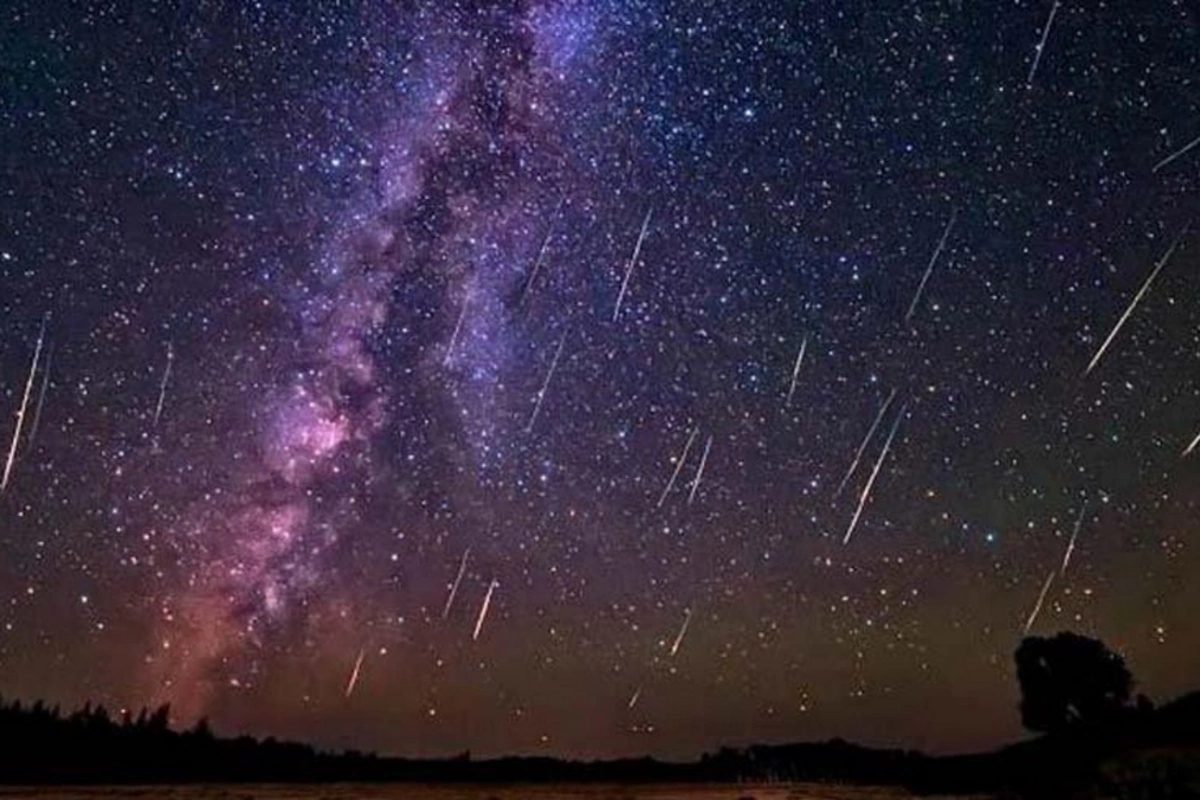
Today, December 4, one of the brightest meteor showers of winter - the Geminids - has begun. The period of activity of the shower will last until December 17, reaching its peak on the 14th.
As reported by BAKU.WS, this was announced by the Department of Astrophysics at BSU.
The meteor shower is named Geminids because its radiant (source) is located in the constellation Gemini (in Latin: Gemini).
In Baku, the shower can be observed from 18:18 to 07:22. The most favorable time for observation is the night of December 14 around 02:30. In Baku, the radiant point during these hours will be at an altitude of 82° above the horizon, and therefore, with favorable weather conditions, up to 119 meteors per hour can be observed.
Since the meteor shower coincides with the new moon, the moonlight will not significantly interfere with observing the phenomenon. Meteors will enter Earth's atmosphere at a speed of approximately 35 km/sec. This creates conditions for a longer burning process and observation of a large number of bolides (very bright meteors) compared to other meteor showers.
The origin of the Geminids meteor shower, unlike other similar phenomena, is associated not with a comet, but with the asteroid 3200 Phaethon. The celestial body was discovered in 1983. Asteroid 3200 Phaethon can approach the Sun at a distance of up to 20 million km, and for this reason, its surface heats up to ~700°C. As a result of heating, the surface material disintegrates and dust forms. When Earth annually passes through this dust stream, the Geminids meteor shower occurs.
Over the past 50 years, the intensity of the meteor shower has been increasing. If in the 1900s only 20 meteors per hour were observed, now 120 meteors will be observed. The reason for this is the increase in dust density in Phaethon's orbit.
Similar News

In February, the maximum temperature reached 27 degrees
In February 2026, the average air temperature in Baku and on the Absheron Peninsula was +8 degrees, which is 4 degrees above the climatic norm. This was reporte...