

 Azərbaycanca
  По-русски
  English
 About us
Scientists found a scenario in which Earth will survive the death of the Sun
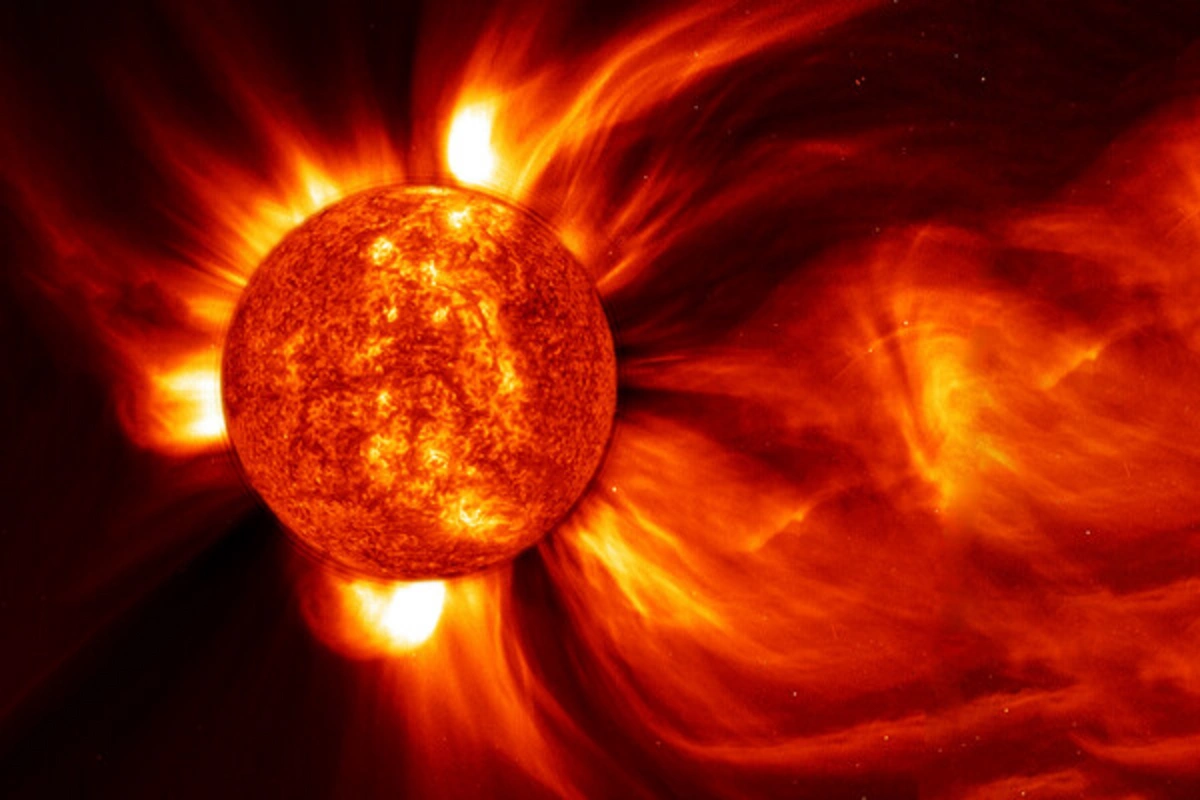
Astronomers have discovered an exoplanet that survived the death of its star and continues to orbit a white dwarf. The study allows scientists to better envision what the future of the Solar System might look like billions of years from now.
As reported by BAKU.WS with reference to Nature, specialists from the University of St Andrews used the JWST space telescope to conduct the first detailed study of the atmosphere of planet WD 1856 b, which orbits a white dwarf — the remnant of a star similar to the Sun.
Observations showed that the temperature of the exoplanet's atmosphere is significantly higher than expected: instead of the predicted −113 °C, it reaches approximately 126 °C. In addition, the mass of the celestial body turned out to be roughly seven times greater than that of Jupiter, although in size it only slightly exceeds the gas giant.
According to the British researchers, after the death of its star, the planet likely changed its orbit and moved closer to the white dwarf, beginning to heat up again. One of the possible reasons for such a displacement, the scientists say, is the gravitational influence of a nearby binary star system.
The authors of the study note that the obtained data confirm that a star's transformation into a white dwarf does not always lead to the destruction of all its planets. Some of them are capable of surviving this stage of evolution and continuing to exist in a new orbit.
In the opinion of international experts, the discovery also helps assess the possible future of the Solar System. In several billion years, the Sun will turn into a white dwarf after the red giant stage. It is expected that Mercury and Venus will be engulfed, while the further fate of Earth remains a subject of scientific debate.

Similar News
iPhone users urged to urgently update iOS
Apple has released the iOS 26.5.2 update, which primarily focuses on improving system security. Owners of compatible iPhones are advised not to delay installing...