

 Azərbaycanca
  По-русски
  English
 About us
The mystery that puzzled physicists for 60 years turned out to be solved in an unexpected way
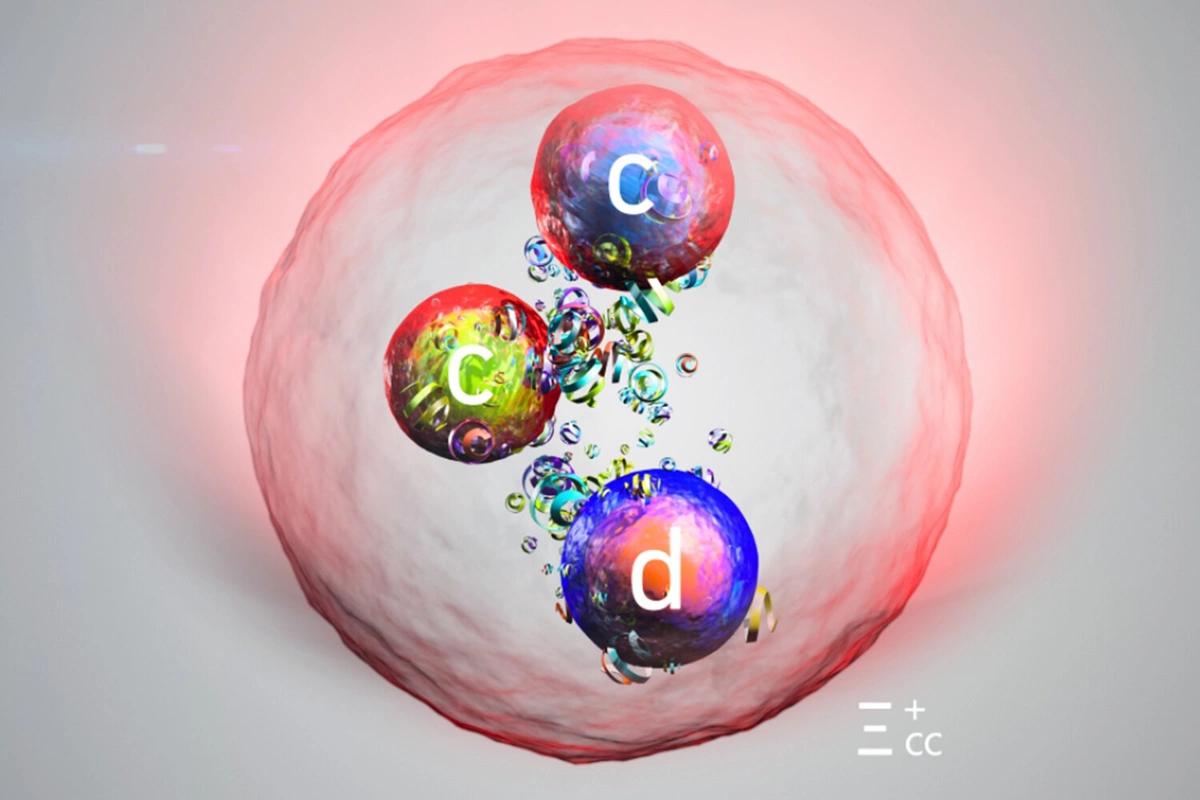
An international team of scientists led by a physicist from Pennsylvania State University has concluded that the famous discrepancy in muon behavior, which for decades was considered a possible hint of a new force of nature, is likely explained by inaccuracies in older calculations. The work has been published in the journal Nature.
The muon is an elementary particle similar to the electron but approximately 200 times heavier. For more than 60 years, physicists have observed a peculiarity: measurements of its magnetic properties did not match the predictions of the Standard Model — the main theory describing elementary particles and fundamental interactions. This gave rise to hopes for the existence of unknown particles or even a "fifth force" of nature beyond gravity, electromagnetism, and the strong and weak interactions.
The authors of the new study recalculated the so-called anomalous magnetic moment of the muon (g−2) using a different approach and obtained a result that practically coincides with experimental data. The discrepancy was reduced to less than half a standard deviation. According to the researchers, this confirms the Standard Model to an accuracy of 11 decimal places.
"We thought we would get solid confirmation of a new force. Instead, it turned out there is none. But we did get a very precise confirmation not only of the Standard Model but also of quantum field theory," said the study's lead researcher, Zoltán Fodor.
The main difficulty was related to the strong interaction — the force that holds quarks together inside protons and neutrons. Unlike other interactions, it becomes stronger as the distance between particles increases, making calculations extremely difficult.
To solve the problem, the scientists used the method of lattice quantum chromodynamics. Space and time were divided into an ultra-fine grid, and the equations of the Standard Model were solved numerically on supercomputers. Additionally, the researchers combined computations with already available experimental data, which made it possible to improve accuracy.
The authors emphasize that the work does not entirely rule out the existence of new physics; however, one of the strongest arguments in favor of a "fifth force" now looks far less convincing.

Similar News

A dangerous consequence of vitamin D deficiency has been identified for women
Women with vitamin D deficiency may have a harder recovery after breast cancer surgery: such patients more frequently experience moderate postoperative pain and...