

 Azərbaycanca
  По-русски
  English
 About us
"Blood Falls" in Antarctica has revealed the secret of ancient life
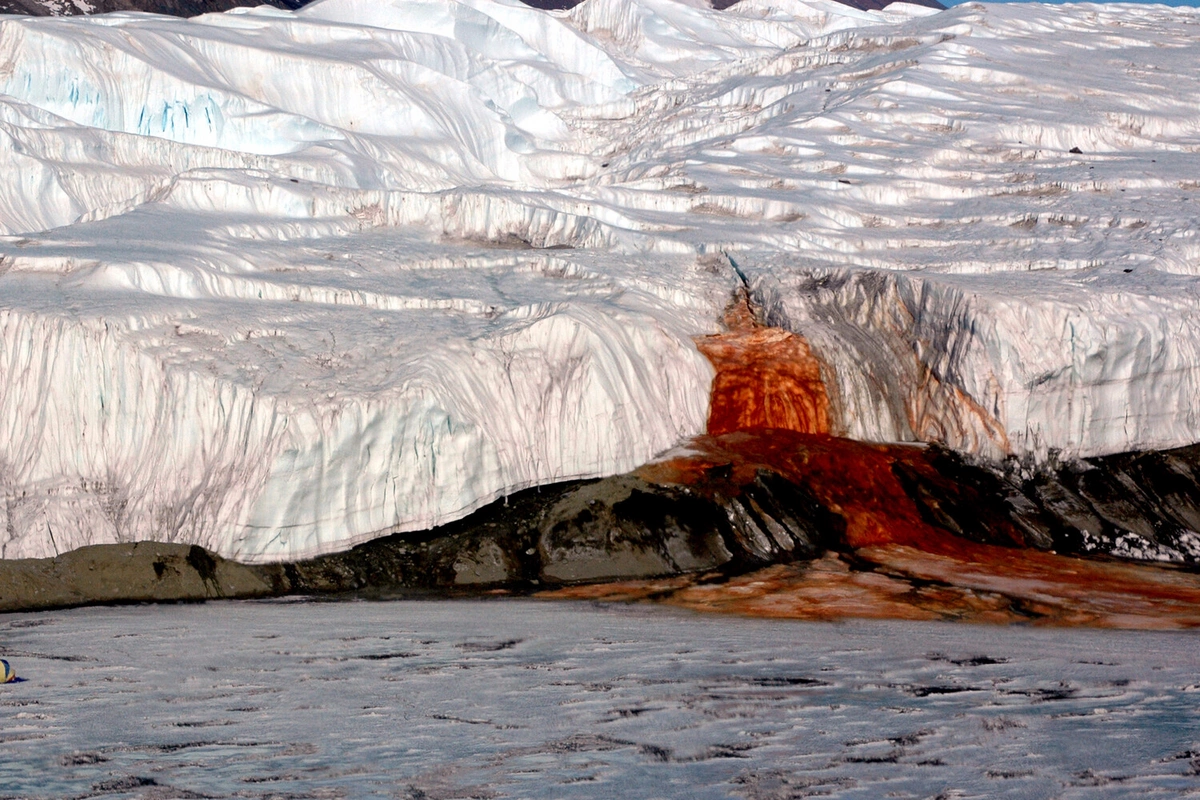
The mysterious "Blood Falls" at the Taylor Glacier in Antarctica were simultaneously captured by three types of sensors - and scientists have for the first time described the mechanics of the discharge of a one-and-a-half-million-year-old iron-rich brine, with the results published in Antarctic Science.
Peter Doran from Louisiana State University and colleagues analyzed data collected in September 2018, when GPS receivers, video cameras, and temperature sensors happened to be operating simultaneously at the moment of one of the periodic discharges of blood-red liquid. It turned out that at the moment of the discharge, the glacier surface dropped by approximately 15 mm, and its movement speed decreased by 10% - this indicates that the brine pressure inside the glacier significantly affects the dynamics of the entire ice body.
"Blood Falls" got its name due to its vivid red color, which is imparted to the water by dissolved ferric iron that oxidizes upon contact with air. The source of the brine is a subglacial lake that was isolated from the surface approximately 1.5 million years ago. Throughout this entire time, bacteria have existed within it, deprived of access to sunlight and oxygen: they obtain energy through the oxidation of iron and sulfur compounds.
The periodic discharges, according to the authors, are determined by cycles of pressure buildup and release of the brine. When the pressure reaches a threshold value, the liquid breaks through cracks in the glacier to the surface - and the glacier literally subsides and slows down in the process.
The discovery is important not only for understanding the Antarctic ecosystem but also for assessing the possibility of analogous forms of life on other planets with subglacial oceans - for example, on the moons of Jupiter.

Similar News

Scientists have found that coffee may reduce the risk of cirrhosis and liver cancer
Scientists from Cedars-Sinai Medical Center found that regular coffee consumption is associated with a lower risk of liver cirrhosis, liver cancer, and death fr...