

 Azərbaycanca
  По-русски
  English
 About us
Vice President: World Bank ready to support private capital participation in infrastructure projects of Azerbaijan
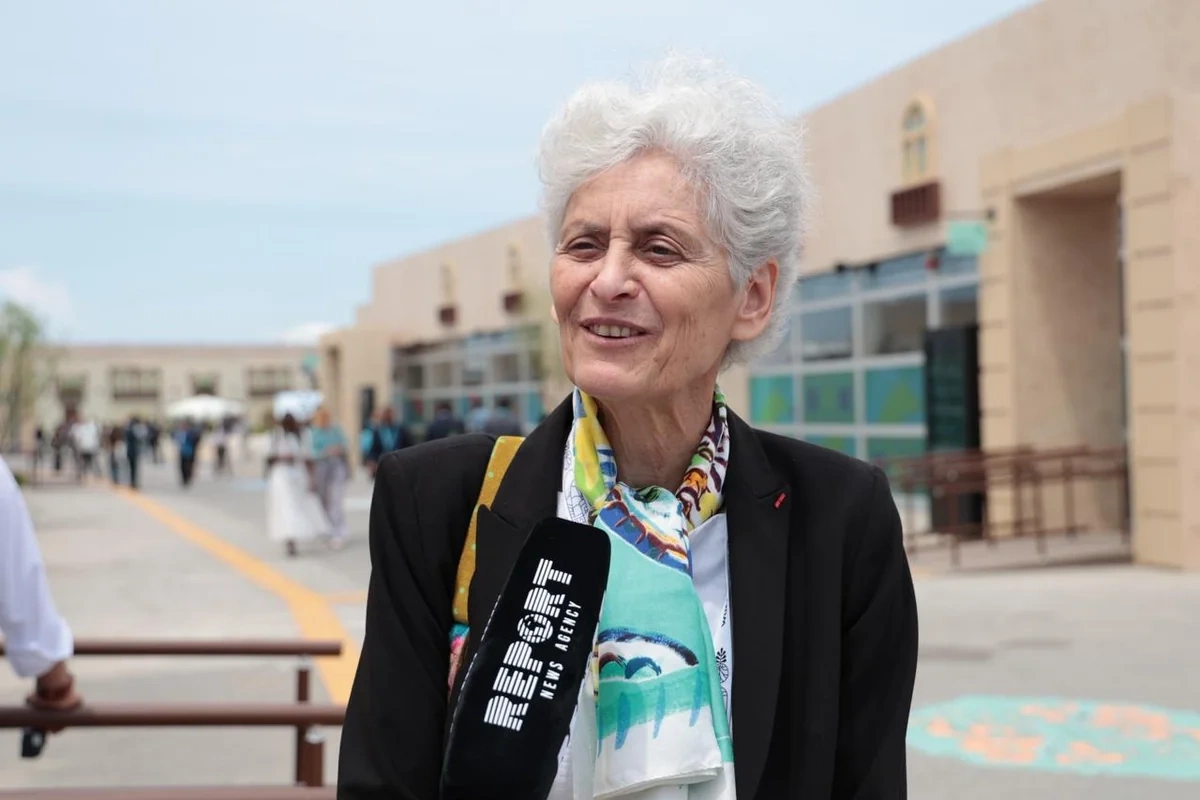
Against the backdrop of the global transformation of logistics routes, Azerbaijan is strengthening its position as a central element of the Middle Corridor, connecting Central Asian economies with European markets. The efficiency of this transport route is determined not only by the modernization of port and railway infrastructure, but also by the digitalization of border procedures, the organization of seamless logistics, and the formation of a sustainable energy foundation. The World Bank Group (WB) assumes the role of a strategic partner in this large-scale process, assisting the region in developing common standards and attracting private capital to key infrastructure.
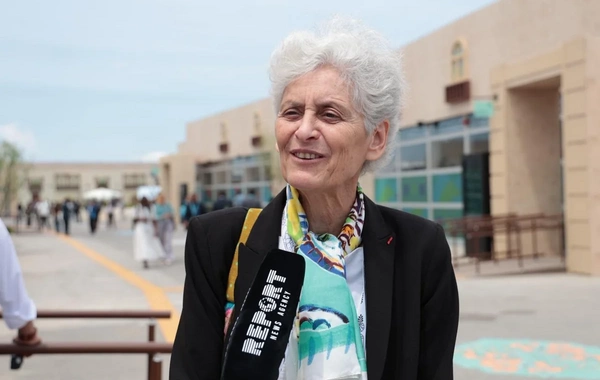
Vice President for Infrastructure of the World Bank Group Valérie Levkov spoke about the comprehensive development of the Middle Corridor, the upgrading of power grid infrastructure to incorporate green generation, the future of the megaproject of an underwater energy cable across the Black Sea, and public-private partnership instruments in an exclusive interview with Report on the sidelines of the 13th session of the World Urban Forum (WUF13).
We present this interview to our readers:
- The World Bank considers the potential of the Middle Corridor as strategically significant for the entire region. Which specific infrastructure nodes in Azerbaijan's transport system does the WB identify as top priorities for modernization - port facilities, railway lines, or logistics centers?
- My answer will be perfectly clear. Everything needs to be developed. And we deal with infrastructure comprehensively, including areas that sometimes imply strengthening the energy sector and developing the secondary road network. Therefore, we strive to approach the corridor's development holistically and coherently, encompassing, as you understand, both the economic dimension of transport routes and the simplification of trade procedures.
In other words, it is not exclusively about "hard" (physical) infrastructure, but also about the entire set of factors ensuring its more effective functioning.
- You have repeatedly emphasized that a regional approach and unified standards are fundamentally important for achieving the goals of the Middle Corridor. How does the WB facilitate coordination between Azerbaijan, Georgia, and Central Asian states to build seamless logistics?
- Yes, we are advocates of interregional dialogue. We bring leaders and decision-makers together at one negotiating table, striving to harmonize and unify processes. This is precisely what we are able to provide - to gather all participants to discuss key stages, as well as existing challenges, in order to develop joint solutions. We apply this practice across a number of major regional corridors, and the Middle Corridor holds one of the leading positions among them.
- Azerbaijan has set ambitious goals for itself in the field of renewable energy (solar and wind power plants). What role is the WB prepared to assume in upgrading the country's power grid infrastructure so that it can seamlessly absorb significant volumes of intermittent "green" generation?
- Yes, this is an extremely important issue. We are working with the Ministry of Energy, providing assistance in ensuring the resilience and strengthening of the power grid. I would note that this topic is currently on the agenda everywhere in the world, as the trend is becoming increasingly apparent whereby the grid is turning into the vulnerable link of the electric power system.
In this regard, we are currently holding negotiations with the Ministry of Energy on providing technical assistance, so as to subsequently engage the private sector in addressing this challenge.
- How do you assess the technical and financial viability of the deep-water cable project along the Black Sea floor for transporting "green energy" from Azerbaijan to EU countries? Is the World Bank ready to participate in financing such megaprojects?
- We are capable of co-financing projects of this scale. The initial step is invariably the preparation of a feasibility study by our advisory unit. And then, once the economic viability of such a large project is confirmed, we will be able to move to the next stage - direct financing.
And in this case as well, we strive to engage the private sector in order to reduce the financial burden on the state and sovereign debt, and possibly to utilize a public-private partnership format. Thus, assistance in mobilizing support from private capital also falls within the scope of the World Bank Group's capabilities.
Similar News
King Charles III of the United Kingdom congratulated President Ilham Aliyev
King of Great Britain and Northern Ireland Charles III sent a congratulatory letter to the President of the Republic of Azerbaijan Ilham Aliyev. As reported by...