

 Azərbaycanca
  По-русски
  English
 About us
The Middle Corridor at a crossroads: why the speed of border crossings matters more than new roads

Ongoing wars and conflicts are significantly strengthening the position of the Middle Corridor on the transport map of Eurasia. But its further development depends not only on building roads, expanding ports, and increasing the number of trains, writes the newspaper "Kaspi."
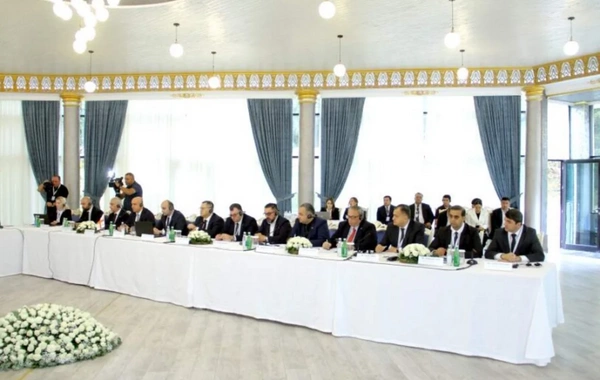
It is very important that cargo crosses borders without lengthy stops and that the sender knows the delivery times and transportation costs in advance. It was precisely these practical issues that were the focus of the fifth meeting of the Trilateral Committee on Customs Issues of Azerbaijan, Georgia, and Turkey, held on September 28 in the Goygol district.
Representatives of the three countries discussed the harmonization of transit procedures, the preliminary electronic exchange of cargo data, and the acceleration of border crossings. Special attention was given to the Baku - Tbilisi - Kars railway, which connects the transport systems of the South Caucasus and Turkey and opens access to the European market.
It is important to recall that on the same day, a meeting of the joint customs committee of Azerbaijan and Turkey was held. Here, the TIR and eTIR mechanisms, Turkey's experience with the NCTS system, and possibilities for increasing the capacity of checkpoints on the shared border were discussed. Following all these meetings, protocols were signed aimed at making transportation faster and more predictable.
Such work takes on special significance against the backdrop of rapidly growing cargo traffic. According to AZCON Holding data, in the first half of the year, Azerbaijan Railways transported 1,958,000 tons of transit cargo in the East - West direction, which is 12% more than the previous year. Although these figures relate only to railway transit through Azerbaijan, their dynamics show how much demand there is for this route. Along with transportation volumes, the requirements for coordinated work among all participants in the transport chain are also growing.
For any shipper, a route represents a single path. If goods quickly crossed one country but were held up for a long time at the next border, the advantage of the previous segment is lost. Queues, additional document checks, or delays during transloading increase costs and may disrupt obligations to the buyer. Therefore, investments in infrastructure yield greater results where they are accompanied by the simplification of procedures.
Solving the congestion problem
Events of recent months have clearly shown which issues require joint solutions. After Georgia introduced new requirements for transit declarations for cargo entering through eastern border crossings on July 1 of last year, the Turkish International Transporters Association U

Similar News
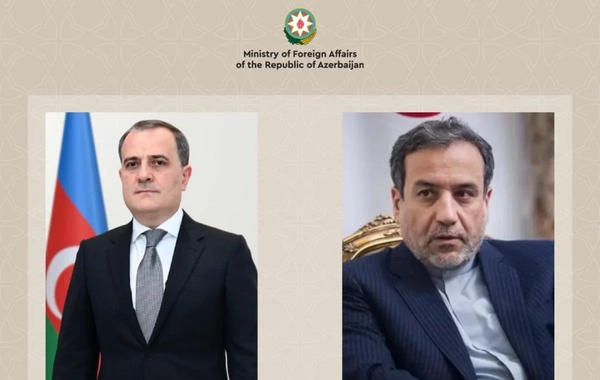
The Foreign Ministers of Azerbaijan and Iran discussed the prospects for the development of Azerbaijani-Iranian relations
The Minister of Foreign Affairs of Azerbaijan, Jeyhun Bayramov, held a telephone conversation with the head of the Iranian MFA, Seyyed Abbas Araghchi. The Minis...