

 Azərbaycanca
  По-русски
  English
 About us
Mikail Jabbarov outlined Azerbaijan's priorities in the non-oil and gas sector
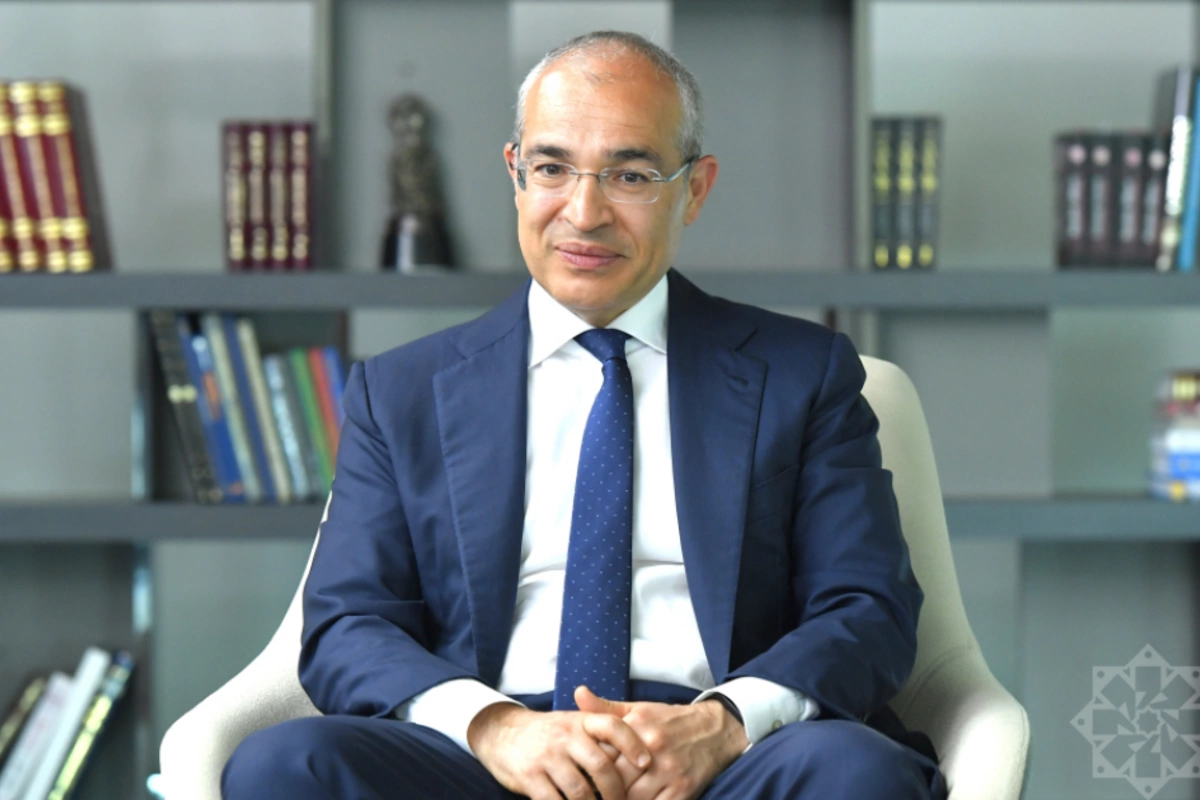
The draft state program on the development of the mining industry and metallurgy is currently in the final stage of preparation.
This was stated by Azerbaijan's Minister of Economy Mikayil Jabbarov in an interview with ITV and AZERTAC, commenting on priority areas in the non-oil sector.
"We see great potential in the development of the mining sector. This is due to both natural and historical reasons. The natural reason is that our country is rich in geological resources important for the mining industry. By the historical reason, I mean that before our Great Victory, access to a significant portion of Azerbaijan's geological resources was limited, as many deposits of gold, copper, silver, and possibly critical minerals were mainly located in the territories liberated from occupation. Today, despite the short period of time, we are already seeing the results of the development of this sector," the minister stated.
He noted that among the projects that will contribute to the growth of the country's export potential in the short and medium term, the construction of the Dashkasan iron ore production plant stands out. "This is a fairly large investment project - its cost is estimated at approximately 2 billion manats. Continuing on the topic of the mining industry, the project for the development of the Zod deposit in the liberated territories can also be noted. In addition, I would like to cite as an example the project aimed at doubling aluminum production compared to the current level, as well as a number of other projects that are currently in an active phase," the minister said.
Jabbarov also highlighted the chemical industry as another promising area of the non-oil sector, emphasizing the availability of a rich raw material base linked to the oil and gas sector, including the production of polyethylene, polymers, polypropylene, and other high value-added products.
According to him, agriculture remains a traditional sector for the country and at the same time an important area of non-oil exports with significant potential.
The minister noted that in accordance with the recently approved state program, state regulation, infrastructure investments, and private sector engagement are envisaged.
Regarding the services sector, Jabbarov highlighted transport and logistics: "Our country has become a transport hub. This in itself is a great achievement. Given the lack of access to the open sea, Azerbaijan's transformation into a transport hub both within the framework of the Middle Corridor and the North–South route is the result of a long-term policy."
He also noted the development of tourism, digitalization, ICT, and data centers as important areas that are viewed not as separate industries but as necessary conditions for sustainable economic development.
In addition, the minister emphasized the importance of energy (not just oil and gas), calling it a fundamental condition for all sectors of the economy.
Jabbarov recalled that in 2025, 71.5% of Azerbaijan's economy was accounted for by the non-oil sector, while the share of the oil and gas sector had decreased to less than 30%.
He also noted that over the past six years, the country's non-oil exports have nearly doubled, and in the current year, they grew by more than 17% over four months.
According to him, Azerbaijan is working on expanding the geography of foreign trade, including through preferential trade agreements with countries such as Turkey, the UAE, and Pakistan.
In conclusion, the minister emphasized that the state itself is a major investor in the country's economy.

Similar News

Azerbaijan's domestic public debt decreased by 7%
As of July 1, 2026, Azerbaijan's domestic public debt amounted to 15 billion 982 million manats. This was reported by Report with reference to the Ministry of F...