


 Azərbaycanca
  По-русски
  English
 About us
Scientists Surprised by Ancient Common Ancestor of All Life
The Last Universal Common Ancestor of all modern organisms - LUCA (Last Universal Common Ancestor) - lived approximately 4.2 billion years ago. However, as a new study has shown, some of its genes may be even older and originate from earlier, now completely extinct forms of life. The work was published in the journal Cell Genomics.
According to the scientists, studying so-called universal paralogs - ancient duplicated genes found in all branches of life - allows us to look deeper than LUCA and get closer to the earliest stages of evolution.
Universal paralogs are pairs of related genes that arose through ancient duplication even before life split into bacteria, archaea, and eukaryotes. If LUCA is imagined as the "trunk" of the tree of life, then the organisms in which these duplicates first appeared can be considered the "roots." These genes provide a rare opportunity to test hypotheses about the deepest stages of biological history.
Fossil evidence from that era is virtually absent, so the genomes of modern organisms remain the main source of information. However, many ancient genes may have disappeared over time due to mutations, horizontal transfer, or loss of function. This means that only a small portion of the original genetic heritage has reached us.
"The history of these universal paralogs is the only information we will ever have about the earliest cellular lineages," the researchers emphasized.
The scientists paid particular attention to genes associated with the translation system - the mechanism of protein synthesis according to the genetic code. This system is probably one of the most ancient molecular mechanisms that has survived to the present day.
Recent work has shown that the precursors of aminoacyl-tRNA synthetase enzymes existed even before LUCA. These enzymes are responsible for attaching the correct amino acid to the corresponding transfer RNA - a key step in protein formation.
"Words are not enough to express how important these enzymes are for life," the authors noted. Their presence before LUCA means that early forms of life could already synthesize proteins according to the genetic code, albeit in a more primitive form.
Similar News
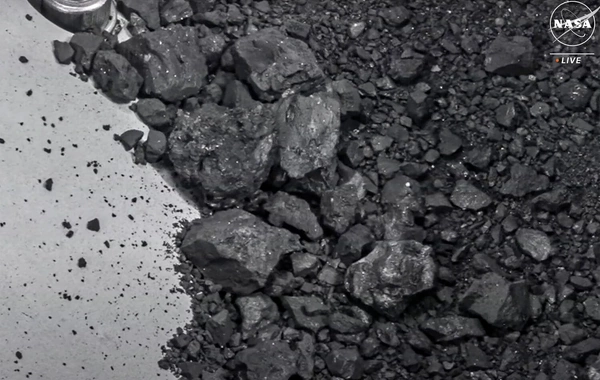
An unexpected find was discovered in asteroid samples
Scientists have discovered that the material of asteroid Bennu is far more complex than previously thought: at the nanoscale, it is divided into several chemica...