

 Azərbaycanca
  По-русски
  English
 About us
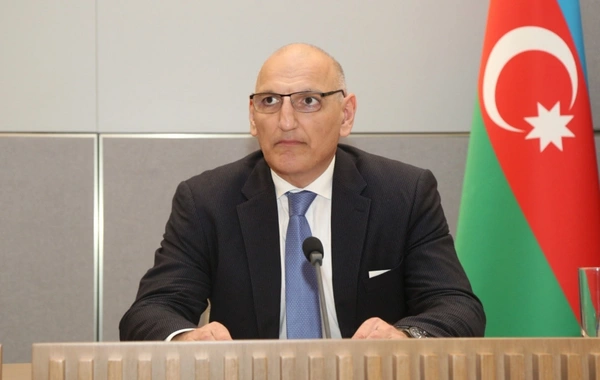
Elchin Amirbeyov gave an interview to Euro magazine
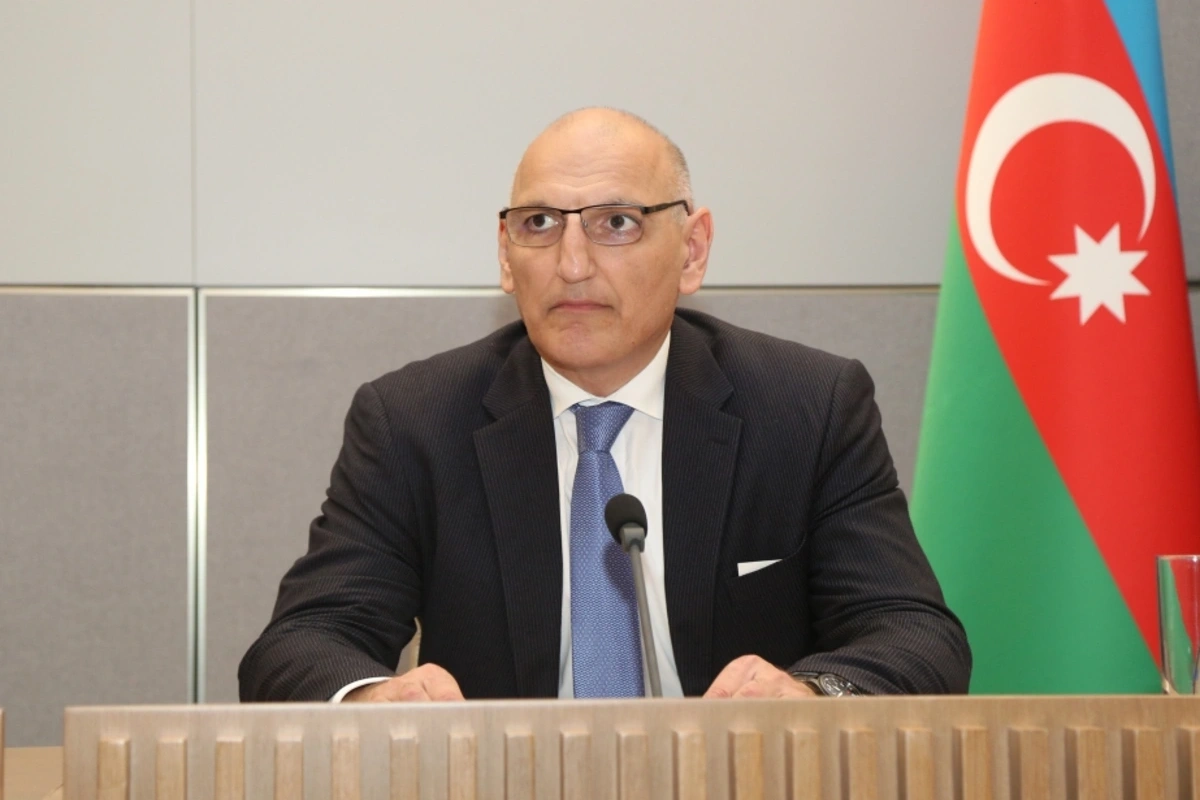
Czechia and Azerbaijan are interested in expanding energy cooperation, including gas supplies and renewable energy resources.
As Report informs, this was stated by Special Representative of the President of Azerbaijan for special assignments Elchin Amirbayov in an interview with Euro magazine (Financial Times) during a business visit to Czechia.
During the interview, Amirbayov also spoke about the growing importance of the Middle Corridor and Azerbaijan's transformation into an important transport hub between Europe and Asia, the normalization process between Baku and Yerevan, as well as regional security issues.
According to him, bilateral relations between Azerbaijan and Czechia have been successfully developing since 2015, when a Joint Declaration on Strategic Partnership was signed.
E. Amirbayov drew attention to the fact that a significant portion of crude oil imported by Czechia is supplied from Azerbaijan, emphasizing that energy cooperation between the two countries is not limited to the oil sector alone and that there is mutual interest in expanding cooperation in the areas of natural gas, renewable energy and other fields.
Along with this, it was noted that there are opportunities for developing cooperation between Azerbaijan and Czechia in the areas of defense, industry, technology and other fields.
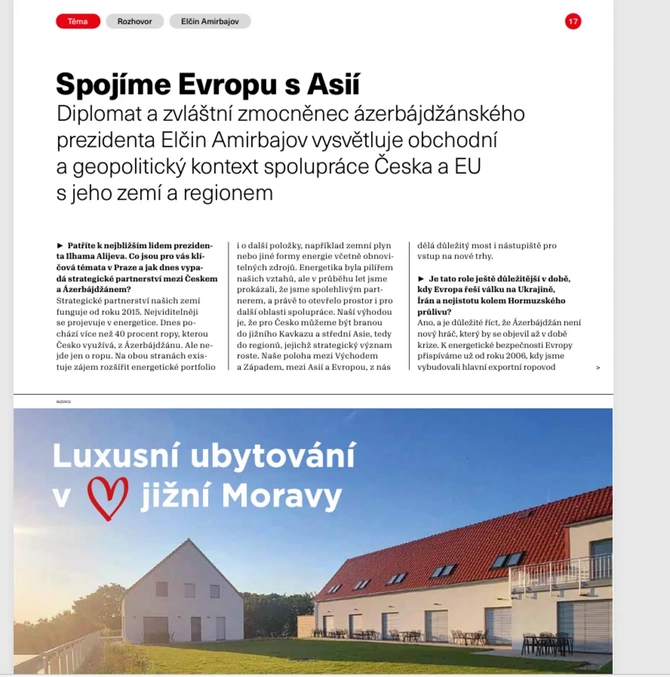
In the interview, special attention was given to energy security issues. E. Amirbayov noted that Azerbaijan's contribution to Europe's energy security did not arise against the backdrop of geopolitical crises in recent years, but that our country has been playing an important role in Europe's energy supply since 2006. In this context, the significance of the Baku-Tbilisi-Ceyhan oil pipeline, as well as the Southern Gas Corridor, completed in 2020, was highlighted. It was reported that Azerbaijan currently exports natural gas to 16 countries, 10 of which are European Union member states. E. Amirbayov drew attention to the fact that Azerbaijan has established itself as a long-term and reliable partner, faithful to its commitments, regardless of market volatility and geopolitical complexities.
E. Amirbayov noted that Europe is currently seeking additional energy volumes amid instability both in the north and in the south. Azerbaijan, in turn, is ready to meet this demand. At the same time, particularly for increasing natural gas supplies, it is necessary to expand the capacity of existing infrastructure, including the Southern Gas Corridor. In this context, it is important to attract investments and financial support mechanisms from the European Union's financial institutions.
E. Amirbayov, speaking about the growing importance of the Middle Corridor against the backdrop of the current geopolitical situation, noted that the South Caucasus and Azerbaijan play an important role in ensuring Europe's access to new markets and regions rich in natural resources.
The interview also touched upon the issue of the peace process between Azerbaijan and Armenia and the restoration of regional ties. E. Amirbayov noted that for many years, due to the conflict, direct ties between Azerbaijan and Armenia were absent, and the main routes in the region ran exclusively through Georgia and Turkey. He reported that under the new conditions, the restoration of transport and communication links could contribute to strengthening peace and enhancing the economic potential of the South Caucasus. E. Amirbayov stated that with the commencement of the Zangezur corridor's operation, in addition to the Georgian route, a shorter and more advantageous route for cargo transportation would be formed.
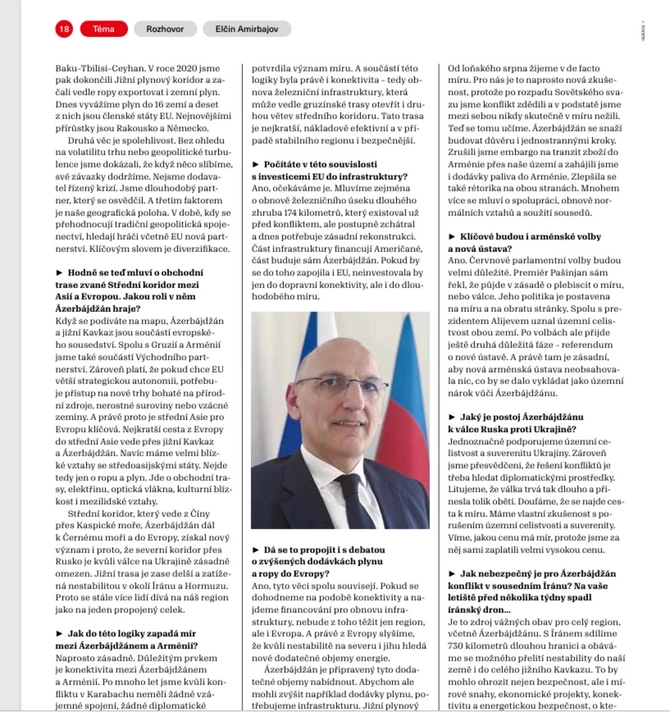
In this context, the issue of possible European Union support for infrastructure projects was also raised. E. Amirbayov noted that this primarily concerns the restoration of an approximately 174-kilometer railway on the territory of Nakhchivan, which existed before the conflict but subsequently fell into disrepair. It was reported that a feasibility study has already been initiated by the European Bank for Reconstruction and Development for this project. The European Union's allocation of its financial resources to this project would serve not only the development of transport corridors but also the strengthening of long-term peace in the region.
Answering a question about the current state of the normalization process between Azerbaijan and Armenia, E. Amirbayov reported that in August of last year, a peace agreement between Azerbaijan and Armenia was initialed in Washington, and the parties are currently living under conditions of de facto peace. He also drew attention to confidence-building measures taken during the past period, noting that restrictions on transit cargo shipments to Armenia were lifted, fuel supplies were carried out, and mutual visits by representatives of the civil societies of the two countries took place.
E. Amirbayov conveyed that domestic political processes in Armenia are also of significant importance from the perspective of the peace agenda. He emphasized that the results of the upcoming parliamentary elections in Armenia and the referendum on the new constitution could play a decisive role in the signing of a peace agreement between the two countries. It was noted that the absence in Armenia's new constitution of any provisions that could be interpreted as territorial claims against Azerbaijan is of fundamental importance from the standpoint of signing a peace agreement and ensuring long-term stability.
During the interview, regional security issues were also addressed. E. Amirbayov noted that Azerbaijan supports the territorial integrity and sovereignty of Ukraine and emphasized the importance of resolving conflicts through international law and diplomacy. Commenting on the position regarding the tensions surrounding Iran, E. Amirbayov stressed that this situation causes serious concern for the entire region, and the spread of instability could create risks for security, economic projects, energy initiatives and connectivity initiatives.
It should be noted that on April 14, E. Amirbayov also gave an interview to the "CNN Prima News" television channel.
Similar News
Ambassador of Ukraine thanked Azerbaijan
A group of employees of the State Emergency Service of Ukraine visited the country's embassy in Azerbaijan. Ambassador of Ukraine to Azerbaijan Yurii Husev wrot...