

 Azərbaycanca
  По-русски
  English
 About us
Today is the birthday of Academician Zarifa Aliyeva
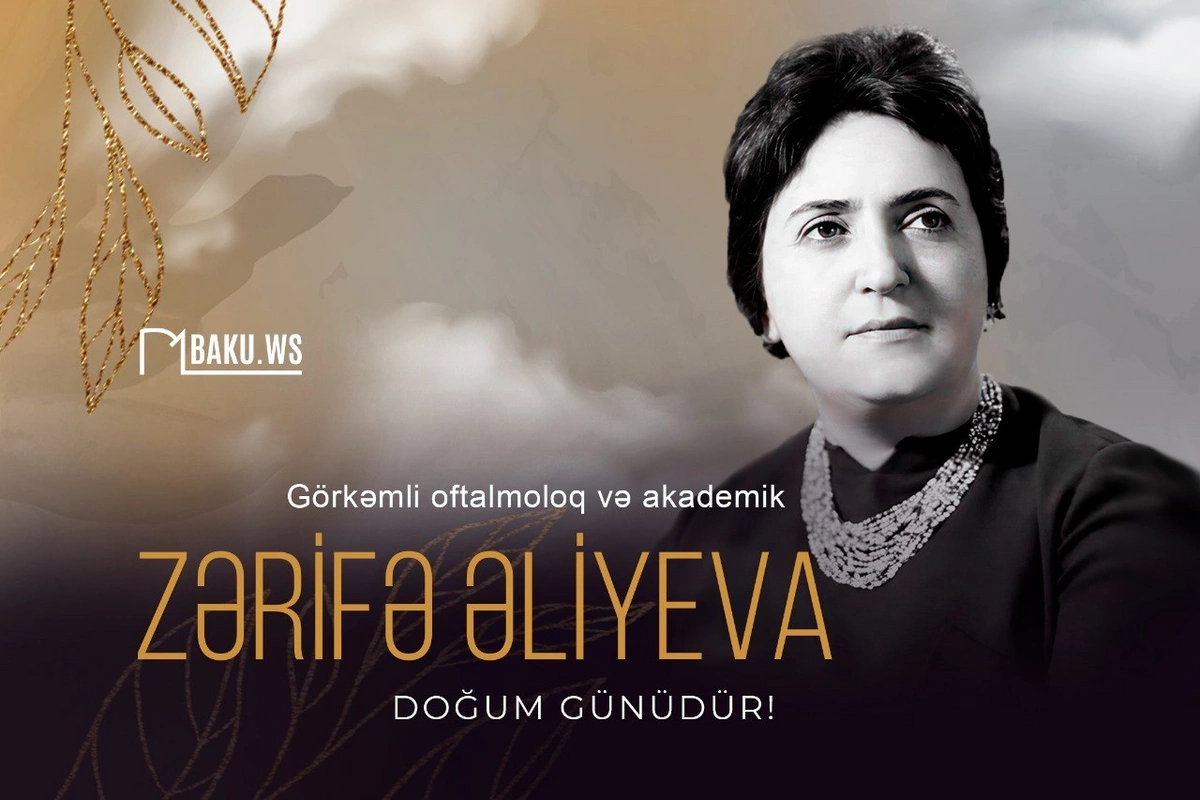
Today marks the 103rd anniversary of the birth of the outstanding Azerbaijani ophthalmologist scientist, academician Zarifa Aliyeva.
Zarifa Aziz gizi Aliyeva was born on April 28, 1923, in the village of Shakhtakhty, Sharur district of the Nakhchivan Autonomous Republic of Azerbaijan.
In 1942, after graduating from secondary school, Zarifa Aliyeva enrolled in the Faculty of General Medicine at the Azerbaijan State Medical Institute, from which she graduated in 1947. She then completed a specialization course in ophthalmology at the Central Institute for Advanced Medical Training in Moscow.
In those years, an eye disease such as trachoma was widespread in Azerbaijan. Effective methods of treating this infection had not been developed, and the fight against this disease was of great importance not only for ophthalmology but also for the healthcare of the republic as a whole.
Zarifa Aliyeva took an active part in organizing and conducting therapeutic and preventive measures to combat trachoma. In addition to specific clinical practice, she traveled to those regions of Azerbaijan where high incidence rates were observed, gave lectures to ophthalmologists, and held numerous discussions with the local population.
The topic of Zarifa Aliyeva's first scientific research was dictated by life itself. She devoted her research work to issues related to the treatment of trachoma, specifically to studying the possibilities of effective use of a new antibiotic at the time — synthomycin, which possessed not only broad antibacterial but also antichlamydial activity.
From 1960 to 1967, Zarifa Aliyeva worked as a senior research fellow at the Institute of Ophthalmology. In 1963, the Higher Attestation Commission of the USSR awarded her the title of senior research fellow in the specialty of "Ophthalmology."
In 1967, Zarifa Aliyeva was invited to the position of associate professor at the Department of Eye Diseases at the Azerbaijan State Institute for Advanced Medical Training of the Ministry of Health, which bore the name of her father — Professor Aziz Aliyev, who had headed this institution in the last years of his life.
Zarifa Aliyeva began to systematically engage in issues of occupational pathology of the organ of vision from 1968. In 1977, she was awarded the academic degree of Doctor of Medical Sciences.
Later, in 1979, at the A.I. Garayev Institute of Physiology of the Academy of Sciences of Azerbaijan, a specialized research laboratory for the study of physiology and occupational pathology of the organ of vision was established at Zarifa Aliyeva's initiative, where a whole series of in-depth studies on the physiological, clinical, functional, and histological mechanisms of the impact of low-intensity occupational hazards on the organ of vision were successfully conducted.
The main directions of her scientific activity in the field of ophthalmology were the physiology of the organ of vision and the prevention, diagnosis, and treatment of eye pathologies caused by occupational diseases, the condition of the organ of vision in workers of certain chemical industry enterprises, herpetic eye disease, acute viral conjunctivitis, anatomical and physiological characteristics of the hydrodynamic system of the eye, modern methods of surgical treatment of lacrimation, eye diseases in diabetes, therapeutic ophthalmology, fundamentals of iridodiagnosis, problems of glaucoma, and others.
Based on the results of her scientific research, she published a number of monographs, in particular, "Occupational Eye Pathology in Tire Manufacturing," "Ophthalmology in Chronic Iodine Intoxication," and "Prevention of Occupational Eye Diseases in the Iodine Industry," which gained worldwide recognition.
A year after defending her doctoral dissertation, she was elected professor of the Department of Ophthalmology at the Azerbaijan State Institute for Advanced Medical Training named after A. Aliyev, and in 1983 she became the head of the Department of Ophthalmology.
Zarifa Aliyeva is the author of about 150 scientific works, 12 monographs, textbooks and teaching aids, one invention, and co-author of 12 rationalization proposals, and was the scientific supervisor of hundreds of Doctors of Sciences and Doctors of Philosophy. The academician participated in a number of international congresses and symposiums. On Zarifa Aliyeva's initiative, the plenary session of the Board of the All-Union Society of Ophthalmologists was held for the first time in Baku at a high level (1977). The academician carried out extensive public work, serving as a member of the USSR Peace Defense Committee, deputy chairperson of the Azerbaijan Peace Defense Committee, a member of the board of the "Znanie" (Knowledge) Society, and the presidium of the Scientific Society of Ophthalmologists of the USSR, and was part of the editorial board of the journal "Vestnik Oftalmologii" (Herald of Ophthalmology) (Moscow).
In 1981, for a series of scientific studies in the field of occupational pathology of the organ of vision that made a significant contribution to the development of ophthalmology, Professor Zarifa Aliyeva was awarded the highest distinction in the field of ophthalmology — the Academician M.I. Averbakh Prize of the Academy of Medical Sciences of the USSR. It is also noteworthy that she was the first female scientist to receive such a high award.
Zarifa Aliyeva was also awarded the honorary title of Honored Scientist (1982) and was decorated with the Order of the Red Banner of Labor (1982).
The National Center of Ophthalmology of the Ministry of Health of the Republic of Azerbaijan bears the name of academician Zarifa Aliyeva. The scientist

Similar News
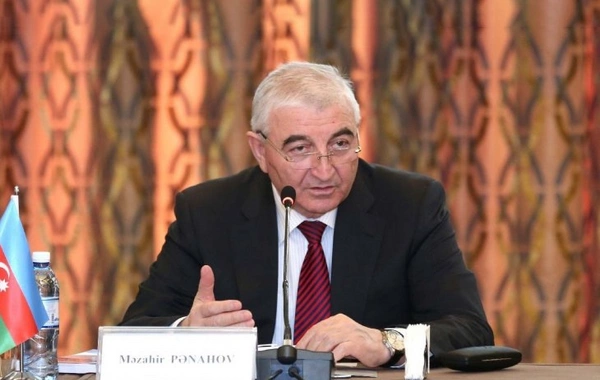
Mazahir Panahov re-elected as CEC chairman
Mazahir Panahov has been re-elected as the Chairman of the Central Election Commission (CEC) of Azerbaijan for a new five-year term. As reported by Report, disc...