

 Azərbaycanca
  По-русски
  English
 About us
Trump explained why he doesn't call the conflict around Iran a war
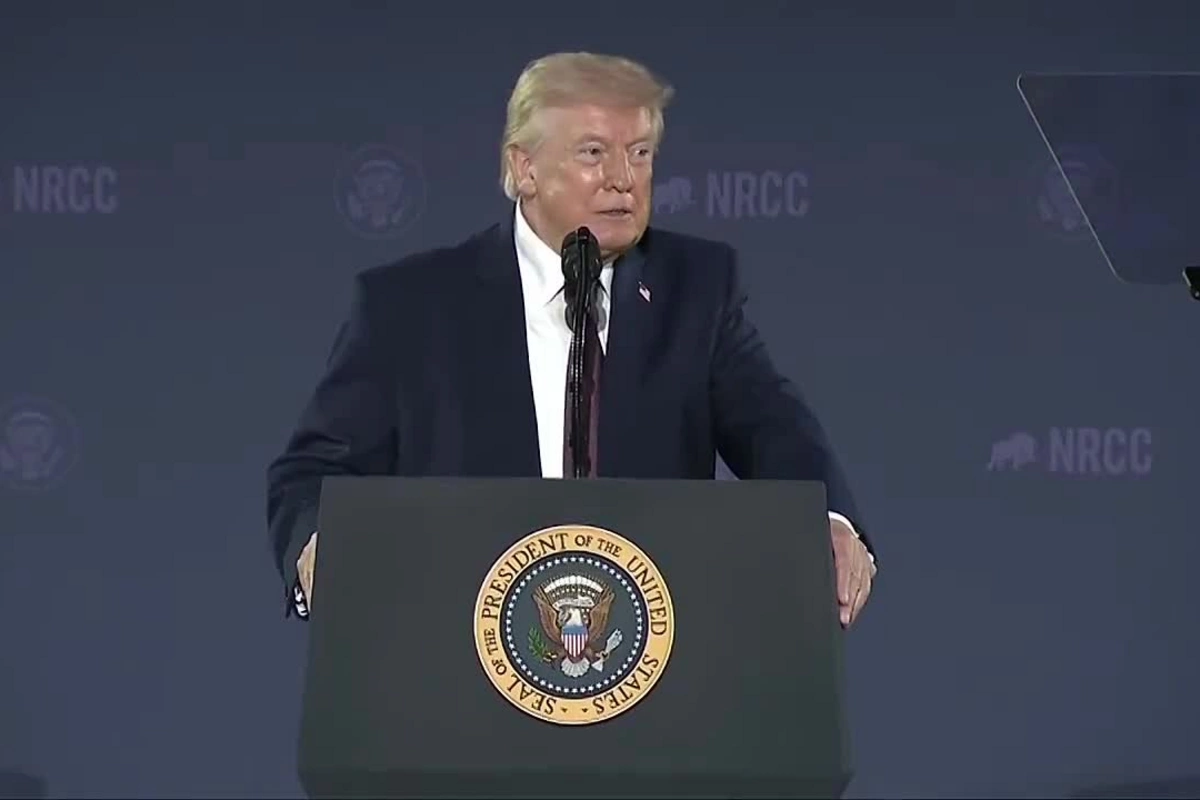
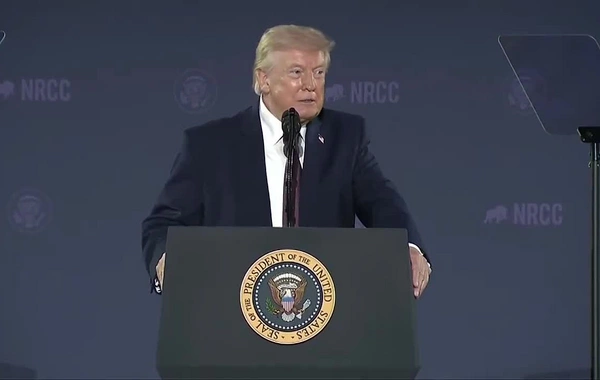
The United States is conducting a military operation against Iran, not waging a war. A declaration of war would require the approval of the U.S. Congress, stated the country's president, Donald Trump.
This was reported by C-Span.
"[I'm] told that if you use the word 'war,' then maybe that's not so good. They don't like the word 'war,' because then it's assumed that you need to get approval," the American leader said, speaking at a fundraising event in Washington for the Republican Party.
The president added that instead of the word "war," he would use the expression "military operation." Earlier, the American leader noted that it is representatives of the Democratic Party who call the conflict a war. He himself characterized what was happening as "an excursion that will save [the U.S.] from war."
As a reminder, on February 28, Israeli Defense Minister Israel Katz announced that the country's Defense Forces had launched a preemptive strike against Iran. Major Iranian cities, including Tehran, were hit. The operation was named "Lion's Roar." Both countries closed their airspace. Later, U.S. President Donald Trump announced that the United States was also participating in the military operation against Iran. According to the Pentagon, the U.S. operation against Iran was named "Epic Fury." The White House justified the attack by citing missile and nuclear threats allegedly posed by the Islamic Republic. Iran, in turn, launched dozens of ballistic missiles at Israel.
Iran also struck American bases across the Middle East with drones and missiles — in Qatar, the UAE, Bahrain, Iraq, Saudi Arabia, and Jordan. The airspace of all these countries, as well as Israel and Turkey, remains closed. The Islamic Republic named its operation "True Promise 4." Since the beginning of full-scale military operations in the Middle East, more than 1,300 people have been killed. The overwhelming number of casualties occurred in Iran, with the dead also including residents of Bahrain, Israel, Kuwait, Lebanon, the UAE, and several American military personnel.
As reported on March 1 by the Islamic Republic's state television, Supreme Leader Ali Khamenei was killed. The deaths of a number of high-ranking Iranian military officials have also been confirmed, including Ayatollah's adviser Ali Shamkhani, IRGC Commander Mohammad Pakpour, and Defense Minister Aziz Nasirzadeh.
Similar News
Invasion, blockade, and massive bombings: The Pentagon is preparing a "decisive strike" against Iran
The Pentagon is preparing four possible scenarios for escalating the conflict with Iran, which may include the seizure of Kharg, Larak, or Abu Musa islands. Thi...