

 Azərbaycanca
  По-русски
  English
 About us
"They told us - leave": the story of the village of Abil-kend, whose population was subjected to ethnic cleansing three times
A unique project has been presented to the public — the research work "Places of Memory of Western Azerbaijan".
For the first time, during field research on the territory of modern Armenia, data on nearly 600 villages where ancestors of modern Azerbaijanis historically lived has been collected and systematized. In some of them, fragments of Turkic cultural and historical heritage have been preserved — cemeteries, shrines, mosques.
A separate video has been prepared for each village in three languages (English, Azerbaijani, Russian), containing photo and video footage of the specific village on the territory of modern Armenia, documented data on the number of Turks (ancestors of modern Azerbaijanis) in the 19th-20th centuries in the specific village, as well as the history of the village and the chronology of the gradual "disappearance" of the Turkic population as a result of expulsions and ethnic cleansings.
Western Azerbaijan is historically a geographical space where hundreds of thousands of Azerbaijanis lived. Despite attempts to erase the traces of our compatriots in these territories, remembering and being aware of the ancient places of residence of Azerbaijanis in Western Azerbaijan is the duty of each of us.
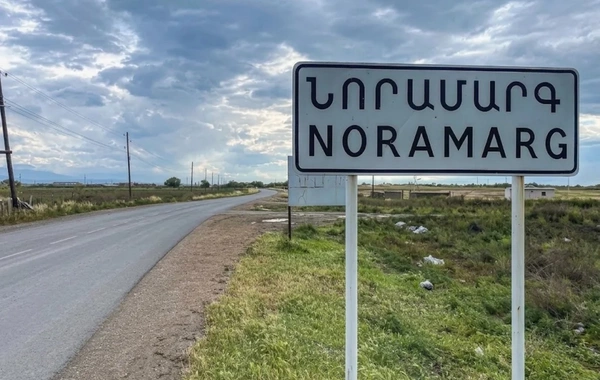
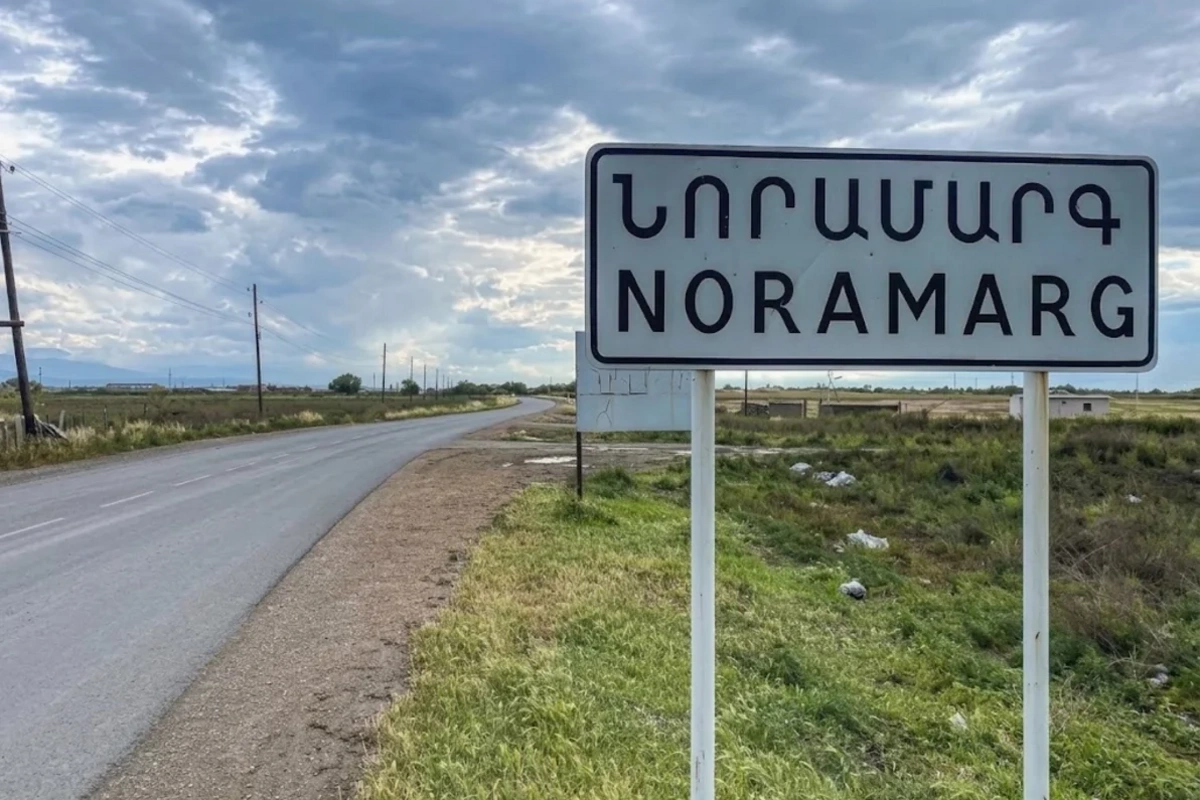
Oxu.Az presents to readers the next part of the series, dedicated to the village of Abil-kend (now Noramarg) in Armenia, whose population was subjected to expulsion and deportation three times.
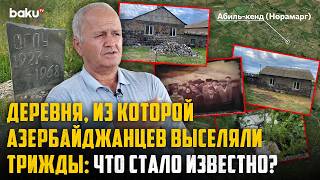
During the tsarist period, this settlement was called Abil-kend,Abil-kend, Abul-kend, Abyul-kend; during the Soviet period — Abilkend, Ablkend, Bulakhly, Bulagli, Bulakhlar, Kalinin settlement, Kalinin.
In Russian Empire sources, the village appeared under the name Abil-kend. In April 1946, it was renamed to Bulakhly, and in the early 1960s — to Kalinin settlement. In April 1991, as part of the policy of Armenianization and destruction of Azerbaijani heritage in Armenia, the village was renamed to Noramarg.
Since 1995, the village has been part of the Ararat Province of the Republic of Armenia.
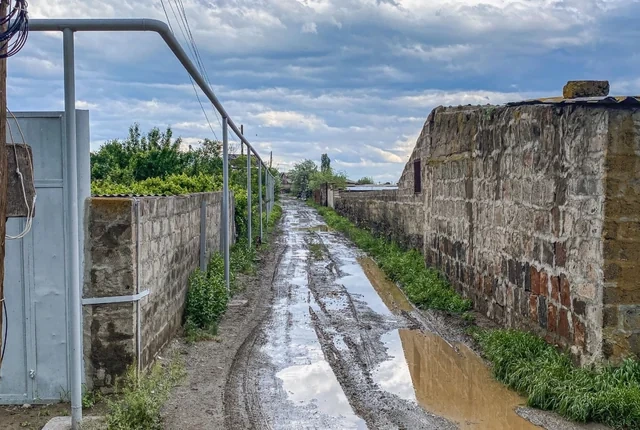
From the mid-18th century until the Russian conquest, the territory of the village was part of the Zangi-basar mahal of the Iravan Khanate.
In 1827, Russia occupied the territory of the Iravan Khanate, and the Treaty of Turkmenchay of 1828 formalized its incorporation into the Russian Empire. During the tsarist Russian period, the village was part of the Erivan Uyezd of the Erivan Governorate.
In 1829-1832, a cameral description of the territories of the former Iravan and Nakhchivan Khanates was compiled on behalf of the Russian authorities. According to the data provided in the document, 85 people lived in the village of Abil-kend, all of them ancestors of Azerbaijanis.
According to statistical data from the tsarist period, also cited in Armenian sources, at various times before 1914, exclusively or predominantly ancestors of Azerbaijanis lived in the village.
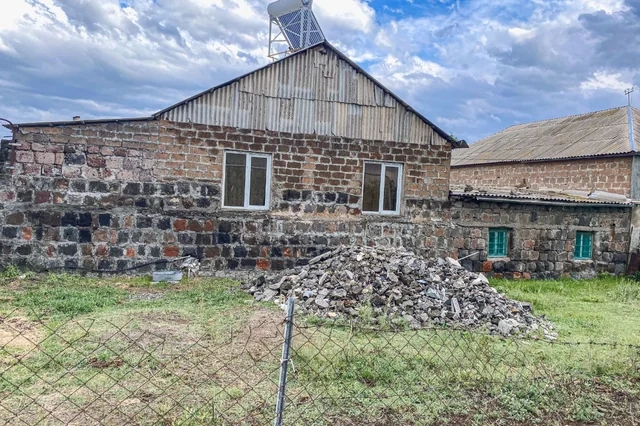
Collection of Information about the Caucasus:
In 1873, 183 people lived in the village, all of them ancestors of Azerbaijanis.
Compilation of Statistical Data on the Population of the Transcaucasian Region, Extracted from Household Lists of 1886:
In 1886, 222 people lived in the village, all of them ancestors of Azerbaijanis.
Korkotyan Z. The Population of Soviet Armenia over the Last Hundred Years (1831-1931):
In 1897, 234 people lived in the village, all of them ancestors of Azerbaijanis.
Caucasian Calendar for 1909:
In 1906, 256 people lived in the village, predominantly ancestors of Azerbaijanis.
Memorial Book of the Erivan Governorate for 1908:
In 1908, 256 people lived in the village, all of them ancestors of Azerbaijanis.
Caucasian Calendar for 1912:
In 1911, 272 people lived in the village, predominantly ancestors of Azerbaijanis.
Caucasian Calendar for 1915:
In 1914, 376 people lived in the village, predominantly ancestors of Azerbaijanis.
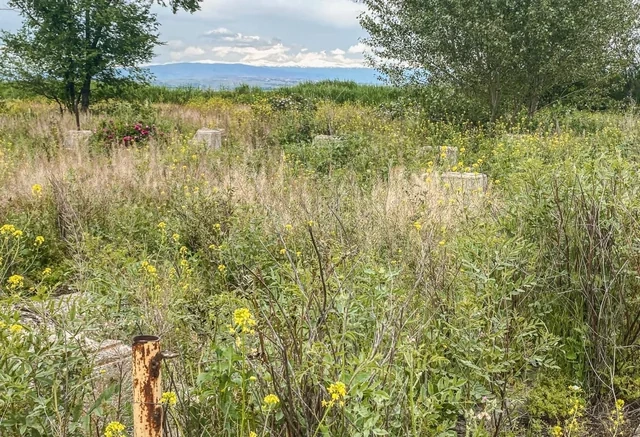
On May 29, 1918, the government of the Azerbaijan Democratic Republic (ADR) ceded Erivan, now Yerevan, and some adjacent territories to the Armenians. Thus, the First Republic of Armenia was created on land where ancestors of modern Azerbaijanis had historically lived. Already in the first months of its existence, it began making territorial claims against neighboring countries: Azerbaijan, Georgia, and Turkey (at that time the Ottoman Empire).
In 1918-1920, the nationalist Dashnaktsutyun party, which was in power in the Republic of Armenia, carried out ethnic cleansings of the Turkic population in the Erivan Governorate, as well as in other areas, particularly in Zangezur, Karabakh, and Nakhchivan.
On October 20, 1919, the residents of the village of Abil-kend addressed a letter to the government of the ADR, in which they reported on the Dashnak atrocities against the Muslim population and asked to be taken under its protection and granted citizenship.
The consequences of the ethnic cleansings were reflected in the data of the 1922 census of Soviet Armenia, according to which the village had been destroyed.
At the end of 1920, Soviet power was proclaimed in Armenia, and in 1921 the communist regime was definitively established in the country. After this, the Azerbaijani population began returning to the village.

Similar News

President Ilham Aliyev received representatives of 01.AI, Sinovation Ventures and TEHA Group companies
On September 24, President of the Republic of Azerbaijan Ilham Aliyev received Kai-Fu Lee, Chief Executive Officer of the Chinese companies 01.AI and Sinovation...