

 Azərbaycanca
  По-русски
  English
 About us
# Russian Trail in the Washington Provocation - INVESTIGATION
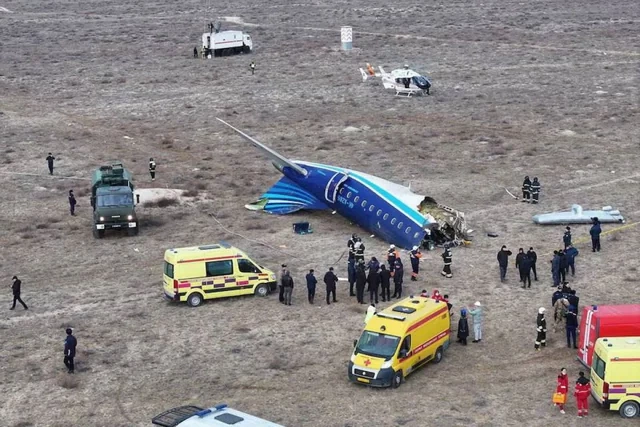
The processes that began with the downing of a passenger aircraft belonging to AZAL in Russian airspace have formed a new and multi-layered geopolitical dynamic in the region. Although initially the incident was assessed as technical or military, it quickly expanded, acquiring dimensions in the political and informational context, as well as in terms of security, and transitioned to a more systemic plane of confrontation. The trajectory of developments shows that the issue has gone beyond a local episode and integrated into a broader context of strategic competition.
Azerbaijan's demand to decisively punish those responsible for downing the aircraft, steps taken within the framework of sovereign rights, including decisions concerning the "Russian House" operating in Baku, intensified Moscow's reaction. From this stage, relations went beyond classical diplomatic polemics and approached a hybrid influence model, where informational, political-psychological, and cyber components are applied in parallel.
Phased escalation of tensions
In the first phase, intensive activity was observed in the informational plane. In media resources affiliated with the Russian state, on political talk shows and expert platforms, accusatory and manipulative theses against Azerbaijan were systematically disseminated. The tone of discourse acquired an emotional-accusatory character, and official Baku's steps were presented out of context.
In the second phase, the rhetoric was elevated to an institutional level. Individual State Duma deputies made openly threatening statements, expressions beyond ethical norms were voiced against Azerbaijan's leadership, and veiled signals concerning sovereignty and territorial integrity were transmitted. This stage can already be characterized not as diplomatic dissatisfaction, but as a mechanism of political-psychological pressure. The goal was to change the balance of legitimacy in the information space and influence public opinion.
The cyber component and synchronous influence model
Parallel to information attacks, activity was also recorded in cyberspace. Interference attempts directed against state structures and media resources demonstrated growing risks in the security sphere. The timing coincidence suggests that the information campaign and cyber activity could have been elements of a coordinated strategy.
Within the hybrid influence model, the synchronous application of informational and cyber components creates simultaneous psychological and technological pressure on the opposing side. The goal is not only to inflict reputational damage but also to test the resilience of state institutions and weaken public trust.
The Washington provocation
Another step against Azerbaijan from Russia manifested during President Ilham Aliyev's visit to Washington at the invitation of US President Donald Trump to participate in the first meeting of the "Peace Council."
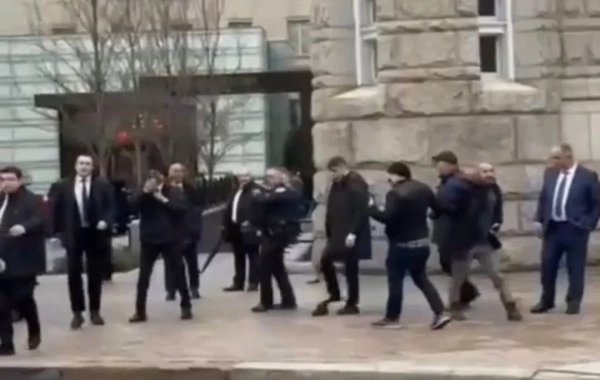
Through agents placed overseas, Russian special services organized a protest action in front of the hotel where the President of Azerbaijan was staying, resorting to yet another provocation.
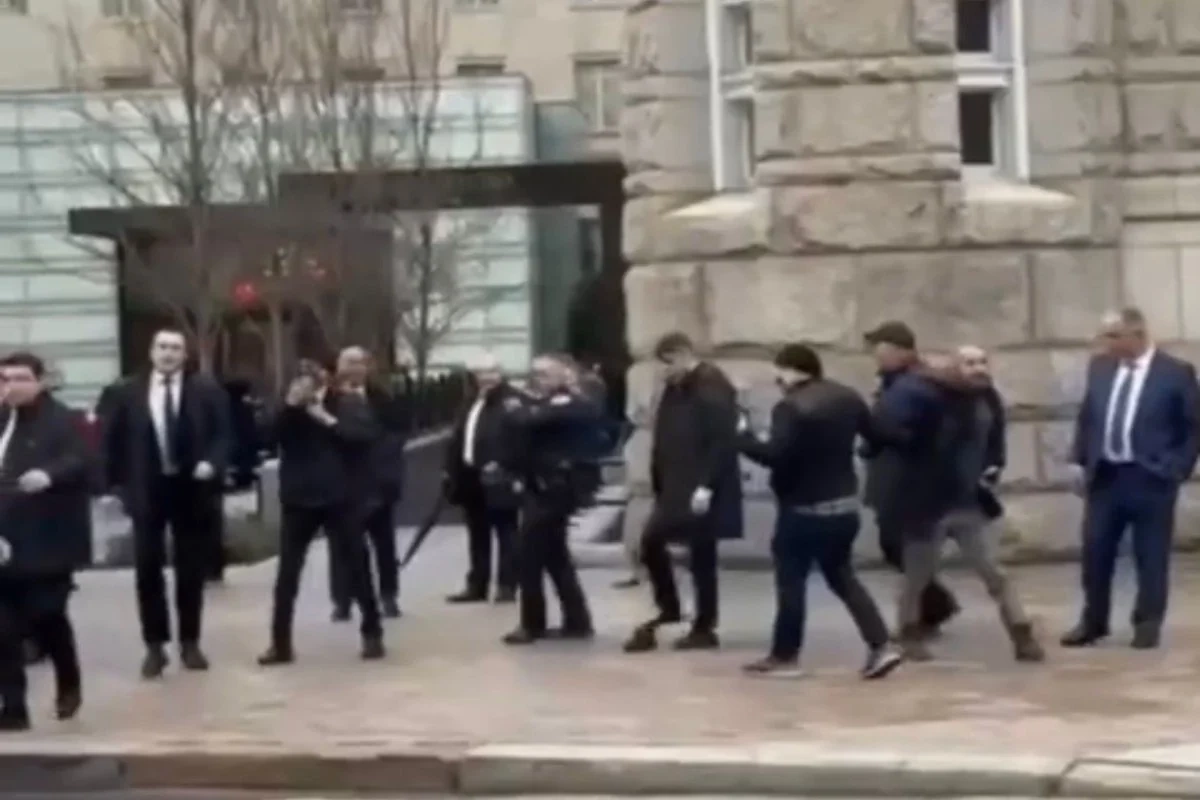
It should be noted that on February 19 of this year in Washington, a group of radically-minded individuals committed provocative actions, made offensive and unethical statements against Azerbaijan's leadership, and also attempted to enter the protected territory.
During the incident, the Presidential Security Service together with US police promptly took control of the situation and removed the radicals from the territory.
In video recordings distributed on social networks, it is clearly visible how anti-national elements use obscene expressions and commit radical actions.
At first glance, the incident could appear as a local political protest, however, considering the participants' past connections and their migration trajectory, it should be assessed in a broader security context.
Analysis of the collected information shows that a significant portion of the action participants had close ties with the Russian Federation: some are its citizens, others lived there for a long time or regularly traveled there, after which they moved to the USA. Such a sequence raises the question not only of random migration but also of possible coordinated organization.
What connects the provocateurs with Russia?
It was revealed that one of the action participants who attracted attention with his radical actions - Adil Vugar oglu Emrahli (born 02.08.1990) - is a citizen of the Russian Federation. During his stay in Azerbaijan, he frequently traveled to Russia. He lived for a long time in the Russian city of Novgorod. He last departed to Germany on 15.10.2022 using a Russian Federation passport. He currently resides in the USA. There is information that he is married to a woman named Tatyana Viktorovna, whose nationality is unknown.
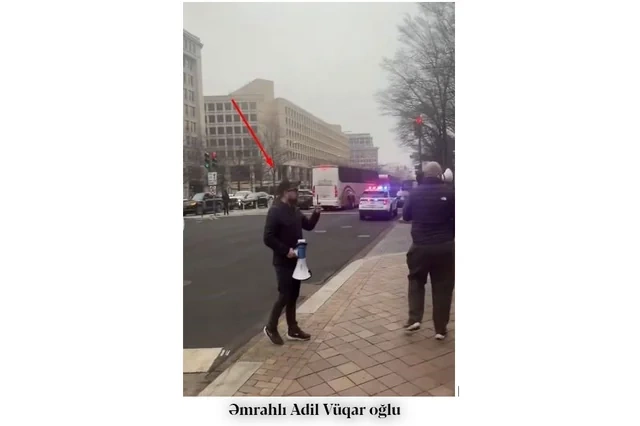
A. Emrahli's father - Vugar Emrahov - is also a citizen of the Russian Federation. On 19.07.2023, he departed from Azerbaijan to Russia, and on 25.09.2023, he returned to Azerbaijan.
There is information that V. Emrahov traveled to Russia 26 times.
One of the most active participants of the action was Ragim Tofig oglu Yagublu (born 06.04.1998), a member of the "Musavat" party.
R. Yagublu, who is the son of Tofig Yagublu, last left Azerbaijan on 20.03.2022, departing to Turkey. He currently resides in the USA.
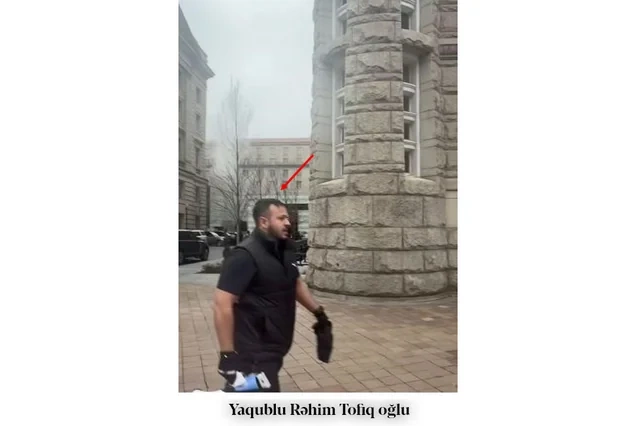
R. Yagublu during his stay in Azerbaijan also repeatedly traveled to the Russian Federation and returned. On 12.07.2018, he departed to Russia, and on 13.08.2018, he returned to the country. There is information that he visited Russia 8 times.
Another participant of the radical action - Bakhtiyar Alovsat oglu Abbasov (born 30.04.1972) - is also a citizen of the Russian Federation. While in the country, he frequently traveled to Russia. It is known that he traveled to Russia and returned approximately 16 times.
He last departed from Azerbaijan to Russia on 12.05.2015 using a Russian Federation passport and lived there for a long time. He was a member of the PFPA.
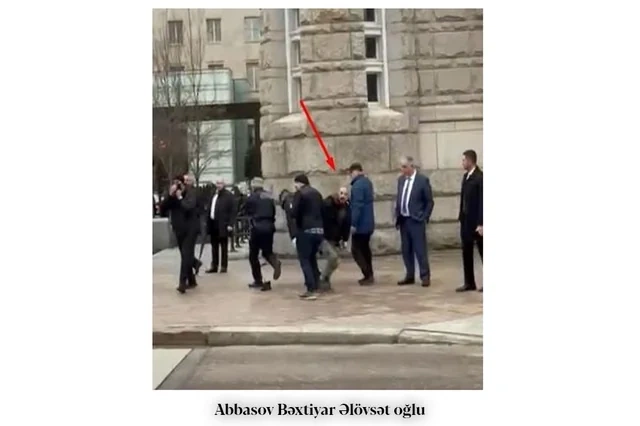
According to available information, he was recruited for cooperation with Russian special services. He was close to Saleh Rustamov, who sent illegal financial funds from Russia to the PFPA, and participated
Similar News
"Double" agents in the proxy war against Azerbaijan
The information-diversionary proxy war against Azerbaijan has intensified, involving marginal figures used by external forces as instruments of pressure. While...