

 Azərbaycanca
  По-русски
  English
 About us
Permafrost is thawing around the world, scientists have warned
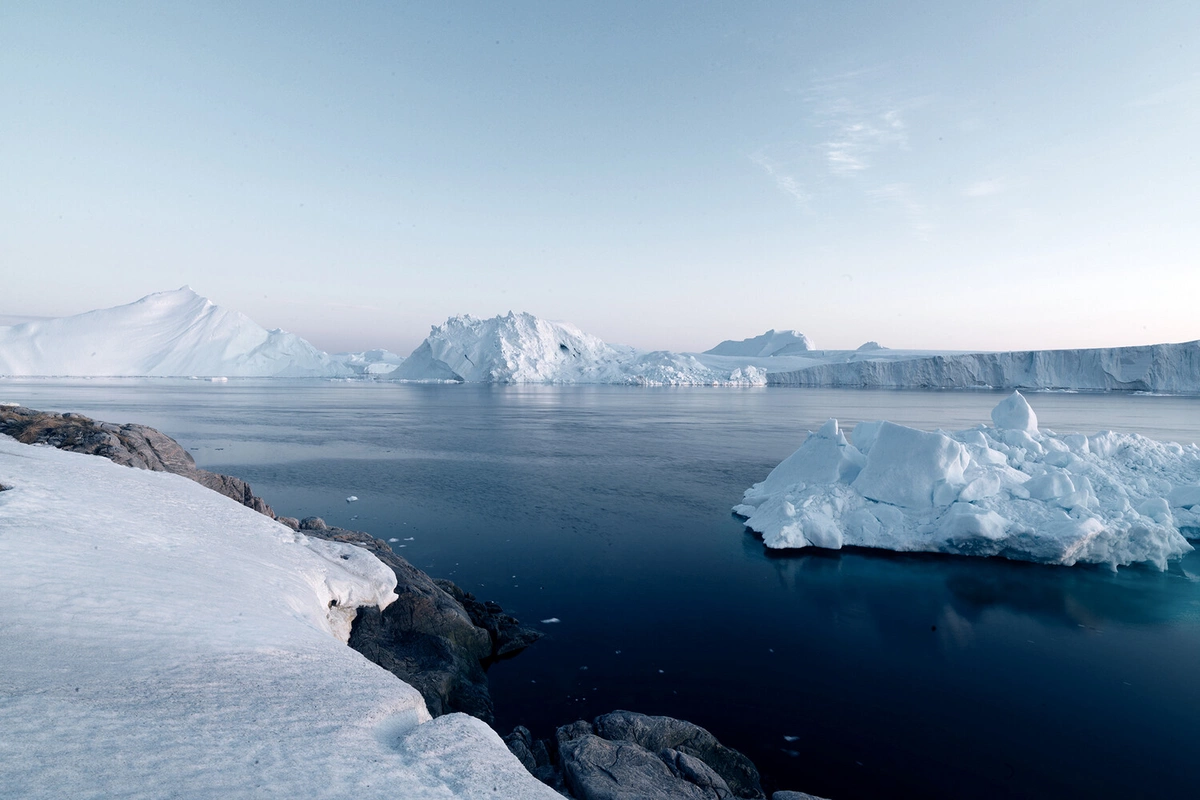
Scientists have for the first time confirmed on a global level that permafrost is thawing worldwide — this has been proven by 25 years of monitoring data from the Arctic, Antarctic, and mountains. The study was published in the journal Communications Earth & Environment (CE&E).
From 2000 to 2024, participants in the Circumpolar Active Layer Monitoring (CALM) program used a standardized methodology to measure the thickness of the active layer — the depth to which the ground thaws during the warm season. The observations covered 156 sites in the Arctic, Antarctic, mountains of Eurasia, the Central Andes, and the Tibetan Plateau. The international team also included researchers from the Faculty of Geography at Lomonosov Moscow State University — Alexey Maslakov, Valery Grebenets, and Lev Kuzyakin.
An increase in the thickness of the thawed layer was recorded at 66% of the sites in the Northern Hemisphere and 42% in the Southern Hemisphere. Mountain permafrost is changing the most: in the European Alps, the layer grew by an average of 10.3 cm per year, and in some places its depth doubled. In Arctic lowlands, the increase is more modest — from 0.8 to 2.3 cm per year, in Antarctica — about 2.5 cm, and in the Andes — from 2 to 6 cm per year.
The main factor in the Arctic turned out to be the increase in summer warmth, with the second most significant being the increase in precipitation. Permafrost thawing is dangerous because it releases greenhouse gases, deforms buildings and roads, and alters polar and mountain ecosystems.
"The results obtained showed that existing climate models systematically underestimate the rate of permafrost degradation in mountainous regions," noted Alexey Maslakov, leading researcher at the Department of Cryolithology and Glaciology at the Faculty of Geography of Moscow State University.
According to him, ice content, soil composition, and the thickness of the organic horizon explain up to 92% of the differences between sites. The authors urge the urgent expansion of the observation network in understudied regions, including the Russian Arctic and the mountains of Central Asia.


Similar News

Special envoys of the US President have arrived in Moscow
A business jet, which may be carrying U.S. President's special envoys Steve Witkoff and Jared Kushner, has arrived in Moscow. This was reported to Interfax by a...