

 Azərbaycanca
  По-русски
  English
 About us
Igor Korotchenko: Iran's "Long Arm" Is Capable of Reaching Any Country in Europe
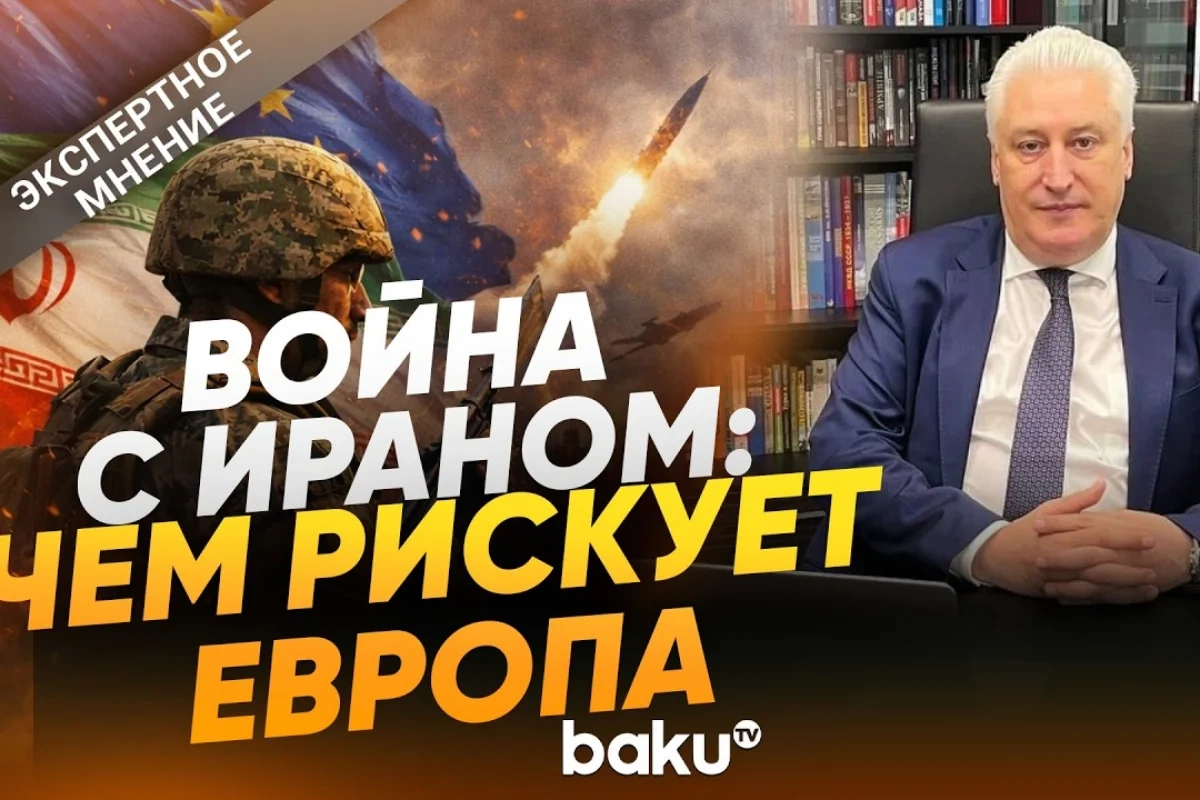
The military capabilities of the Islamic Republic of Iran have been seriously underestimated by both the United States of America and Israel.
As reported by BAKU.WS, this was stated in a comment to Baku TV Ru by the well-known Russian military expert and editor-in-chief of the magazine "National Defense," Igor Korotchenko.
According to him, a clear confirmation of this was the launch of a medium-range ballistic missile at a British military base on the island of Diego Garcia — a strategic facility located in the Indian Ocean more than 3,500 km from Iranian territory.
It should be recalled that the base on Diego Garcia atoll was established back in the 1970s and is one of the key strongholds of the Anglo-American military presence in the region. Over the years, strategic operations have been carried out from here — from the bombing of Iraq to supporting operations in Afghanistan. The very fact that Tehran decided to strike such a remote and symbolically significant facility speaks to a qualitatively new level of Iranian missile ambitions.
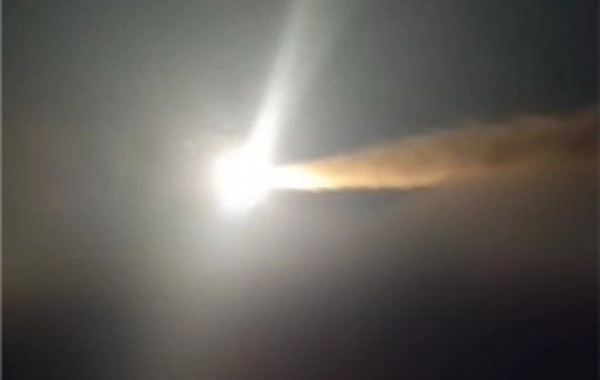
As reported, Tehran attacked the base with two ballistic missiles. One of them did not reach the target — presumably due to a technical malfunction or defect. The second was intercepted by an American warship using SM (Standard Missile) family interceptors. Nevertheless, the very fact of such an attack shocked Western military analysts.
"The main conclusion that everyone is drawing from this situation today is that Iran has a so-called 'long arm,' that is, medium-range ballistic missiles on mobile chassis, which are evidently concealed in rock excavations or underground shelters," Korotchenko emphasized.
In his assessment, the Aerospace Force of the Islamic Revolutionary Guard Corps (IRGC) is capable of deploying these missiles at any moment to strike various targets.
Speaking about the possibility of an Iranian strike against one country or another in Europe, the expert emphasized that Tehran demonstrates political pragmatism and realism.
"This means that as long as European countries are not drawn into a military operation against Tehran, the IRGC will have no incentive or desire to attack targets on the European continent. This is also a deterrent factor to a certain extent," Korotchenko noted.
According to him, any political leader today is perfectly well aware that joining his state and armed forces to the U.S. and Israeli military operation would inevitably lead to retaliatory and quite harsh actions by Tehran. The expert believes that it is precisely this factor that will restrain even such traditionally militarily active countries as France and the United Kingdom, as well as other European states, from sending their warships or contingents to assist the Americans.
In particular, Korotchenko mentioned Donald Trump's calls to allies to take part in unblocking the Strait of Hormuz.
"However, the situation can change quite quickly. We are closely monitoring the unfolding events, but once again I want to emphasize that the tactics of retaliatory actions chosen by Tehran fully obey the laws of logic, are calculated, and serve as a deterrent factor against any other third country joining the hostilities," the expert concluded.
In his conviction, any state that attempts to launch combat operations against Iran will inevitably receive a retaliatory strike of vengeance in one form or another.
Similar News
Iran struck the American aircraft carrier "Abraham Lincoln"
The Naval Forces of the Islamic Revolutionary Guard Corps (IRGC) struck one of the largest American ships, the aircraft carrier "Abraham Lincoln," with cruise m...