

 Azərbaycanca
  По-русски
  English
 About us
# An Unexpected Way to Combat Stress Caused by Constant Noise Has Been Named
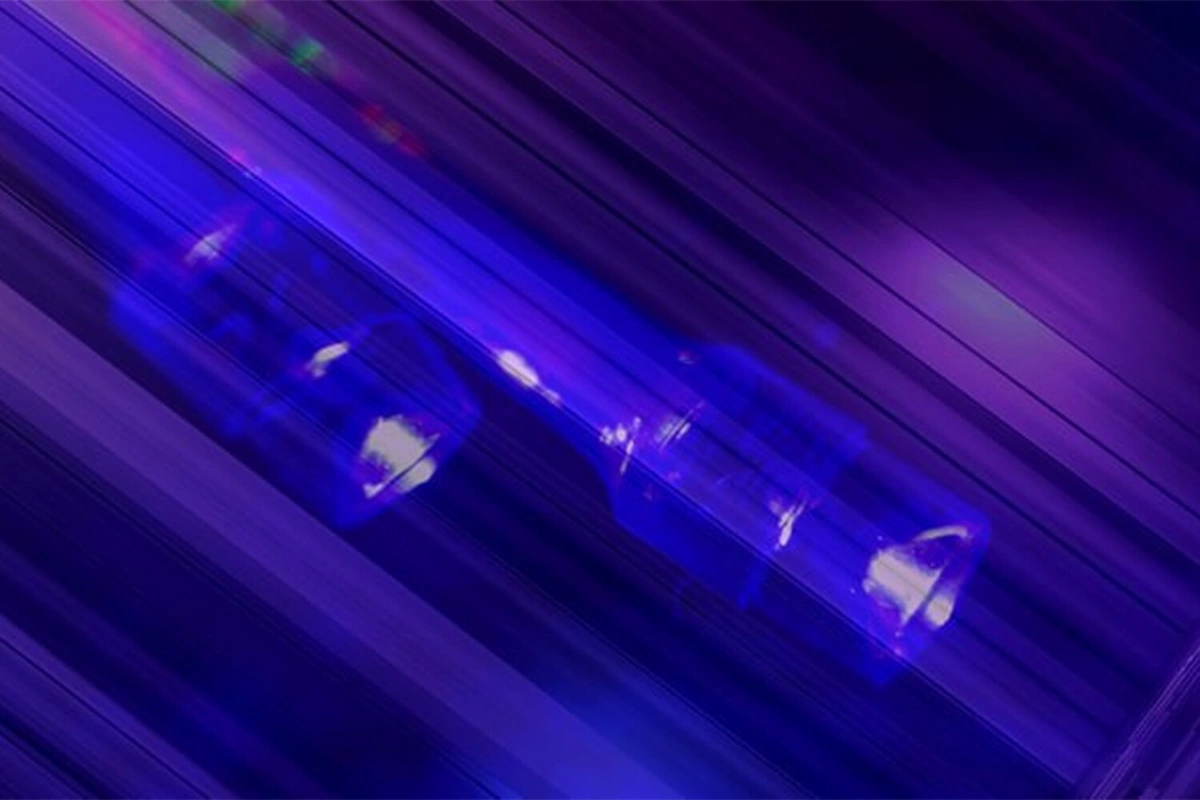
Constant background noise and vibration - from traffic to industrial equipment - gradually increase stress and anxiety. However, a new study has shown that blue light can reduce such effects even when the physical exposure continues. The work was published in the journal Physiology & Behavior.
The study was conducted by scientists led by Longfei Ho and Muqin Liu from Fudan University. They used zebrafish as a model - a popular subject for neurobiological research whose hormonal regulation is largely similar to that of humans.
First, the researchers tested which vibrations caused the greatest anxiety. Fish were exposed daily for a week to oscillations at frequencies of 30, 50, and 100 Hz. The frequency of 100 Hz caused the most pronounced stress: the animals more frequently descended to the bottom of the aquarium and avoided illuminated areas - behavior characteristic of an anxious state.
Then the scientists added light therapy. During vibration, the aquariums were illuminated with red (654 nm), green (512 nm), white, or blue light (455 nm). The result was unexpected: it was blue light that significantly reduced signs of anxiety.
Fish under blue illumination more frequently explored the upper layers of water and demonstrated normal social behavior. In an additional test, they spent more time near other individuals, indicating a reduction in social anxiety. Red light, on the contrary, not only did not help but in some measures increased avoidance behavior.
Analysis of biochemical parameters confirmed the observations. Vibration caused elevated levels of cortisol and noradrenaline - stress hormones. Under blue light exposure, this increase was blocked. Moreover, the level of serotonin - a neurotransmitter associated with good mood - increased.
The authors suggest that the effect is related to the activation of special light-sensitive retinal cells containing melanopsin. This pigment is maximally sensitive to the blue spectrum and transmits signals to brain regions that regulate emotions and hormonal balance.
The researchers emphasize that the work was performed on animals, and transferring the results to humans requires further experiments. However, the data point to the promise of light therapy as an accessible and non-invasive way to reduce anxiety caused by environmental exposure.
According to the authors, adjusting lighting in industrial zones or offices with high noise levels could become an additional tool for preventing stress disorders - especially in early stages when medication treatment is not yet required.
Similar News
An unexpected find was discovered in asteroid samples
Scientists have discovered that the material of asteroid Bennu is far more complex than previously thought: at the nanoscale, it is divided into several chemica...