

 Azərbaycanca
  По-русски
  English
 About us
From Tragedy to Revival: Diplomats' Visit to Karabakh and Eastern Zangezur
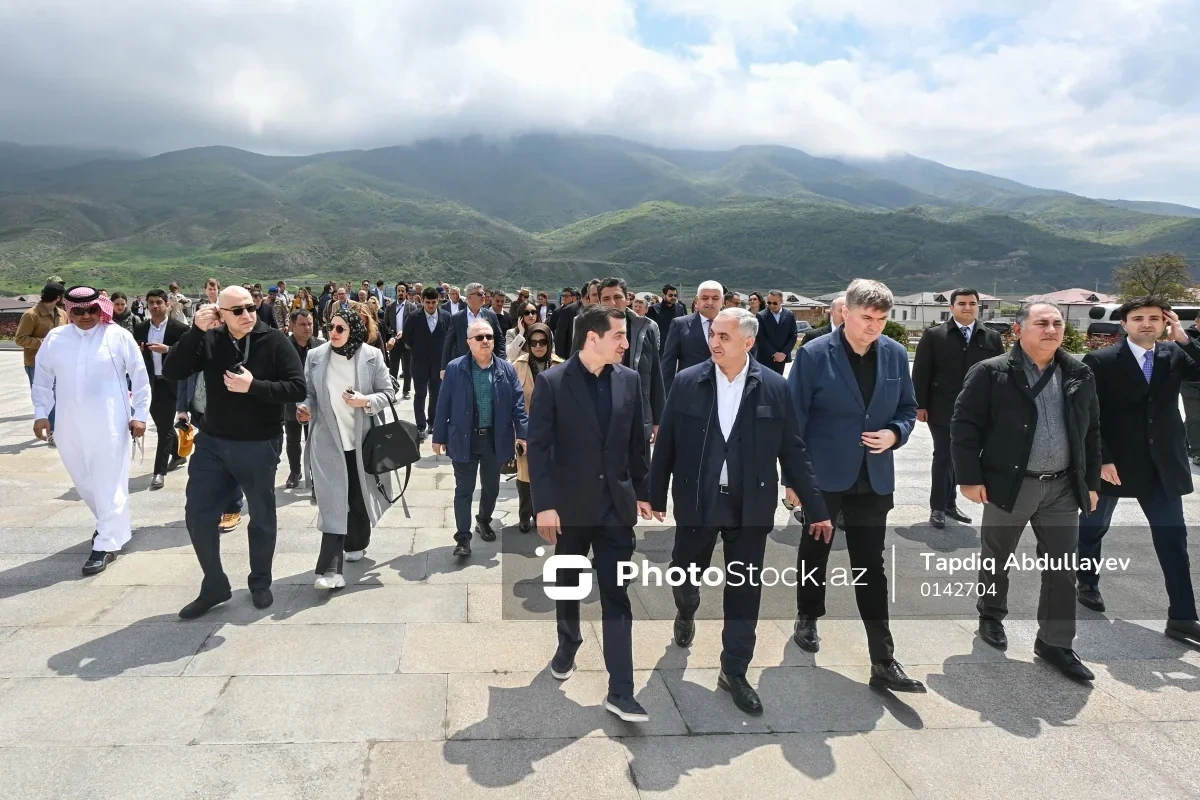
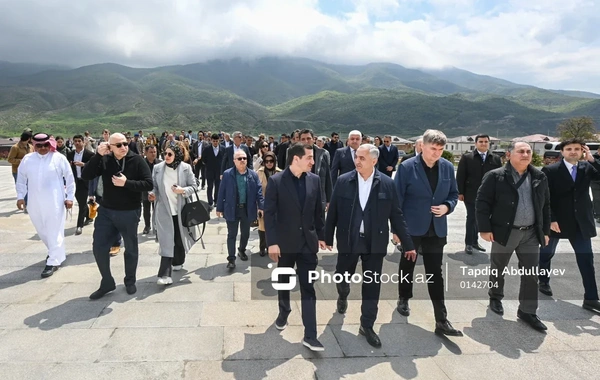
Yet another visit by representatives of the diplomatic corps accredited in Azerbaijan to Karabakh and East Zangazur has once again become not just a familiarization trip, but an important political and symbolic event, writes the newspaper "Kaspi."
More than 150 ambassadors, diplomats, military attachés, and representatives of international organizations from 62 countries, accompanied by the Assistant to the President of Azerbaijan, Head of the Foreign Policy Affairs Department of the Presidential Administration Hikmet Hajiyev, set off for the liberated territories to see with their own eyes the large-scale transformations taking place there.
The two-day visit will cover Khankendi, Khojaly, Shusha, and the Lachin district. Its main goal is to demonstrate to the international diplomatic community not only the consequences of many years of occupation, but also the unprecedented process of regional restoration that Azerbaijan is carrying out using its own internal resources.
Symbolically, the trip began precisely in Khojaly - the site of one of the most tragic pages in the modern history of Azerbaijan. The diplomats visited the Memorial to the Victims of the Khojaly Genocide and paid tribute to those who perished. As Hikmet Hajiyev noted while speaking about the visit on the social network X, it is impossible to build a future while turning a blind eye to the tragedies of the past.
This emphasis is particularly important: the international community is given the opportunity to understand the scale of the humanitarian tragedy experienced by Azerbaijan not through political interpretations, but directly on the ground.
The next point on the route was Khankendi, where the delegation visited Victory Park and familiarized themselves with the large-scale restoration work. The guests also visited Karabakh University, including the exhibition center and the educational institution's clinic.
The development of educational and medical infrastructure attracted particular attention from the diplomats. At the university, they were shown the faculty of arts, and at the clinic - modern healthcare technologies implemented in the liberated city.
This part of the visit is particularly illustrative: it is no longer simply about restoring what was destroyed, but about creating a new model of life - modern, sustainable, and oriented toward the return of the population.
In Shusha, the diplomatic corps visited the fortress, familiarized themselves with the history of Azerbaijan's cultural capital, and with the ongoing restoration work. Shusha today is not only a symbol of historical memory, but also an example of how national cultural heritage becomes part of a strategy for national revival.
Hikmet Hajiyev noted that this is already the 21st visit of the diplomatic corps to the liberated territories. According to him, while in the first trips foreign diplomats mainly saw the destruction left by the Armenian occupation, now before them is a picture of large-scale transformation.
"The opinion of the diplomatic corps and the international community is that Azerbaijan has a unique model of restoration and reconstruction, and there is no comparable experience in any region of the world," he emphasized.
Indeed, the pace of reconstruction impresses even experienced international observers. Azerbaijan is essentially creating from scratch infrastructure, transport corridors, energy systems, educational institutions, and new urban spaces.
The Ambassador of Belarus, Dmitry Pinevich, admitted that with each new visit, the changes become increasingly noticeable.
"Flying into the airport, we observe the construction of connecting highways, the development of energy projects that create a foundation for the implementation of new initiatives," the diplomat noted. Pinevich also emphasized the deep emotional impact that the Memorial to the Victims of the Khojaly Genocide had on him.
An equally important assessment was given by the UN Interim Resident Coordinator Igor Garafulic, for whom this trip was his first. According to him, such visits allow the international community to gain a deeper understanding of Azerbaijan's history, the suffering endured, and the country's aspiration for sustainable peace.
"You give all of us a good opportunity to learn your history, to learn about all the suffering and to understand why you strive for peace," he noted.
This is perhaps where the main significance of such trips lies. Karabakh today is becoming a space not only of restoration, but also of diplomatic witness. International representatives see not abstract statements, but concrete roads, universities, hospitals, monuments, and cities returning to life.
For Azerbaijan, this is an important element of foreign policy strategy: to show the world not only the consequences of the conflict, but also its own vision for the future of the region - through development, the return of life, and the strengthening of peace.
And the more frequently the diplomatic corps visits Karabakh, the harder it becomes to ignore this new reality.
Similar News
Representatives of 176 countries will participate in the World Urban Forum in Baku
Representatives from 176 countries have registered to participate in the 13th session of the World Urban Forum (WUF13), which will be held in Azerbaijan. As rep...