

 Azərbaycanca
  По-русски
  English
 About us
108 years of the Azerbaijani army: Honor. Courage. Victory.
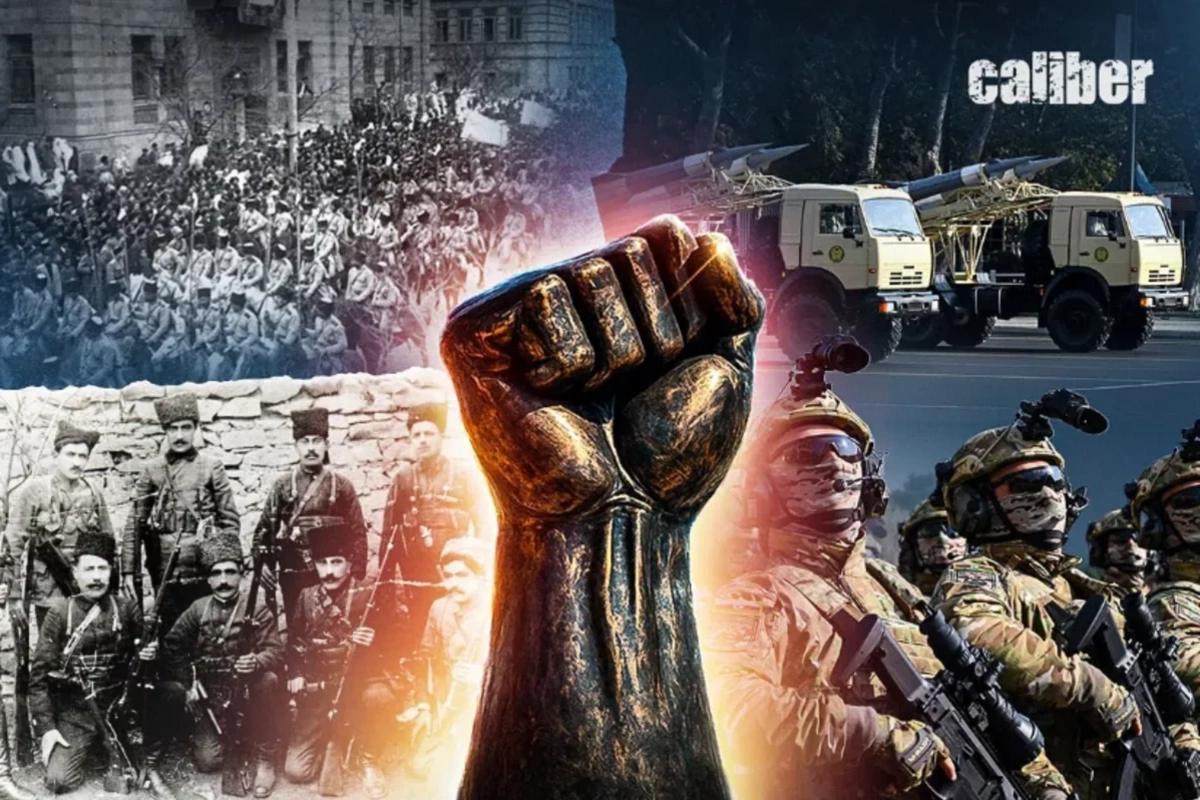
The number 108 may not seem that monumental to some in the context of world history. But it is precisely during this period that the Armed Forces of the independent Republic of Azerbaijan traversed their difficult path of development, becoming an army whose experience is now studied at leading military educational institutions around the world.
As reported by BAKU.WS, this was stated in the latest episode of the Caliber YouTube channel.
The fate of the Azerbaijani army, which traces its origins to the Separate Corps established by the decision of the government of the Azerbaijan Democratic Republic on June 26, 1918, under the command of General Aliaga Shikhlinsky, can hardly be called cloudless. The first regular unit of the ADR and today's victorious Armed Forces are separated by a gap of several decades — first the Soviet one, which consumed Azerbaijan's very statehood, then the early nineties, when independence was restored but there was no army capable of defending it.
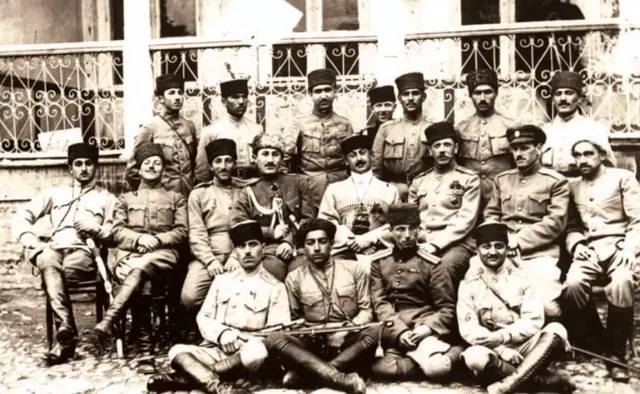
The Corps of 1918 did not last long. In the autumn of that same year, together with Nuri Pasha's Caucasian Islamic Army, it liberated Baku from Armenian-Bolshevik formations — on September 15, and this date remained the first combat success of the national army. But in April 1920, the Bolsheviks put an end to both the first democratic republic in the Muslim East and its armed forces: the national army was disbanded, and the very idea of Azerbaijani statehood was buried under the Soviet slab for seven long decades.
With the restoration of independence in 1991, the task of creating an army returned as well — and it became apparent that between the right to armed forces and an actual army lies a gap that enthusiasm alone cannot fill. The first years of independence were marked by detachments that were not consolidated into a single manageable force, without unified command, without discipline, without strategy. Armenian armed gangs took full advantage of this situation: the scale of occupation of Azerbaijani territories grew month after month.
The turning point came when Heydar Aliyev took the helm of independent Azerbaijan. The steps taken by the great leader in the military sphere can hardly be overestimated: armed groups that had brought anarchy and chaos into the country's domestic political life were disbanded, and a regular army with a unified command was created. This was institutional building — a titanic effort that bore its first fruit in January 1994: during operations on the southern front, two dozen villages of the Fuzuli district,

Similar News
The Cabinet of Ministers of the NAR has received a new authority
Amendments have been made to the "Rules for Leasing, Renting, and Using Pastures, Meadows, and Hayfields." As reported by Oxu.Az, the relevant resolution was si...