


 Azərbaycanca
  По-русски
  English
 About us
The oldest and largest city in Ireland has been found: this rewrites history
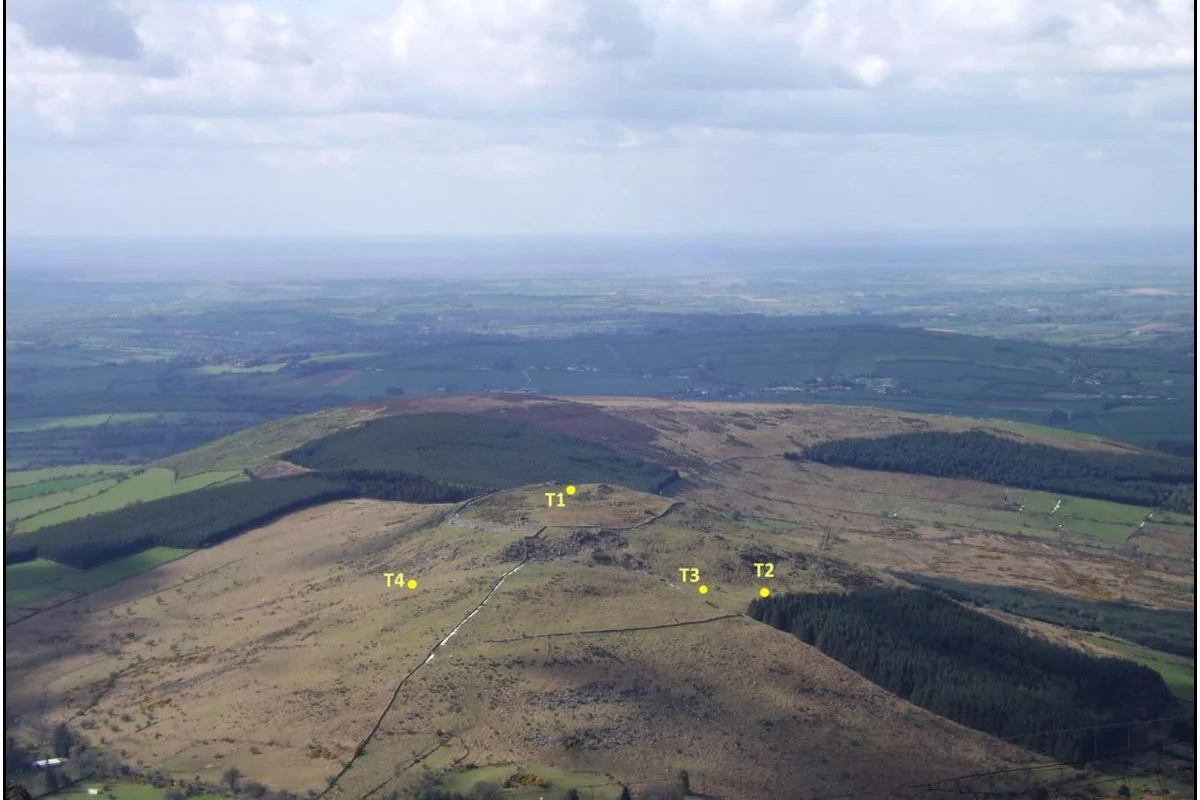
Archaeologists have discovered the largest settlement ever found in prehistoric Britain and Ireland, and it rewrites the history of the Bronze Age.
As reported by BAKU.WS, this is written about in Interesting Engineering.
According to a recent study published in the journal Antiquity, the settlement, surrounded by two ring structures, had about 600 houses within the Baltinglass hillforts complex, which includes 13 hill summits. The epic landscape reflects this groundbreaking discovery, as the area contains monumental archaeological finds from the early Neolithic and Bronze Age, such as the newly discovered settlement.
"As the oldest and largest cluster of houses to date, the Brussels Town Ring represents an intriguing example for understanding settlement dynamics in Bronze Age Ireland. This means: proto-urban development in Northern Europe may have occurred almost 500 years earlier than traditionally thought," the study authors stated.
Archaeologists discovered an early prototype of a city "500 years earlier than traditionally thought."
The oldest Irish city
Interestingly, in County Wicklow, Ireland, this complex is located inside a monumental structure called the Brussels Town Ring. It consists of two fortification walls: one around the outer part of the village and a small one located in the center of the hill.
Aerial photography showed that 509 houses are scattered on the outskirts of the city center, although the exact purpose of these enclosures is yet to be determined. However, a small cluster of 98 houses was found in the central part.
Radiocarbon analysis showed that the settlement definitely dates back to the late Bronze Age and early Iron Age (3700-800 BC). On this hilly massif, archaeologists apparently discovered other enclosures as well. So far, they have excavated this site with a "high density of bumps" only four times, digging trenches over the house platforms. The study authors explained:
"In Trench 1, a layer of pebbles corresponding to a floor was found, as well as evidence of a major fire. In Trench 3, part of a hearth was found, surrounded by a series of stake holes, and in Trenches 2 and 4, traces of pits and other potential stake holes were found. As is typical for Irish hillforts, the set of artifacts was meager and consisted of a small number of stone tools and burnt clay."
The presence of fresh water
It is noted that as the history of civilization teaches us, a water source is a crucial resource. Therefore, in addition, archaeologists discovered what may be the first of its kind water cistern in Ireland. Scientists described it as a "unique structure outlined by large stones." Apparently, a stream flowed into the structure from a rocky outcrop, possibly to provide the large city with fresh water.
With such a thriving and developed settlement ahead of its time, archaeologists wondered why this place was abandoned. Comparing data on the last, striking settlement with other mountain settlements in Ireland, archaeologists stated that this story fits into a regional decline, which is not yet linked to climate change.
"Future research will focus on confirming the nature and dating of the potential cistern, identifying the structural features of prehistoric round houses, and establishing the nature and chronology of surrounding elements," the study concludes.
Similar News

A simple way to add healthy activity to your life has been named
New Year's resolutions are most often associated with the desire to lead a more active lifestyle, however, experts assure: exhausting workouts are not necessary...