

 Azərbaycanca
  По-русски
  English
 About us
Zaur Mikailov: The state program provides not only for the expansion of networks and pipelines, but also for increasing water sources
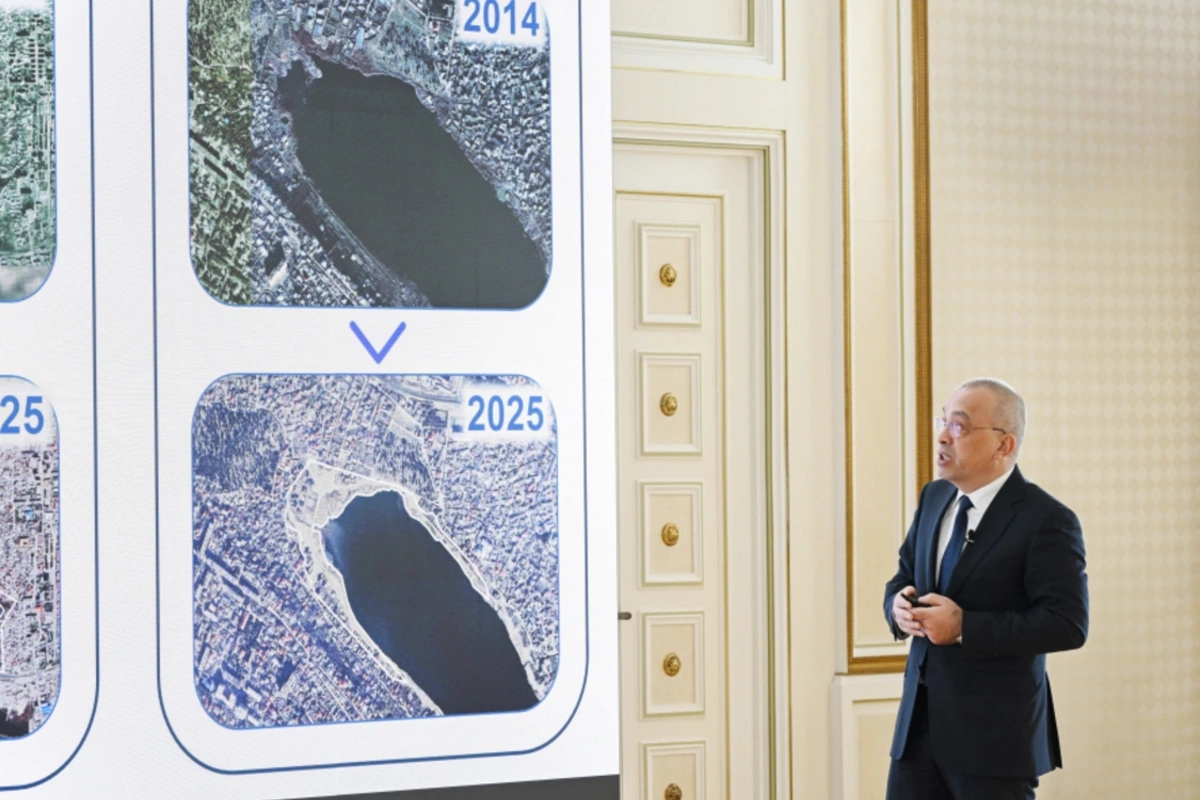
One of the important issues here is accounting for the demand for drinking water in Baku and on the Absheron Peninsula, especially the development of our sources. As you can see, a table is shown here, the daily consumption on the Absheron Peninsula averages 16 cubic meters. Our design capacity is 19.1 cubic meters. But, as you know, the average of 16 cubic meters increases here during the summer months. The peak demand in Baku and on the Absheron Peninsula is 20.8 cubic meters per second. However, according to development forecasts, it is expected that in 2040 - this program is currently calculated until 2040 - this figure will average 20.7 cubic meters per second, and during peak times, that is, in hot summer months and in some areas where there are problems with water supply to the regions, it will reach 26.9 cubic meters. In this regard, the State Program prepared by us provides for the expansion not only of networks and main lines but also an increase in water sources. One of them, of course, as we noted, is our desalination project, which will provide more than 100 million cubic meters of drinking water per year. This means an additional 3.2 cubic meters of water per day.
As reported by BAKU.WS with reference to Oxu.Az, this was stated by the chairman of the State Water Resources Agency of Azerbaijan, Zaur Mikailov, at a meeting dedicated to the State Program for improving water supply, rainwater, and wastewater systems in the city of Baku and on the Absheron Peninsula for 2026-2035, which was held under the chairmanship of President Ilham Aliyev.

"In addition, as you noted, we also plan to improve five sources and supply additional volumes of water from them. These are two directions coming from the Baku-Shollar main line, a water source from the Kura treatment facilities, and the Oguz-Gabala water pipeline. We plan that thanks to this, we will reach this peak level by 2030. After the parallel expansion of the network, all demand will be met by 2040.
As already mentioned here, we will get 3.2 cubic meters through seawater desalination, another 3 cubic meters through the reconstruction of the Jeyranbatan water treatment plant and the completion of the classical facility, and an additional 2 cubic meters of water through the operation of installations on existing water mains. As you correctly noted, if it were not for our current losses, we would have enough water volumes. But by that time, after we reduce our losses by 20%, this will allow us to meet the needs for additional volumes of water," Z. Mikailov noted.
Similar News
Ilham Aliyev signed a decree on granting special scholarships to young talents
President of the Republic of Azerbaijan Ilham Aliyev signed an order on granting special scholarships to young talents. As reported by AZERTAJ, the document sta...