

 Azərbaycanca
  По-русски
  English
 About us
Indian expert explained why WUF13 in Baku is important for the entire world
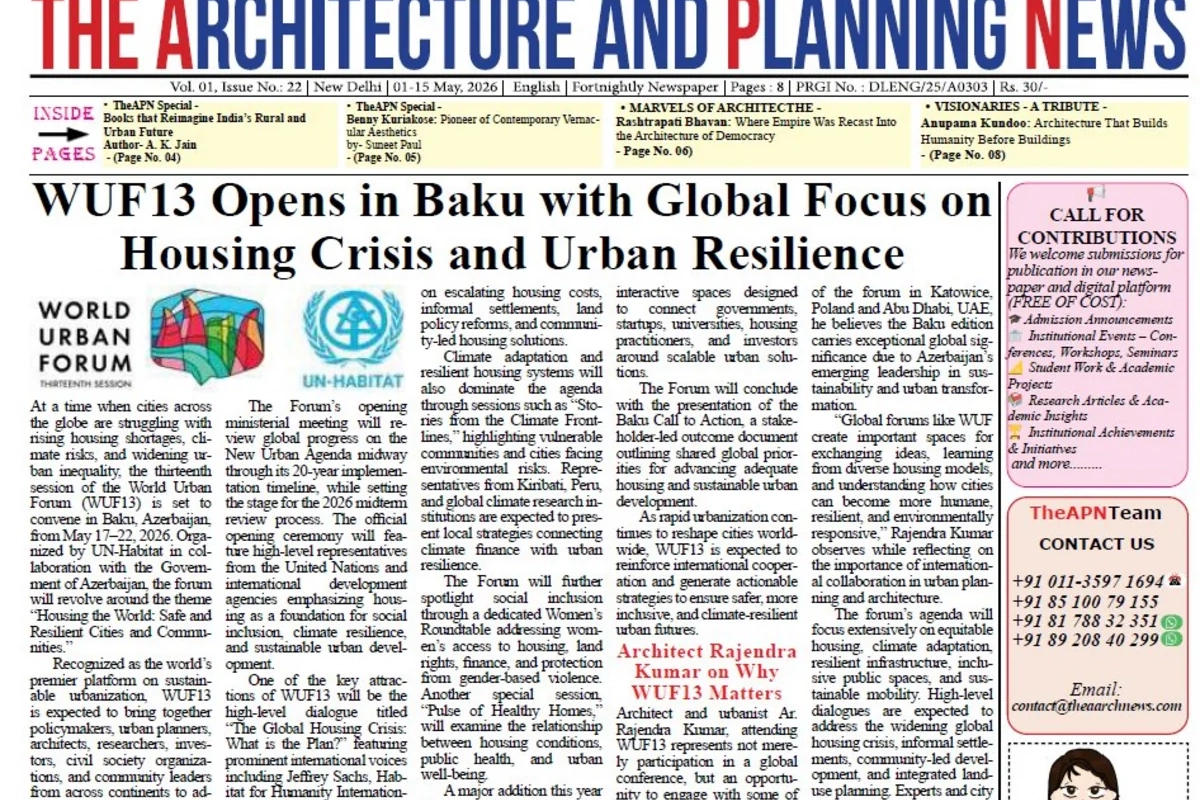
Indian architect, urbanist, and academic Rajendra Kumar, who specializes in environmentally sensitive architecture, urbanism, and sustainable development, explained the significance of the 13th session of the World Urban Forum (WUF13) held in Baku in his new article.
His piece was published in The Architecture and Planning News (TheAPN).
The author notes that cities along the Silk Road, including Icherisheher, the Palace of the Shirvanshahs, and the historic center of Sheki, demonstrate approaches aimed at improving quality of life and strengthening urban resilience.
According to R. Kumar, WUF13 will pay special attention to climate-resilient urbanization, including the adaptation of public infrastructure to growing environmental risks, particularly in regions already facing the consequences of climate change.
He believes that discussions bringing together issues of climate financing, urban governance, and local implementation of solutions may influence the shaping of future international urban policy. According to him, the forum also provides an opportunity to better understand the rapidly developing Baku — from the Old City to modern landmarks such as the Heydar Aliyev Center and the Flame Towers, which reflect a balance between modernization, cultural identity, and heritage preservation.
R. Kumar emphasized that Azerbaijan's successful hosting of COP29 and the subsequent WUF13 demonstrates the country's growing commitment to global dialogue on sustainable development, climate action, and urban planning. He also noted the significance of Azerbaijan's declared "Year of Urban Planning and Architecture — 2026," which underscores efforts to strengthen architectural heritage while simultaneously advancing sustainable and inclusive urban growth.
He separately highlighted modern projects, including "White City" and the large-scale restoration work in Shusha, as an example of Azerbaijan's aspiration to create sustainable urban environments of the future.
In the scholar's opinion, WUF13 discussions are particularly relevant for India, where rapid urbanization requires a comprehensive approach to issues of affordable housing, informal settlements, environmental sustainability, mobility, and infrastructure.
He added that the forum can facilitate international cooperation between governments, universities, research and creative institutions, leading to new partnerships, academic initiatives, and cultural exchange.
In conclusion, R. Kumar noted that WUF13 in Baku is a timely reminder: the future of cities depends not only on infrastructure and technology but also on inclusivity, sustainability, cultural heritage, and joint global action.

Similar News
The leadership of the Ministry of Defense observed the progress of training exercises during the drills
The leadership of the Ministry of Defense observed the course of training exercises within the framework of the joint military exercises "Force of Unity – 2026,...