Azərbaycanca
 По-русски
 English

 About us
A 320-Million-Year-Old Reptile Mystery Has Been Solved for the First Time
Be the first to know
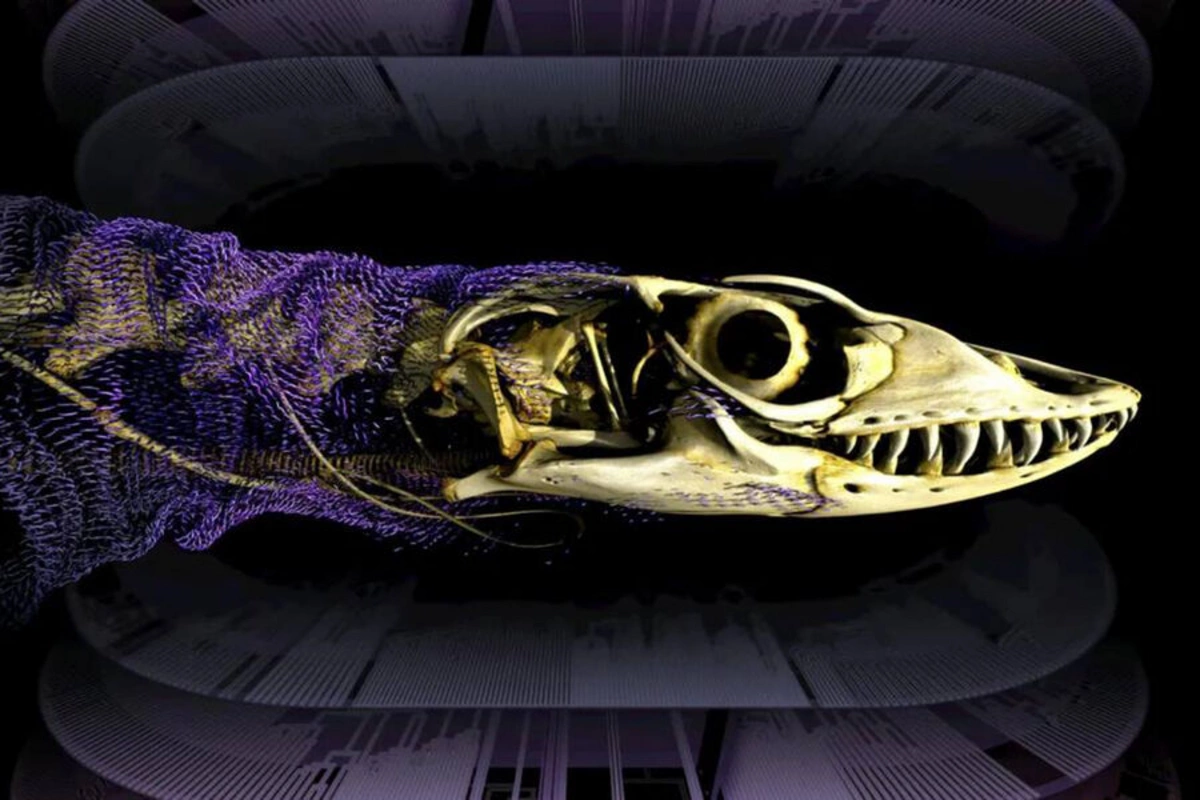
An international team of researchers traced 320 million years of dermal bone evolution in reptiles and concluded that bony plates—osteoderms—arose independently in different groups of lizards. The study also showed that monitor lizards managed to re-"restore" lost armor, which contradicts one of the classical principles of evolution. The work was published in the Biological Journal of the Linnean Society (BJLS).
Osteoderms are bony formations that develop within the skin. They are found in crocodilians, turtles, some lizards, snakes, and even dinosaurs. It is believed that the first such structures appeared approximately 475 million years ago in ancient vertebrates, long before the formation of the internal bony skeleton.
To understand the origins of these structures, scientists analyzed data on 643 living and fossil reptile species and used computational methods to reconstruct the evolutionary history of dermal armor.
It turned out that most lizards acquired osteoderms during the Late Jurassic and Early Cretaceous—more than 100 million years ago, at a time when brachiosaurs, allosauruses, and stegosauruses roamed the Earth. According to the researchers, armor may have helped protect against predators, colonize new habitats, and adapt to a changing climate.
However, the most unusual story turned out to be that of monitor lizards—a group that includes Australian goannas. Their ancestors completely lost their bony armor, likely because an active lifestyle and rapid movement were incompatible with the additional weight. But after colonizing Australia approximately 20 million years ago, their descendants re-developed osteoderms.
The researchers attribute this to the climatic changes of the Miocene, when Australia was becoming drier. Dermal bones may have reduced water loss and provided additional protection in open arid landscapes.
According to the authors, monitor lizards are the only known lizard lineage that was able to re-acquire osteoderms after losing them. This contradicts Dollo's law—the hypothesis that complex traits do not re-emerge once they have been lost.
The work also settles a long-standing debate about the origin of dermal armor. In the early 20th century, it was believed that all lizards inherited osteoderms from a common ancestor; however, the new study showed that armor arose multiple times and independently across different evolutionary lineages.
Scientists now plan to investigate the genetic mechanisms that allow skin to reinitiate the formation of bone tissue after millions of years of evolution.


Similar News
Exercise found to have the ability to "reprogram" the heart
Regular aerobic exercise changes not only how the heart works but also the structure of the nerve ganglia involved in its regulation. Moreover, the changes on t...