Azərbaycanca
 По-русски
 English

 About us
Places of Memory of Western Azerbaijan: The Village of Alagöz, Subjected to Ethnic Cleansing
Be the first to know
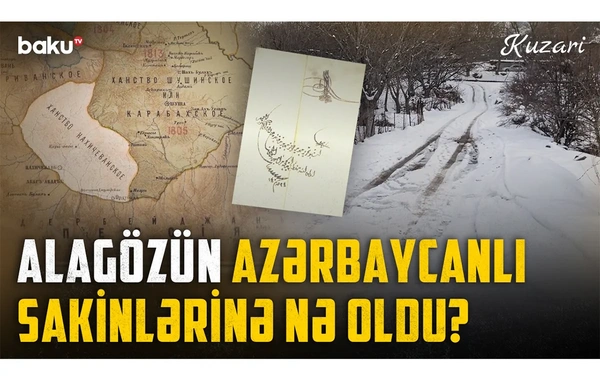
As part of the "Memorial Sites of Western Azerbaijan" project, a study has been published on the history of the Azerbaijani village of Alagöz, which was emptied as a result of the expulsion of Azerbaijanis from Armenia in the late 1980s.
As reported by BAKU.WS, the article was published in Perished Civilization.
It is noted that during the tsarist period, the name of the village was written as "Alagez" or "Alagyaz," while during the Soviet period it was written as "Alayaz." For several centuries, the village bore the name Alagöz. In April 1991, as part of the policy of Armenianization and destruction of Azerbaijani heritage in Armenia, the village was renamed Yeghegis.
Since 1995, the village has been part of the Vayots Dzor Province of the Republic of Armenia.
References to the village are found in Ottoman sources from the 18th century.
Sources indicate that from the mid-18th century until the Russian conquest, the territory of the village was part of the Daralagez maghal of the Nakhchivan Khanate.
In 1827, Russia occupied the territory of the Nakhchivan Khanate, and the Treaty of Turkmenchay of 1828 formalized the annexation of these territories to the Russian Empire. During the tsarist Russian period, the village was part of the Sharur-Daralagez uyezd of the Erivan Governorate.
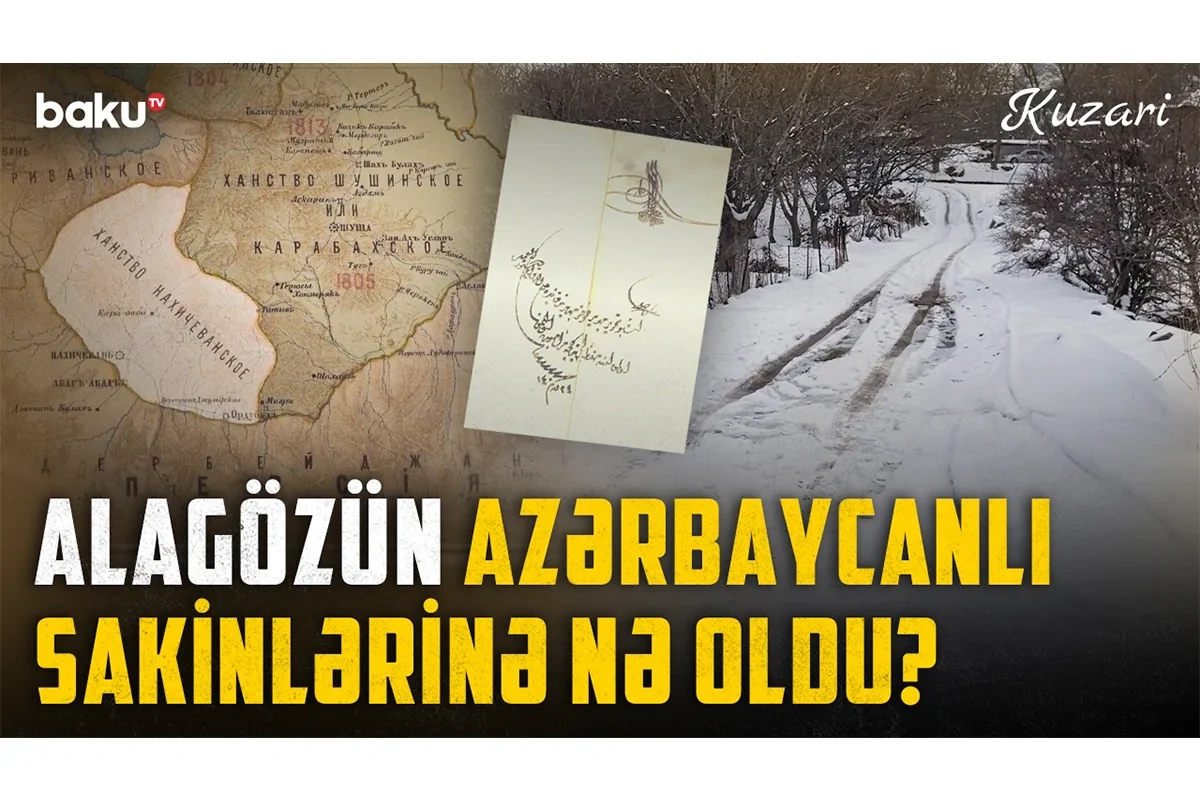
In 1829-1832, a cadastral survey of the territories of the former Iravan and Nakhchivan Khanates was compiled on behalf of the Russian authorities. According to the data provided in the document, the population of Alagöz was 98 people: 32 indigenous Turks and 66 Armenians, of whom 58 were settlers from Persia.
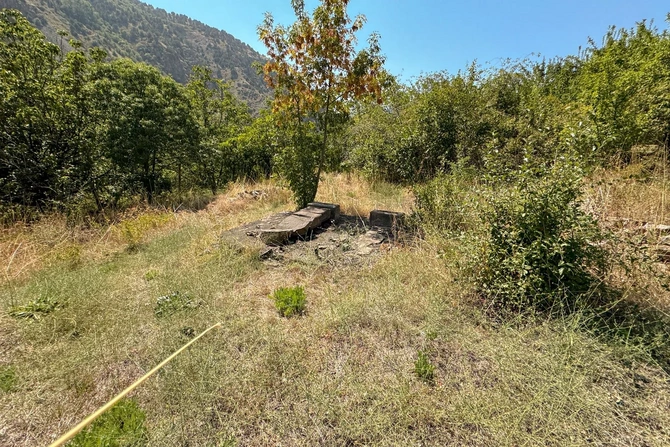
The "Collection of Information about the Caucasus" notes:
"In 1873, 223 people lived in the village, all of them ancestors of Azerbaijanis."
On May 29, 1918, the government of the Azerbaijan Democratic Republic (ADR) ceded Erivan, now Yerevan, and some adjacent territories to the Armenians. Thus, on land where the ancestors of modern Azerbaijanis had historically lived, the First Republic of Armenia was established. In the very first months of its existence, it began making territorial claims against neighboring countries: Azerbaijan, Georgia, and Turkey (at that time the Ottoman Empire).
In 1918-1920, the nationalist Dashnaktsutyun party, which was in power in the Republic of Armenia, carried out ethnic cleansing of the Turkic population in the Erivan Governorate, as well as in other regions, particularly in Zangezur, Karabakh, and Nakhchivan.
Evidence that the residents of Alagöz were subjected to ethnic cleansing is provided by the sharp decline in the Turkic population of the village. This is apparent when comparing statistical data from previous years with the results of the Soviet Armenia census conducted in 1922. In 1922, the village had a population of 271 people, of whom 180 were Azerbaijanis.
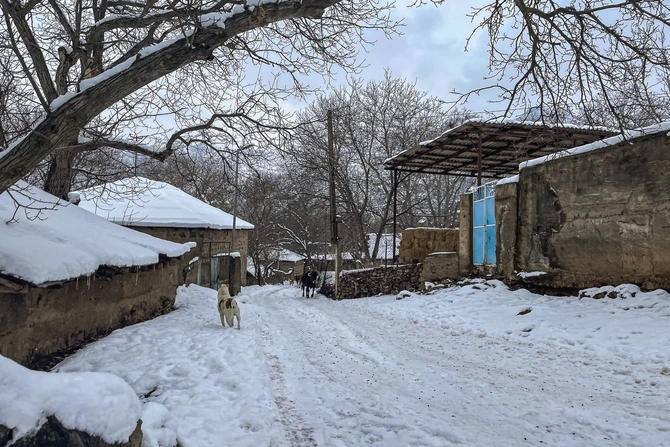
The "Dictionary of Toponyms of Armenia and Adjacent Regions" by T.Kh. Hakobyan, St.T. Melik-Bakhshyan, and O.Kh. Barseghyan provides the following population data for the village:
In 1989, 262 people lived in the village, all of them Azerbaijanis.
In the late 1980s, as a result

Similar News

Places of Memory of Western Azerbaijan: The History of the Village of Alagöz, Whose Residents Were Expelled by Armenians in the 1980s
A unique project has been presented to the public - the research work "Places of Memory of Western Azerbaijan". For the first time, during field research on the...