

 Azərbaycanca
  По-русски
  English
 About us
Unusual twisted DNA structures found in human blood
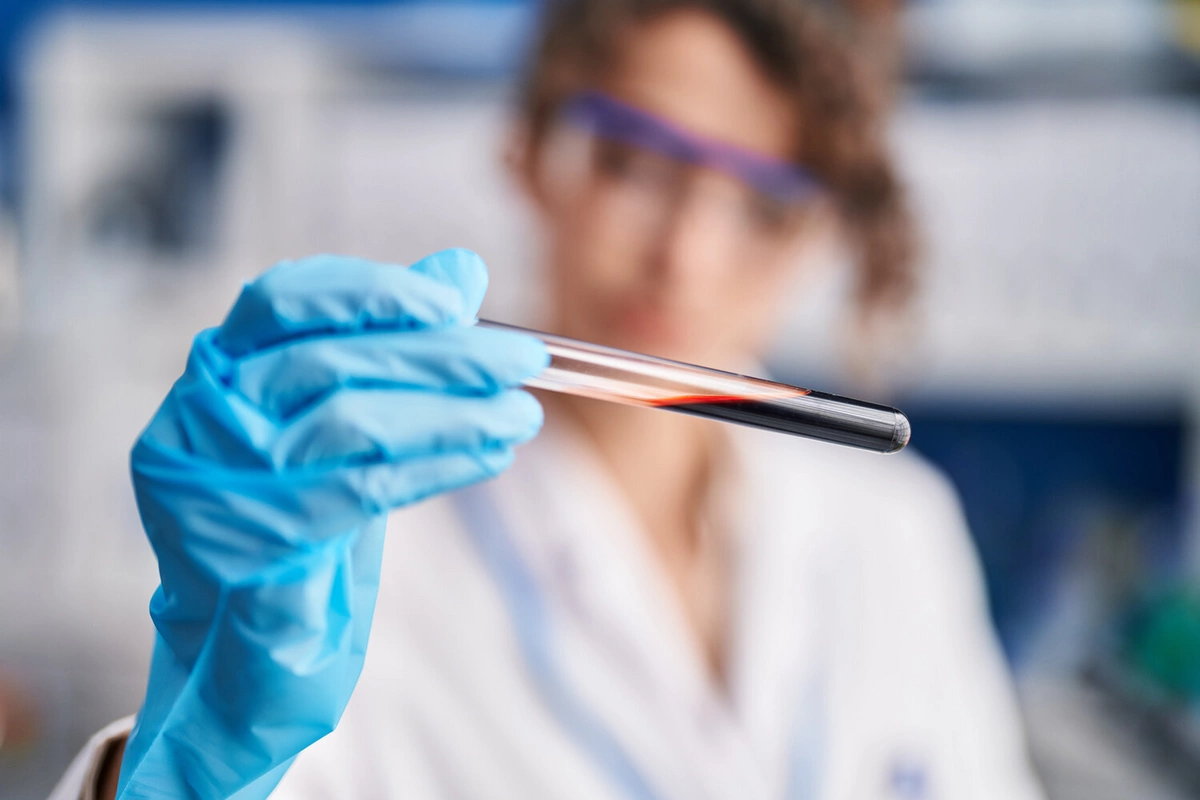
Scientists from the University of Cologne have discovered unusual four-stranded DNA structures in human blood plasma that differ from the familiar double helix. These are G-quadruplexes — compact structures formed from guanine-rich segments of genetic material. The results of the study have been published as a preprint on bioRxiv.
Normally, DNA exists as a double helix of two linked strands. However, individual fragments of genetic material can fold differently. In a G-quadruplex, four guanine bases join together into a flat structure, and several such "squares" can stack on top of one another.
The researchers studied ultrashort cell-free DNA — small fragments of genetic material that enter the bloodstream during the natural death of cells. Such molecules can be as short as about 50 "genetic letters."
To determine whether G-quadruplexes are preserved directly in plasma, the scientists used a gentle extraction method that was not supposed to destroy the spatial structure of the material. The samples were then tested using two independent approaches: an antibody that recognizes G-quadruplexes and a special fluorescent molecule. Both methods produced a positive signal.
Additional experiments showed that the detectors were interacting specifically with folded structures rather than randomly binding to genetic material. According to the researchers, this provides the first direct biochemical evidence of the presence of G-quadruplexes in nucleic acids isolated directly from human plasma.
However, the scientists have not yet determined whether the discovered structures are specifically DNA or RNA, as both molecules are capable of forming G-quadruplexes. It is also unknown whether they fold inside cells or only after entering the bloodstream.
The researchers note that G-quadruplexes are found in regions of the genome associated with the regulation of gene activity, and changes in them have been observed in certain types of cancer. However, the new study does not prove that the discovered structures can be used for tumor diagnostics.


Similar News
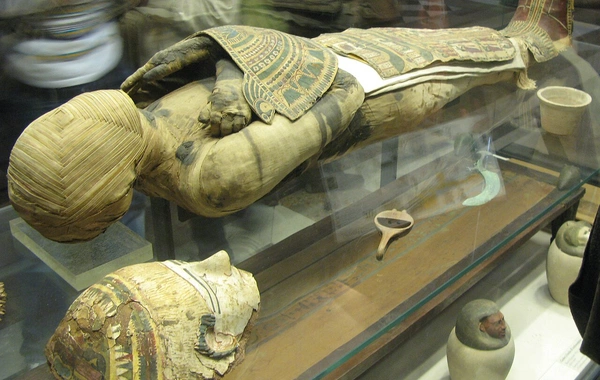
The curse of mummies turned out to be a real biological threat to antiquities buyers
Bioarchaeologists have warned of a real health threat posed by the growing trade in mummified human remains on social media, marketplaces, and auction sites. Th...