Azərbaycanca
 По-русски
 English

 About us
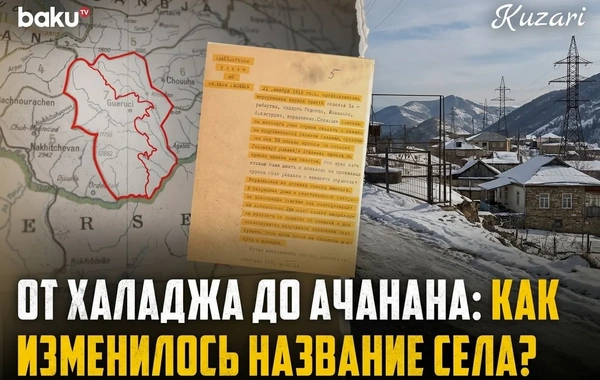
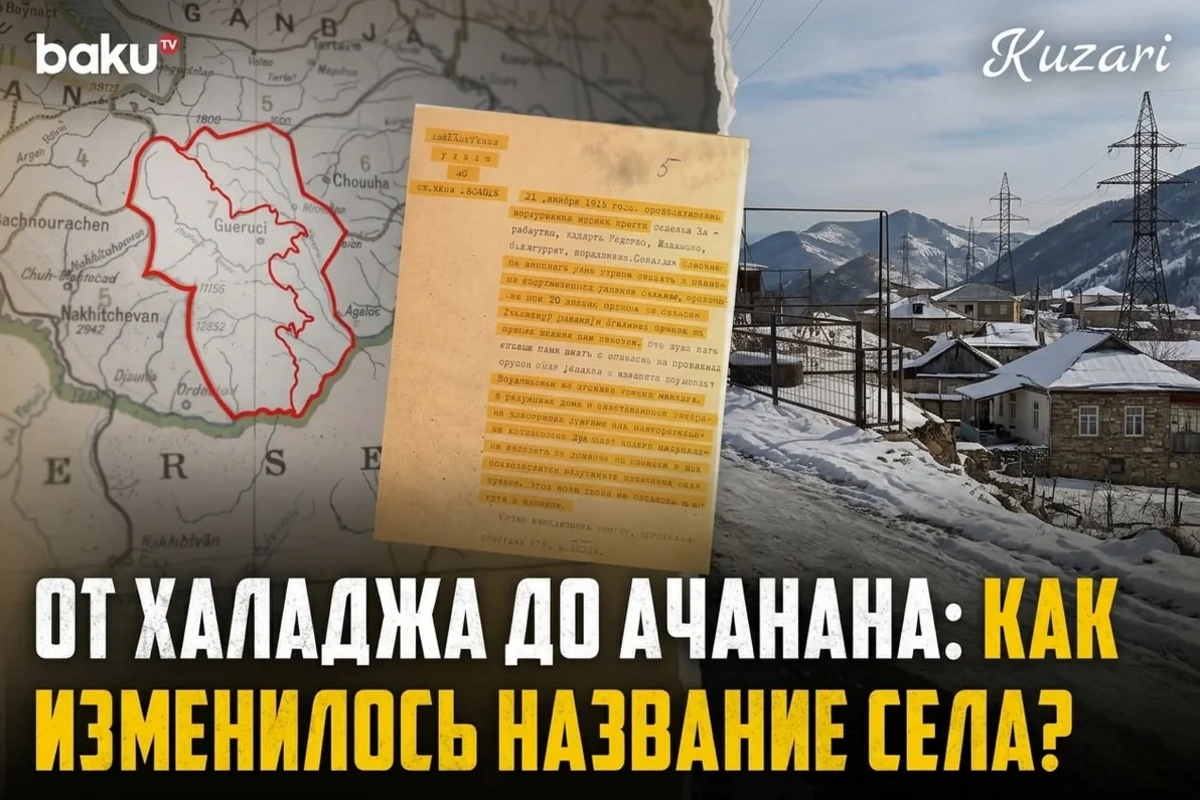
Places of Memory of Western Azerbaijan: Ancient Turkic Village of Zangezur - Khalaj
Be the first to know
As part of the "Memorial Sites of Western Azerbaijan" project, a study on the history of the Azerbaijani village of Khalaj in present-day Armenia, which was emptied in the late 1980s as a result of the expulsion of Azerbaijanis, has been published.
As BAKU.WS reports with reference to Report, an article on this topic has been published in the Perished Civilization edition.
It is noted that during the tsarist period the village was called "Khalaj," "Khalaj 2nd," "Khalach," and during the Soviet period — "Khalaj," "Khalach." For at least two centuries, the village bore the name Khalaj. In July 2006, as part of the policy of Armenianization and destruction of Azerbaijani heritage in Armenia, the village was renamed Achanan. Since 1995, the village has been part of the Syunik Province of the Republic of Armenia.
The village is historically located in Zangezur, where the ancestors of Azerbaijanis lived and the western part of which was handed over to Armenia by the Bolsheviks.
From the mid-18th century until the Russian conquest, the territory of the village was part of the Ajanan-Turkish magal of the Karabakh Khanate.
In the early 19th century, the Karabakh Khanate came under the rule of the Russian Empire. During the tsarist Russian period, the village was included in the Zangezur district of the Elisavetpol Governorate. According to the document "Description of the Karabagh Province," compiled in 1823 on the orders of Commander-in-Chief and Chief Administrator in Georgia A.P. Yermolov, the ancestors of Azerbaijanis lived in the village.
According to statistical data from the tsarist period, which Armenian sources also reference, at various times before 1914, exclusively or predominantly the ancestors of Azerbaijanis lived in the village.
In 1918–1920, independent Armenian armed detachments and troops of the First Republic of Armenia carried out ethnic cleansing of the Turkic population in the Elisavetpol Governorate, including in Zangezur. Ethnic cleansings were also carried out in the Erivan Governorate and other regions, particularly in Karabakh and Nakhchivan.
According to archival documents, in December 1918, Armenian armed formations opened fire on the villagers. As a result of the attack, 80 people were killed, and the rest were forced to flee. The village itself was looted and burned. The fact of the village's destruction is also confirmed by Armenian sources from 1919.
On November 29, 1920, despite the Dashnaktsutyun government still being in power in Erivan, Soviet Armenia was proclaimed. The next day, the leadership of Soviet Azerbaijan decided to transfer Zangezur to Soviet Armenia. As a result, the former Zangezur district was divided: in the summer of 1921, its western part, where after the ethnic cleansings mainly Armenian population remained, became part of the Armenian SSR, while the eastern part remained within the Azerbaijan SSR.
In the early 1920s, the Azerbaijani population began returning to the village. During the Soviet period, the village was part of the Kafan district, established in 1930. According to Armenian sources, until the 1980s, exclusively Azerbaijanis lived on the territory of the village.
In the 1940s, residents of three liquidated surrounding


Similar News

Three employees of Baku TV have been awarded the "Taraggi" medal
Three of the journalists awarded today by President Ilham Aliyev are employees of Global Media Group. As reported by BAKU.WS, all of them work at the Baku TV ch...