Azərbaycanca
 По-русски
 English

 About us
Places of Memory of Western Azerbaijan: The History of the Village of Urut, Where Azerbaijanis Lived Until the End of the 1980s
Be the first to know
A unique project has been presented to the public - the research work "Places of Memory of Western Azerbaijan".
For the first time, during field research on the territory of modern-day Armenia, data on nearly 600 villages where ancestors of modern Azerbaijanis originally lived has been collected and systematized. In some of them, fragments of Turkic cultural and historical heritage have been preserved - cemeteries, shrines, mosques.
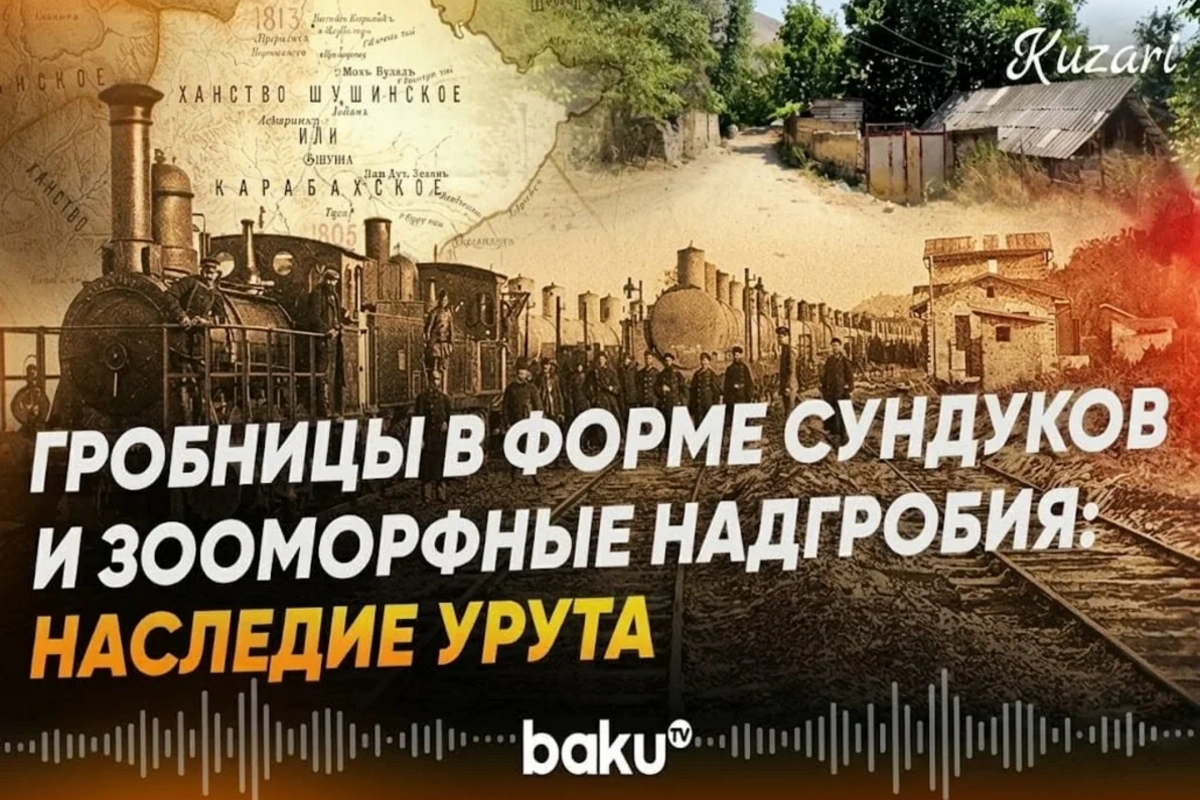
A separate video has been prepared for each village in three languages (English, Azerbaijani, Russian), containing photo and video footage of the specific village on the territory of modern-day Armenia, documented data on the number of Turks (ancestors of modern Azerbaijanis) who lived there in the 19th-20th centuries, as well as its history and the chronology of the gradual "disappearance" of the Turkic population as a result of expulsions and ethnic cleansings.
Western Azerbaijan is historically a geographical space where hundreds of thousands of Azerbaijanis lived. Despite attempts to erase the traces of our compatriots in these territories, remembering the ancient places of residence of Azerbaijanis in Western Azerbaijan and being aware of them is the duty of each of us.
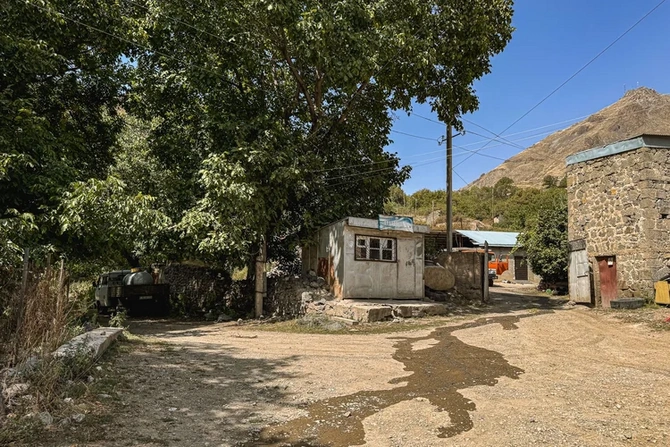
BAKU.WS presents to its readers the next part of the series, dedicated to the Azerbaijani village of Urut (now Vorotnavan) in Armenia, where Azerbaijanis lived until the late 1980s.
In the documents of the Russian Empire and other written sources of the 19th - first third of the 20th century, the ancestors of modern Azerbaijanis were designated by various terms: "Tatars", "Caucasian Tatars", "Turks" or "Muslims". In some sources used in the preparation of the project, the designations "Turks", "Turko-Tatars", "Islams" or "Mohammedans" are also found. Hereinafter, for the period before 1920, the term "ancestors of Azerbaijanis" will be conventionally used, and for the subsequent period - "Azerbaijanis".
During the tsarist period, the settlement was called Urut, Rut, and during the Soviet period - Urut, Vorotan.
For several centuries, the village bore the name Urut. In July 1968, as part of the policy of Armenization and destruction of Azerbaijani heritage in Armenia, the village was renamed to Vorotan, and in June 2017 - to Vorotnavan.
Since 1995, the village has been part of the Syunik Province of the Republic of Armenia.
The village is mentioned in a 16th-century Ottoman source.
From the mid-18th century until the Russian conquest, the territory of the village was part of the Karabakh Khanate.
In the early 19th century, the Karabakh Khanate came under the rule of the Russian Empire. During the tsarist Russia period, the village was part of the Zangezur district of the Elisabethpol Governorate.
According to statistical data from the tsarist period, also cited in Armenian sources, at various times before 1914, the village was inhabited exclusively or predominantly by ancestors of Azerbaijanis.
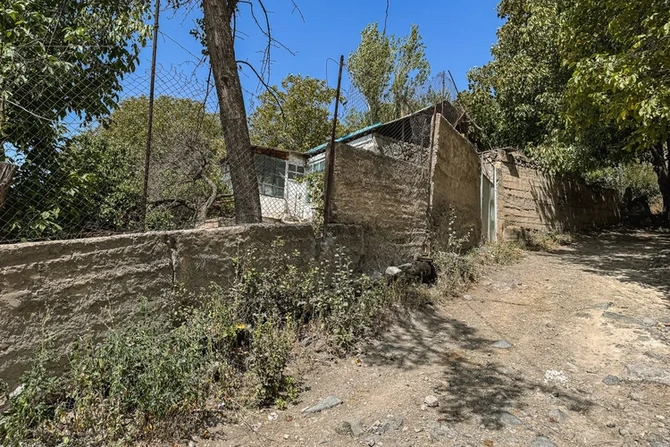
Korkotyan Z. Population of Soviet Armenia over the Last Hundred Years (1831-1931):
In 1831, 11 people lived in the village, all of them ancestors of Azerbaijanis.
In 1873, 222 people lived in the village, all of them ancestors of Azerbaijanis.
Compendium of Statistical Data on the Population of the Transcaucasian Region, Extracted from Family Lists of 1886:
In 1886, 211 people lived in the village, all of them ancestors of Azerbaijanis.
In the late 19th - early 20th century, the economic development of the South Caucasus, driven in particular by the expansion of the Transcaucasian railway network, the development of trade, and the growth of industry, contributed to population growth in many settlements of the region. The population growth of the village of Urut by 1897 could also have been partially linked to these processes.
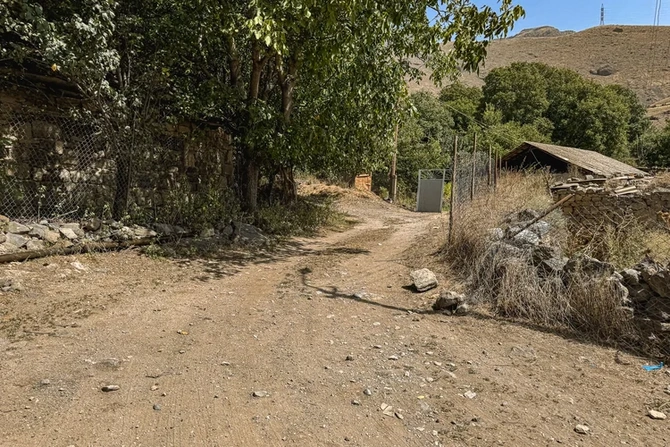
Korkotyan Z. Population of Soviet Armenia over the Last Hundred Years (1831-1931):
In 1897, 359 people lived in the village, all of them ancestors of Azerbaijanis.
Collection of Information on the Elisabethpol Governorate:
In 1900, 360 people lived in the village, all of them ancestors of Azerbaijanis.
Memorial Book of the Elisabethpol Governorate for 1910:
In 1908, 390 people lived in the village, all of them ancestors of Azerbaijanis.
Caucasian Calendar for 1915:
In 1914, 409 people lived in the village, predominantly ancestors of Azerbaijanis.
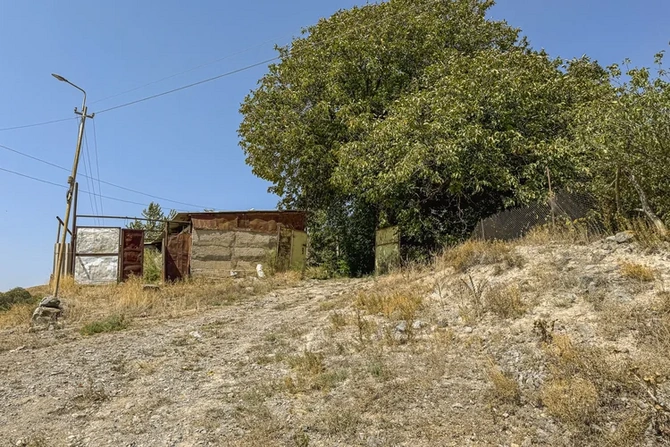
On May 29, 1918, the government of the Azerbaijan Democratic Republic (ADR) ceded Erivan, now Yerevan, and some adjacent territories to the Armenians. Thus, the First Republic of Armenia was created on the land where ancestors of modern Azerbaijanis had historically lived. Already in the first months of its existence, it began to make territorial claims against neighboring countries: Azerbaijan, Georgia, and Turkey (at that time the Ottoman Empire).
In 1918-1920, independent Armenian armed detachments and troops of the First Armenian Republic carried out ethnic cleansings of the Turkic population in the Elisabethpol Governorate, predominantly in Zangezur. Ethnic cleansings were also carried out in the Erivan Governorate, as well as in other areas, especially in Karabakh and Nakhchivan.
According to archival documents, as early as 1917, the village of Urut was devastated by Armenian militants. In September 1918, Armenian armed detachments, on the orders of Andranik Ozanyan, attacked the village of Urut, forcing its residents to leave their homes.
The consequences of the ethnic cleansing are evident when comparing the number of Turkic residents of the village in previous years with their numbers according to the 1922 Soviet Armenia census data.
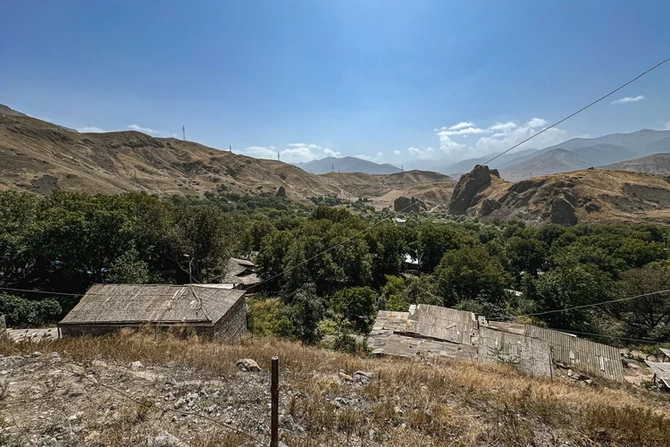
Korkotyan Z. Population of Soviet Armenia over the Last Hundred Years (1831-1931):
In 1922, 173 people lived in the village, all of them Azerbaijanis.
On November 29, 1920, Soviet Armenia was proclaimed, although the Dashnaktsutyun government was still in power in Erivan. The next day, the leadership of Soviet Azerbaijan decided to transfer Zangezur to Soviet Armenia. As a result, the former Zangezur district was divided: in the summer of 1921, its western part, where after ethnic cleansings mainly Armenian population remained, became part of the Armenian SSR, while the eastern part remained part of the Azerbaijan SSR.
During the Soviet period, the village was part of the Sisian district.
According to Armenian sources, at various times until the late 1980s, the territory of the village was inhabited exclusively or predominantly by Azerbaijanis.
Korkotyan Z. Population of Soviet Armenia over the Last Hundred Years (1831-1931):
In 1926, 263 people lived in the village, all of them Azerbaijanis.
In 1931, 340 people lived in the village, all of them Azerbaijanis.
Manvelyan A.P., Martirosyan G.M. Settlements and Population of the Armenian SSR for 1831-1959:
In 1959, 623 people lived in the village, predominantly Azerbaijanis.
Hakopyan T.Kh., Melik-Bakhshyan St.T., Barseghyan O.Kh. Dictionary of Toponyms of Armenia and Adjacent Regions:
In 1970, 609 people lived in the village.
In 1979, 663 people lived in the village.
In 1989, 162 people lived in the village.
In the late 1980s, as a result of Armenian territorial claims on Karabakh and the deterioration of relations between the two republics, Azerbaijanis were permanently expelled from the territory of the Armenian SSR.
After the expulsion of Azerbaijanis, the territory of the village was settled by Armenians.
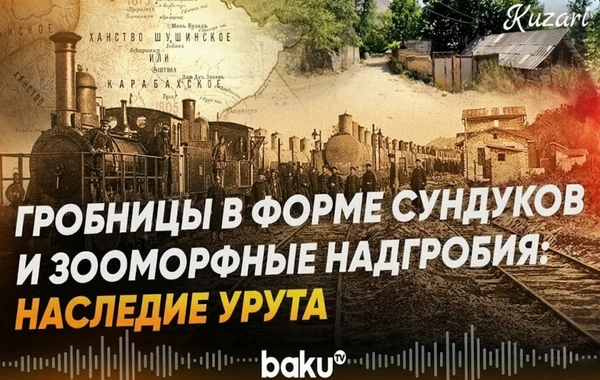
During the Soviet period, chest-shaped and zoomorphic tombstones were discovered on the territory of the village of Urut. According to published research, the tombstones bore inscriptions in Arabic and Turkic languages, dating back to the 15th-17th centuries. According to Soviet Armenian and Azerbaijani sources, some monuments of that period contain references to death from plague.
In 2021-2024, as part of the preparation of the book "Perished Civilization", extensive fieldwork was carried out on the territory of Armenia, including in remote mountainous areas, to identify and document preserved objects of Azerbaijani heritage. During this work, an Azerbaijani cemetery was discovered on the territory of the village, where some tombstones have been preserved.
Sources used in the preparation of the material:
To substantiate the above-mentioned information, 26 separate sources were used. Among them are documents from the State Archive of the Republic of Azerbaijan, the Great Soviet Encyclopedia, The Scotsman, Richard Hovannisian's work The Republic of Armenia, and other documents. In addition, 20 visual materials related to the village of Sultan-Ali-Gyshlaq have been posted.
Special note: video materials of this project will be exclusively broadcast on Baku TV.
Similar News
Farhad Mammadov: Six thematic committees will operate within the framework of the "Bridge of Peace" initiative
The increasing number of participants in the "Peace Bridge" initiative and the growing interest of Azerbaijani and Armenian societies in this format is already...