Azərbaycanca
 По-русски
 English

 About us
Baku Strengthens Economic and Energy Presence in Southeastern Europe
Be the first to know
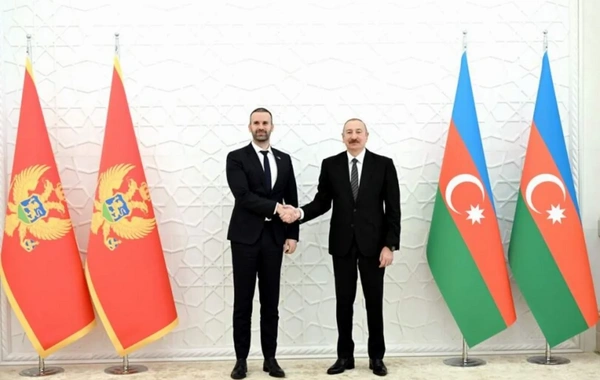
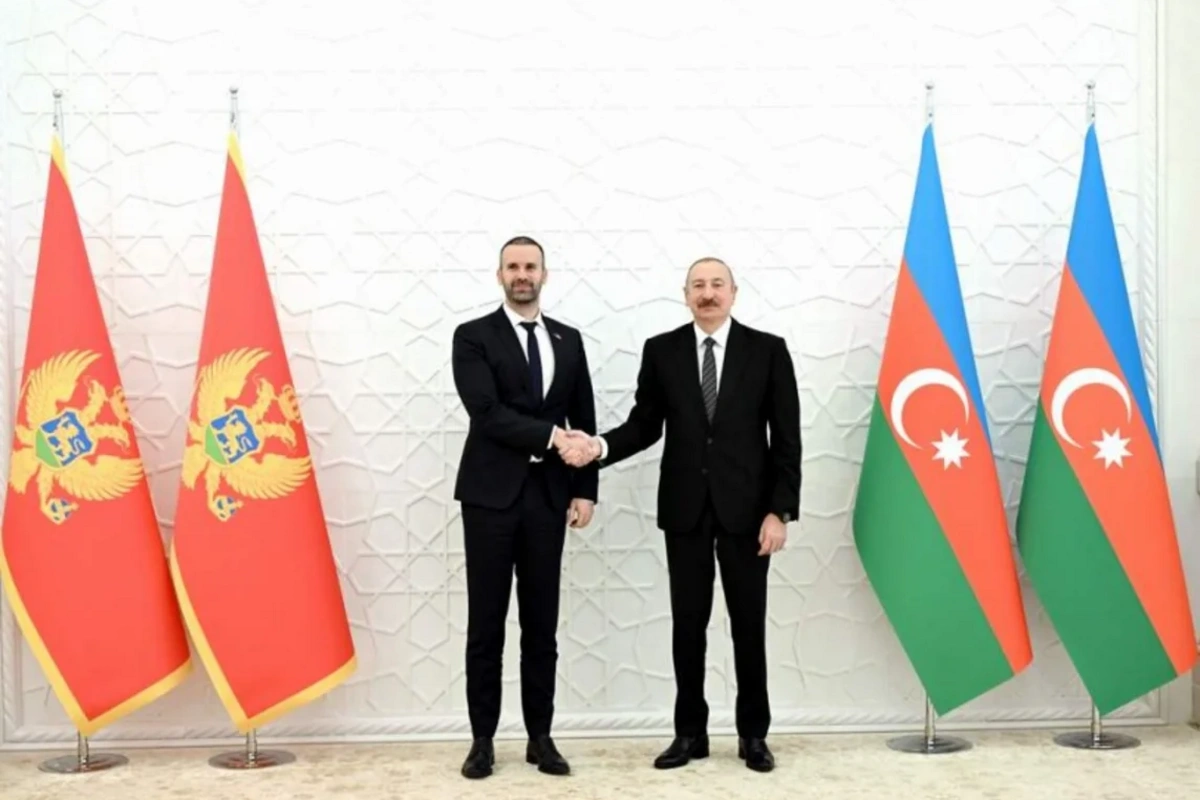
Among the visits of high-ranking representatives of European states to Azerbaijan in recent days, the working visit of Montenegro's Prime Minister Milojko Spajić to Baku stands out in particular, writes the newspaper "Caspian."
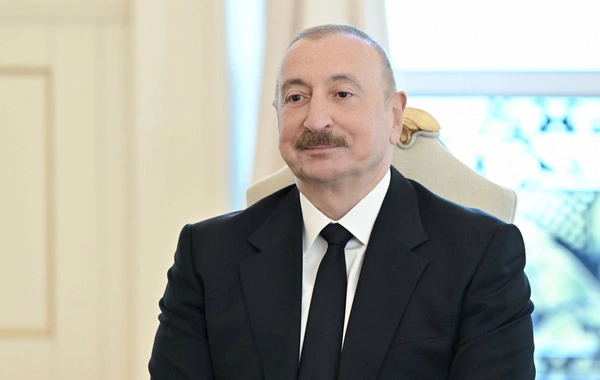
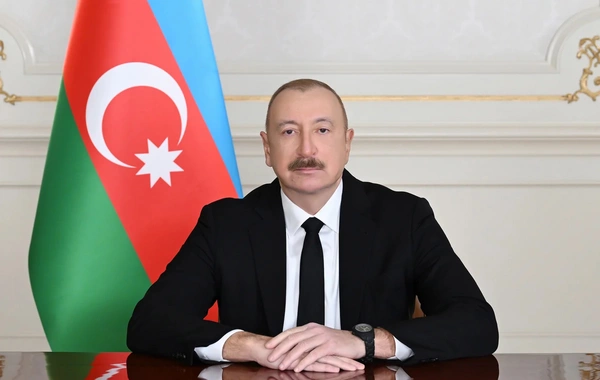
On November 24, the Prime Minister of Montenegro was received by President of Azerbaijan Ilham Aliyev, who discussed with him the full spectrum of bilateral relations and announced the upcoming official visit of the President of Montenegro to Azerbaijan.
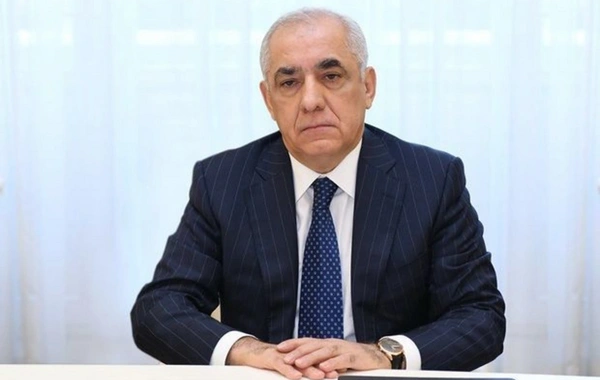
On the same day, Spajić met with Prime Minister Ali Asadov and Minister of Finance Sahil Babayev, who heads the Azerbaijani part of the joint commission on economic cooperation. The main topics of the negotiations were the expansion of Azerbaijani investments in Montenegro, energy cooperation, and the implementation of joint infrastructure projects.
Overall, the visit continued a series of contacts between the leadership of the two countries in recent years. As early as June 2024, the third session of the joint economic commission was held in Podgorica; in November of the same year, President of Montenegro Jakov Milatović met with Ilham Aliyev at the COP29 climate conference in Baku; and in December 2025, Azerbaijan was visited by Deputy Prime Minister and Foreign Minister of Montenegro Ervin Ibrahimović. One of the recurring topics of these negotiations was the expansion of Azerbaijani investments in Montenegro's economy.
In January of this year, during negotiations with the Azerbaijani side, Montenegro's Minister of Tourism Simonida Kordić reported that the volume of Azerbaijani investments in the country's economy had exceeded 800 million euros. According to her, in 2025, the number of Azerbaijani tourists who visited Montenegro increased by 54%.
One of the largest Azerbaijani investment projects in Montenegro has been the Portonovi resort in Kumbor, on the shore of the Bay of Kotor. In 2012, the government of Montenegro concluded a long-term lease agreement with SOCAR for the territory of former military barracks — the development of the project was undertaken by the company Azmont Investments. In 2019, a yacht marina and part of the resort complex opened here, and in 2021, the One&Only hotel began operating. During the negotiations with Spajić, the Azerbaijani co-chair of the intergovernmental commission Sahil Babayev cited Portonovi as a successful example of investment cooperation and expressed Baku's interest in implementing new projects in the tourism, infrastructure, and other sectors of Montenegro's economy.
Montenegro's European Prospects
Notably, at the meeting with Spajić, President Ilham Aliyev specifically highlighted Montenegro's progress in negotiations on EU accession. According to him, bringing national legislation into compliance with European standards contributes to creating predictable conditions for long-term investments.
Earlier in the month — on November 4 — the European Commission presented a roadmap for completing negotiations on Montenegro's accession to the EU, allowing for the possibility of their conclusion as early as December of this year. In this regard, Azerbaijan's investment interest in Montenegro should also be considered in light of its prospects for EU membership. This will allow Azerbaijani capital, already established in the country's tourism sector, to gain additional opportunities for expanding its presence in the European tourism and hospitality services market.
From TAP to IAP
One of the central topics of energy negotiations was the Ionian-Adriatic Pipeline (IAP) project, which is intended to connect the Trans-Adriatic Pipeline TAP with Croatia's gas transmission system through Albania, Montenegro, and Bosnia and Herzegovina. Its designed throughput capacity is 5 billion cubic meters of gas per year. SOCAR has been participating in the project management group as an observer since 2016.
Since Montenegro does not yet have its own gas transmission network, the implementation of the IAP will require the creation of domestic gas infrastructure. Given SOCAR's experience in the gasification of Albania and Bulgaria, this area could become yet another sphere of Azerbaijani investment in the Balkans.
Notably, on November 18 — six days before Spajić's negotiations in Baku — Montenegro signed a memorandum with the United States in Warsaw on energy cooperation, also covering the IAP project. The possibility of transporting gas in both directions will allow Podgorica to receive both Azerbaijani gas through TAP and LNG through Croatian infrastructure. This is precisely what explains Montenegro's interest in cooperating simultaneously with Baku and Washington.
Baku's New Foothold in Europe
During negotiations with Prime Minister Ali Asadov, Spajić also announced the intention to launch an electronic visa system next year, which should simplify travel for Azerbaijani citizens to Montenegro. The IV session of the intergovernmental commission on economic cooperation is scheduled for 2027 in Baku.
The upcoming negotiations will take place against the backdrop of Montenegro's advancement toward EU membership and the intensification of international contacts on the Ionian-Adriatic Pipeline project. For Azerbaijan, prospects are opening for expanding its investment presence on the Adriatic coast, participating in the development of gas infrastructure in the Western Balkans, and entering new markets for natural gas sales.
Thus, in the long term, Montenegro could become one of the anchor points of Azerbaijan's economic and energy presence in Southeastern Europe, which will undoubtedly serve the long-term interests of both countries.
Similar News

Places of Memory of Western Azerbaijan: The History of the Village of Ayrum, Where Azerbaijanis Lived Until the Late 1980s
A unique project has been presented to the public - the research work "Places of Memory of Western Azerbaijan". For the first time, during field research on the...