

 Azərbaycanca
  По-русски
  English
 About us
Physicists have found a solution to one of the main paradoxes of the Universe's structure
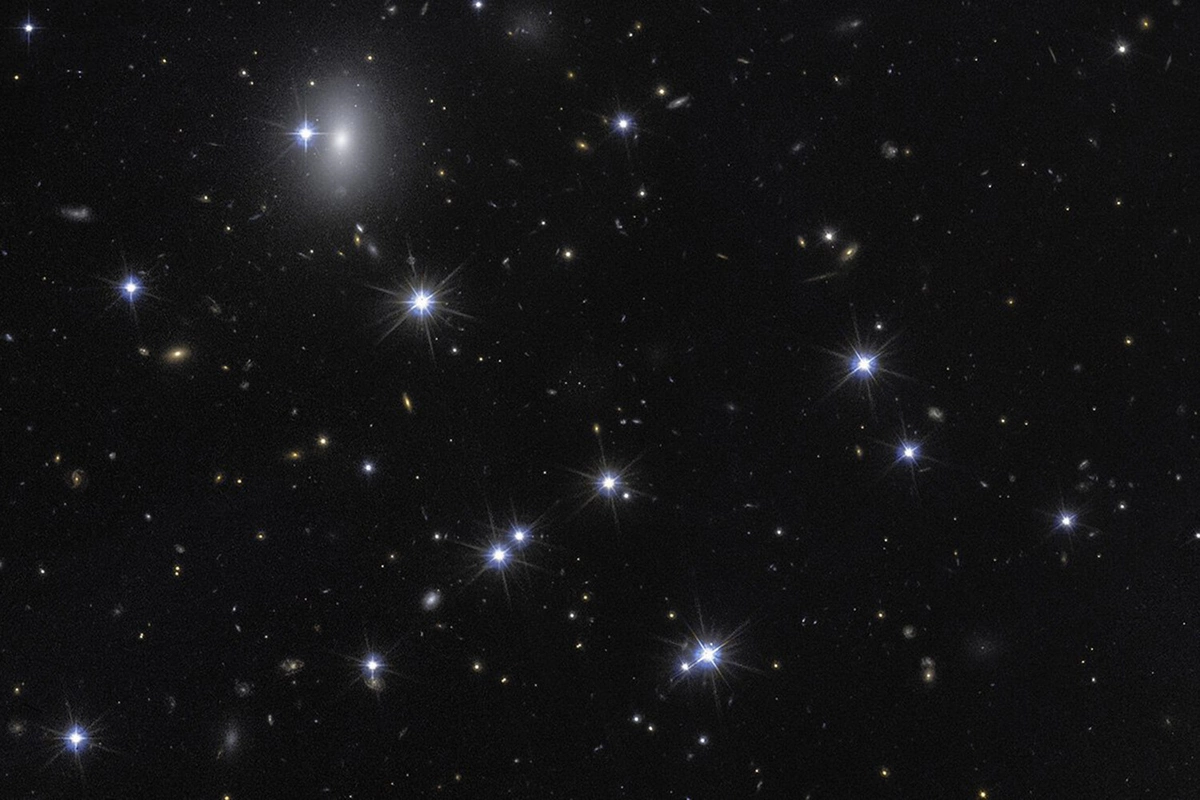
Theoretical physicists have proposed a new perspective on gravity that explains one of the deepest paradoxes of cosmology: why the Universe is becoming increasingly structured even though the laws of thermodynamics demand a steady increase in chaos. The study was published in the journal Physical Review D.
The second law of thermodynamics states that in a closed system, entropy — a measure of disorder — always increases. The Universe as a whole is moving toward equilibrium and homogeneity. However, in practice we observe the opposite: from an initially nearly homogeneous cloud of matter, galaxies, stars, planets, and life have emerged. This apparent contradiction has long troubled physicists.
The authors of the new study showed that the key to solving this puzzle lies in the expansion of space itself. As the Universe expands, it constantly creates "new room" — volume in which matter can organize into structures without violating the global increase in entropy. In other words, local order — stars, planets, biospheres — is possible precisely because the total volume of the Universe grows faster than it can "mix."
Within the framework of the new theory, gravity is viewed not merely as the curvature of spacetime as described by Einstein, but as a driving force that enables this structuring. Gravity gathers matter into clumps, lowering local entropy at the expense of increasing it in the surrounding space — in the form of radiation and heat. The expansion of the Universe serves as a "buffer," without which this process would be impossible.
The authors emphasize that their approach does not contradict general relativity but builds upon it. According to the scientists, this framework may prove useful in the search for a unified quantum theory of gravity — one of the major unsolved problems in modern theoretical physics.

Similar News

The reason to remove a healthy wisdom tooth has been named
American oral and maxillofacial surgeon Lee Kojanis explained in which cases even a completely healthy wisdom tooth may require removal. According to the specia...