Azərbaycanca
 По-русски
 English

 About us
A valuable economic resource: women's employment is becoming one of the main drivers of Azerbaijan's development
Be the first to know
A country's economy can be assessed by various criteria, including the level of female employment. Statistical figures explain how many women work in hired positions and start their own businesses.
For the labor market, this is an important reserve that either brings benefits or remains idle, writes the newspaper "Kaspi".
A step forward is not enough
According to UN estimates, from 2015 to 2026, the share of working women increased in 128 out of 186 countries. However, in the most productive age range - from 25 to 54 years - 63.9% of women are employed compared to 92% of men.
The reason lies not only in social barriers and a shortage of kindergartens. The World Bank study "Women, Business and the Law - 2026" shows that fewer than 5% of women on the planet live in countries that have approached full legal equality. Meanwhile, involving them in the economy could add 20% to the GDP of developed nations, and in countries where barriers are particularly numerous, as much as 50%.
Inequality affects not only career opportunities but also the wallet: on average globally, women earn 20% less than men. They are more often employed in the shadow sector, where there are no social guarantees. Moreover, having children often slows down careers and negatively impacts income, as a new mother cannot quickly return to work and work full days.
The path to a career begins with education
In our country, special attention is paid to female employment. Financial independence, a promising profession, a career, and starting one's own business are impossible without proper education. This is precisely why access to education for girls and young women is one of the priority areas. Since 2021, the State Committee on Family, Women, and Children Affairs, together with the Ministry of Science and Education and the Education Development Foundation, has been implementing a large-scale program called "Support for the Education of Young Women." The project helps young women from socially vulnerable families enroll in universities, master in-demand professions, and fulfill themselves in professional activities.
It is noteworthy that the number of young women receiving education in our country is growing. Over the 2021-2026 period, they constituted the majority among those admitted to colleges - 64.7%. During this period, the number of young women admitted to secondary educational institutions increased by 17.3%, while the number of young men decreased by 7%. In universities, the share of female students exceeds half of all students, and in Azerbaijan's scientific sphere, women make up over 60% of all specialists.
After their studies, a significant portion of graduates naturally enters the labor market, where the share of women currently stands at 48.1%, which is nearly half of the country's entire employed population.
Why do women earn less?
Experts emphasize that there is virtually no gender discrimination in workplaces in our country, and equal pay is provided for the same work regardless of gender. So why is the average salary of men in Azerbaijan much higher than that of women? According to data from the State Statistics Committee for last year, the average monthly salary for men was 1,264 manats, while for women it was 874.6. The gap of 389.4 manats looks substantial; however, as economist Emin Garibli explained, this income difference is due to the structure of employment. Men more often go into profitable capital-intensive industries: oil extraction, heavy industry, and IT. Women, on the other hand, more often work in healthcare and education, where salaries are traditionally lower. According to the expert, to equalize incomes, it is necessary to introduce modern labor standards, monitor their compliance at enterprises, and help women transition into technology-driven and well-paid professions.
Invisible labor
A significant number of women in Azerbaijan do not enter the labor market at all or leave after some time, having decided to devote themselves to family and home. In reality, this is full-fledged work without days off or vacations: from early morning to late evening, they need to feed the family, get children ready for school or extracurricular activities, maintain order in the house, keep track of shopping, and sometimes also care for elderly sick relatives. According to UN calculations, women spend 2.5 times more time on household chores and caring for loved ones than men: on average, three more hours per day.
E. Garibli emphasized that economists around the world are debating how to convert this labor into monetary terms. Some countries are already discussing calculations that would allow the value of domestic work to be included in the gross domestic product. Women who manage households and raise children create real economic value - it simply is not reflected in financial reports due to the absence of material compensation.
Own business: leadership and scale
An increasing number of women in our country do not want to limit themselves to the role of homemaker. For those who want to manage their own time and not depend on the constraints of hired employment, entrepreneurship becomes the entry point into the economy. Women go into their own businesses not only for the sake of a flexible schedule or potentially higher earnings - behind this choice lie healthy ambitions, the desire to make decisions independently, and to take on a leadership role. In Azerbaijan, female entrepreneurs have long gone beyond beauty salons, fashionable clothing tailoring, and educational courses: they are launching projects in IT, manufacturing, tourism, and agriculture.
By the end of last year, the country had 344,509 female entrepreneurs. The largest number is in Baku (96,556), followed by the Lankaran-Astara and Gazakh-Tovuz economic zones. In the liberated East Zangazur, fewer than 2,000 female entrepreneurs are registered. This is quite understandable, as the region is only beginning to be actively settled, but women's businesses are coming there too.
The state supports such business activity with real assistance. In January-October, the Azerbaijan Business Development Fund issued nearly 500 women preferential loans totaling more than 22 million manats. The funds went toward developing businesses in agricultural product processing, industrial production, aquaculture, tourism, and the service sector. In addition to preferential loans, female entrepreneurs have access to grants, startup certificates with tax exemptions on innovative income, and assistance with participation in exhibitions and trade platforms.
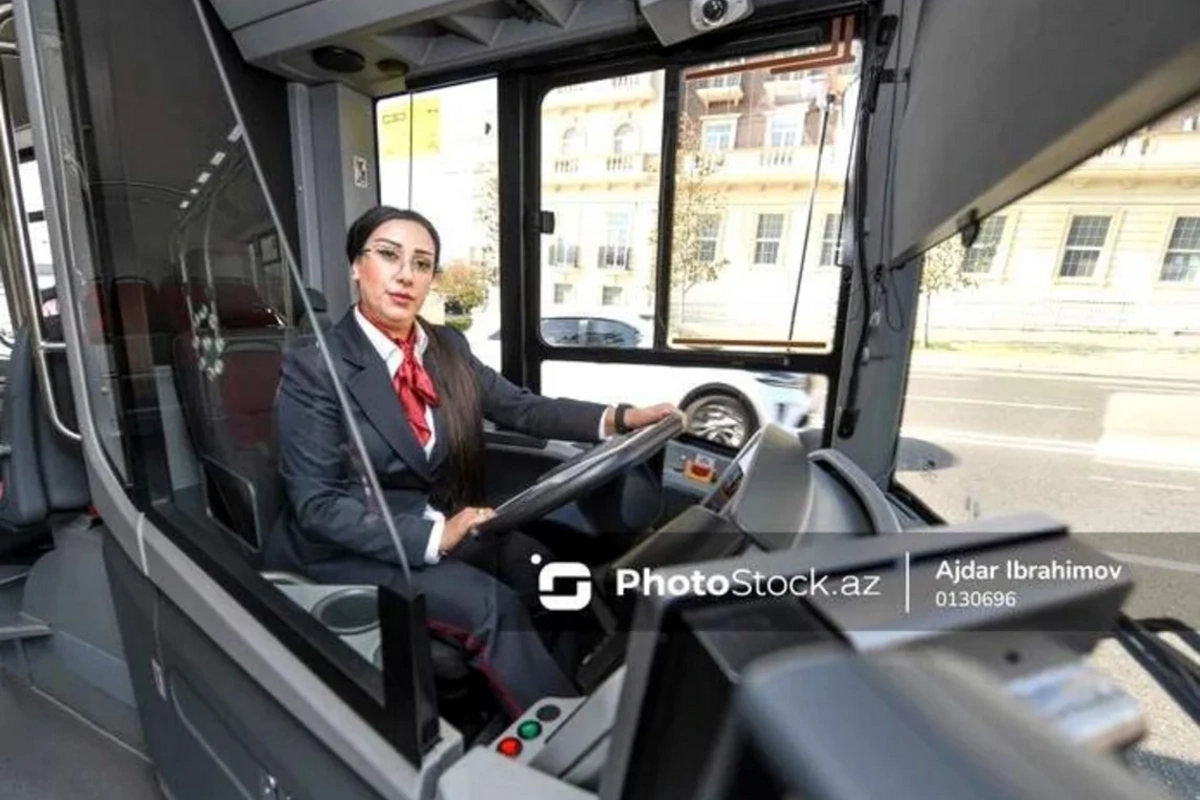
Female employment in Azerbaijan is a valuable economic resource that is becoming one of the main drivers of the country's development.
Similar News

Azeri Light crude oil has decreased in price
The price of a barrel of Azerbaijani Azeri Light oil on the world market decreased by $1.37, or 1.33%, to $101.4. This was reported by Report citing a source on...